On September 22, 2025, the Union Club of British Columbia was alive with conversation, energy, and purpose as mayors, councillors, Indigenous leaders, and business figures gathered for the inaugural Get It Done B.C. forum. Held on the margins of the UBCM convention in Victoria, the event marked the debut of a new civic movement aimed at tackling one of the province’s biggest challenges: how to actually get projects built in British Columbia.
Hosted by Resource Works, the event was both a call to action and a rallying point for communities that fuel the provincial and national economy. It also introduced the Alliance of Resource Communities, a new network of municipal leaders determined to push for reforms that will make development faster, fairer, and more collaborative.
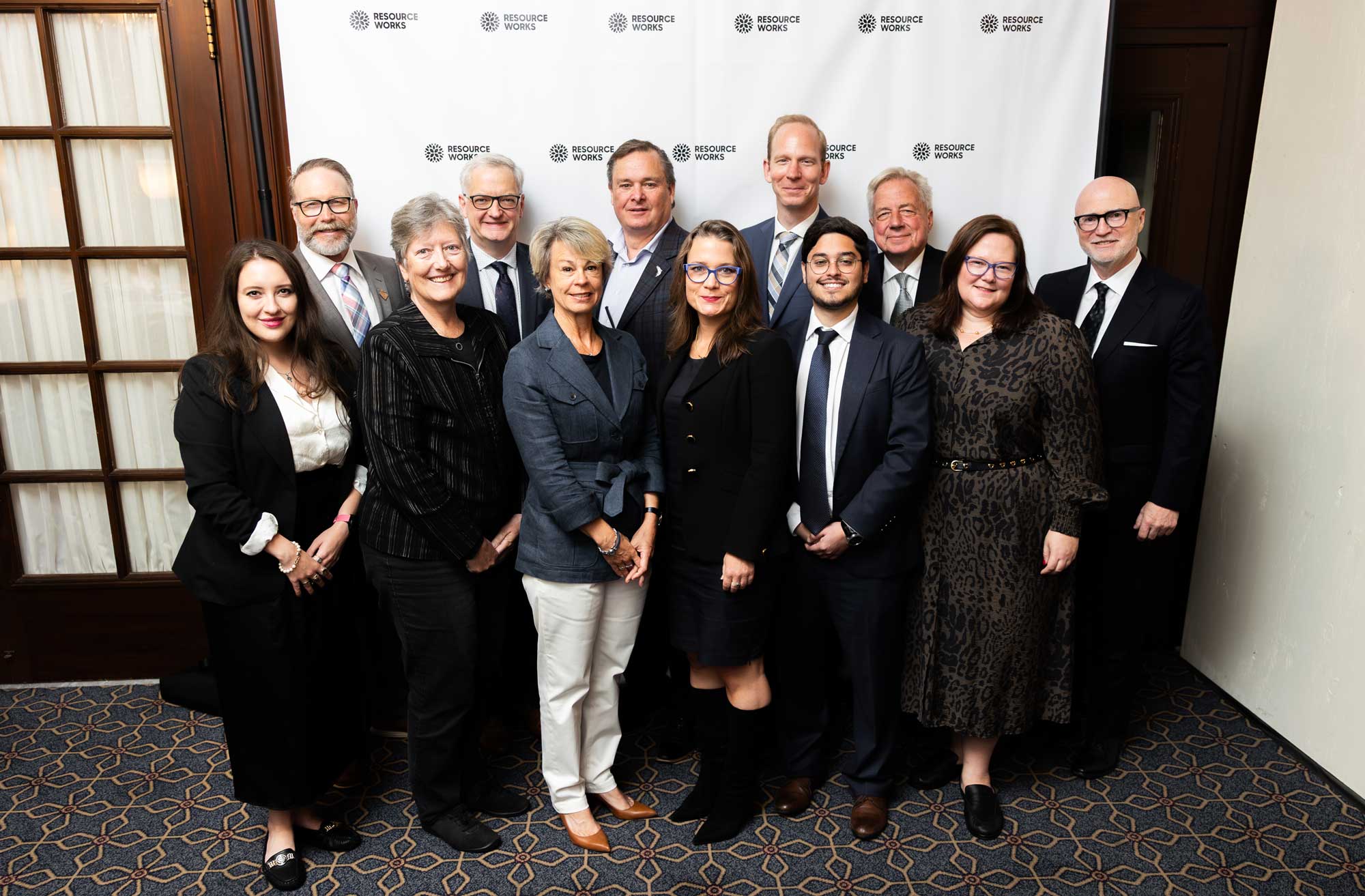
Resource leaders from across B.C. gathered together in Victoria on Sept. 22, 2025.
A moment whose time has come
Across B.C., communities are feeling the drag of policy inertia — stalled housing projects, endless environmental reviews, and a shortage of investment-ready infrastructure. In his remarks, Stewart Muir, president and CEO of Resource Works, later remarked: “B.C. is at a crossroads. We can either stay boxed in by bureaucracy and ideology, or we can roll up our sleeves and get things done. What I heard loud and clear throughout was that people are choosing action.”
That message resonated. Mayors from all four corners of B.C. including Metro Vancouver shared local perspectives on what it will take to align provincial priorities with on-the-ground realities. Many noted that their residents aren’t asking for miracles; they’re asking for governments that can work together to deliver.
A gathering of builders
The program featured a keynote address by Adrian Dix, B.C.’s minister of energy, mines and low carbon innovation, as well as a mayors’ panel moderated by Dallas Smith and featuring Brad West of Port Coquitlam and other community leaders. The Coast Forest Policy panel drew strong engagement, as did Heather Exner-Pirot’s address on national resource strategy, which concluded with an insightful Q&A led by Andrew Robinson.
Between formal sessions, guests enjoyed lively conversation and a door prize draw for a two-night stay at Pacific Sands Resort in Tofino. The day opened with the debut of a refreshed Resource Works Advisory Council with some new faces as well as a thoughtful new approach, chaired by Karen Graham.
The day also brought together members of the Resource Works board, the new advisory council, the not for profit’s staff, and the heads of several of B.C.’s principal natural resource advocacy organizations. This was a rare and refreshing convergence of leadership and alignment that signals the kind of allyship needed to build a stronger future for both the province and the country in 2026 and beyond.
Standing together for the road ahead: Leaders from across British Columbia’s resource sectors gathered in Victoria on September 22, 2025, in a show of unity and purpose with municipal officials. With challenges and change on the horizon, these resource people, representing energy, mining, forestry, aquaculture, and business, stood shoulder to shoulder with the Resource Works team to affirm a shared commitment to collaboration, economic resilience, and a stronger future for B.C. and Canada. L–R: Margareta Dovgal (Resource Works), Geoff Morrison (CAPP), ’Lyn Anglin (Resource Works board), Tim McEwan (MABC), Karen Graham (Resource Works advisory council chair), Brian Kingzett (BC Salmon Farmers), Susan Downie-Gagnon (Resource Works board), Derek Cummings (CAPP), Jairo Yunis (BCBC), Richard Prokopanko (Resource Works board chair), Kim Haakstad (COFI), and Stewart Muir (Resource Works), Victoria, Sept. 22, 2025.
From talk to action
By the night’s end, the consensus was clear: this can’t be a one-off. Attendees agreed to reconvene in 2026 with tangible progress to show — from policy proposals to collaborative projects that prove what’s possible when B.C. leaders choose to work together.
Later in the week the Alliance of Resource Communities officially launched with the immediate support of many mayors, providing evidence that Get It Done B.C. was not an isolated expression of what residents are looking for right now. When municipalities, Indigenous governments and industry partners get together to advocate for a smarter, faster, and more inclusive approach to development, that is a sign of positive change.
The start of something big
As the evening wound down in the Union Club’s historic lounge, a sense of optimism filled the air. If the enthusiasm of this first Get It Done B.C. gathering is any measure, it’s clear that something important has begun.
The message from participants was unmistakable: the province doesn’t need more debate — it needs action. And if this crowd has anything to say about it, that’s exactly what’s coming.
Watch & share the highlights
Recordings of the sessions are now available on the Resource Works YouTube page, including:
I’d also like to thank our Reception Sponsor, Global Container Terminals, and our Silver Sponsors: BC Council of Forest Industries, Tourmaline, FortisBC, Cenovus, FPX Nickel, Trans Mountain and the BC Salmon Farmers, who generously donated the salmon served at the lunch.