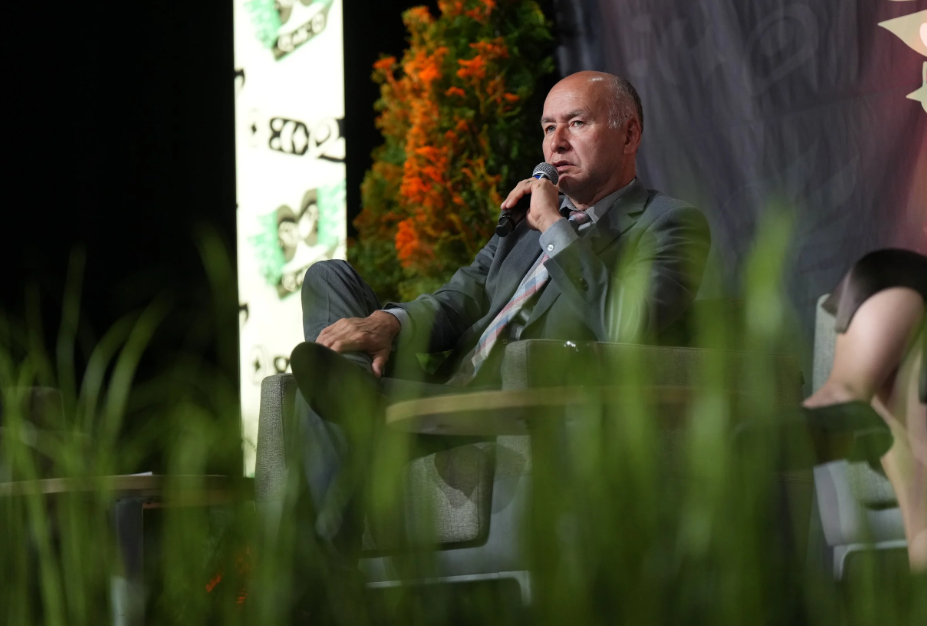
Ellis Ross stepped onto the stage at the Vancouver Convention Centre last year. He didn’t reach for notes, and spoke plainly to the audience of business leaders, chiefs, and policymakers gathered for the Indigenous Partnerships Success Showcase (IPSS).
“I’m very proud to say that my band, the Haisla Band, is no longer talking about unemployment, poverty, reconciliation,” Ross said. “We’re talking about the management of wealth.”
Ross’s message was equal parts challenge and triumph, and was followed by a standing ovation for a man who has lived the slow climb from the margins to the mainstream. Once a water-taxi operator in Kitamaat Village, he is now one of the country’s most influential Indigenous political figures.
As he returns as a featured guest to this year’s IPSS, Ross embodies the event’s core theme: Shared Prosperity Now.
Born and raised in the Haisla Nation near Kitimat, Ross spent his early life in a community scarred by unemployment and a lack of opportunity.
“We had nothing,” Ross told the Arc Energy Ideas podcast last year. “We were begging for money, begging for infrastructure. We were one of the poorest bands in British Columbia.” Under his leadership, that changed forever.
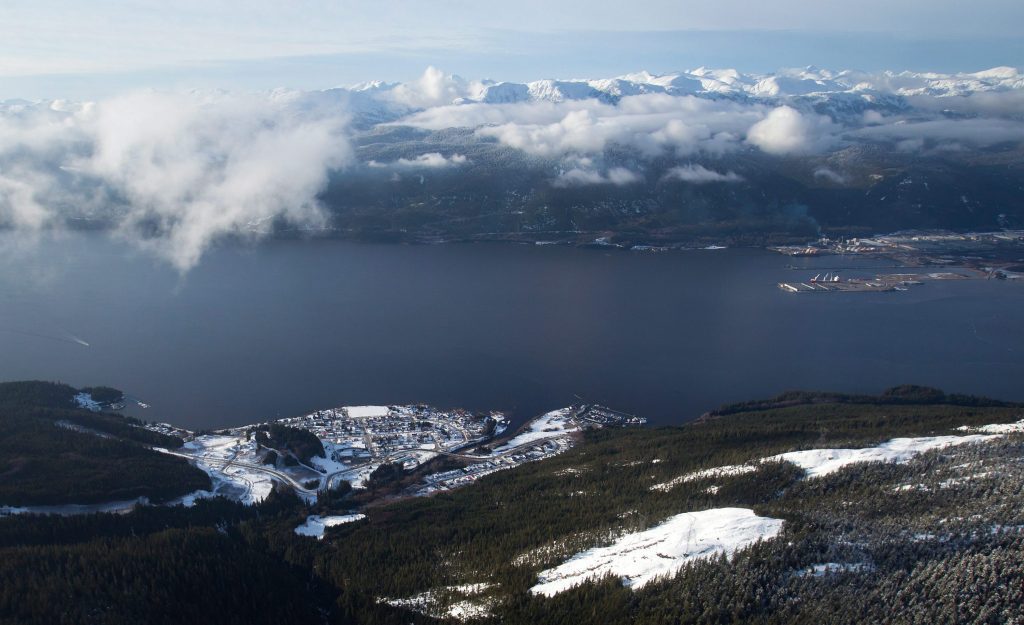
As Haisla chief councillor from 2011 to 2017, Ross helped transform his community through industry partnerships rooted in resource development. He rejecting the old idea that development was a natural enemy of culture, and steered the Haisla into the energy economy on their own terms by embracing liquefied natural gas (LNG).
The Cedar LNG project, co-owned by the Haisla Nation and Pembina Pipeline, will become the largest Indigenous-majority-owned energy project in Canada’s history.
“It will have one of the lowest carbon footprints in the world,” said Crystal Smith, Ross’ successor as Haisla Chief Councillor. Cedar LNG is scheduled to begin operation in 2028.
For Ross, participation means power.
“If you uplift an Aboriginal community, the biggest beneficiaries, apart from First Nations, are the rest of British Columbia,” he said at IPSS in 2023. “We’ve got no malls or car dealerships on reserves. We spend it in our neighbouring communities.”
Ross’s journey hasn’t been without conflict. Writing in the Times Colonist in 2020, he warned of foreign-funded activists “hijacking our future” by dividing Indigenous communities and undermining resource partnerships.
“The last thing any of us need is intervention from foreign groups that want to hijack our future for their own objectives,” he wrote, condemning the influence of U.S. foundations funnelling money to anti-development campaigns.
He is vehemently opposed to “distraction politics”, and it became a hallmark of Ross’s political career. As MLA for Skeena from 2017 to 2024, Ross built a reputation for straight talk. He was eager to defend both workers and environmental standards for the modern resource industry.
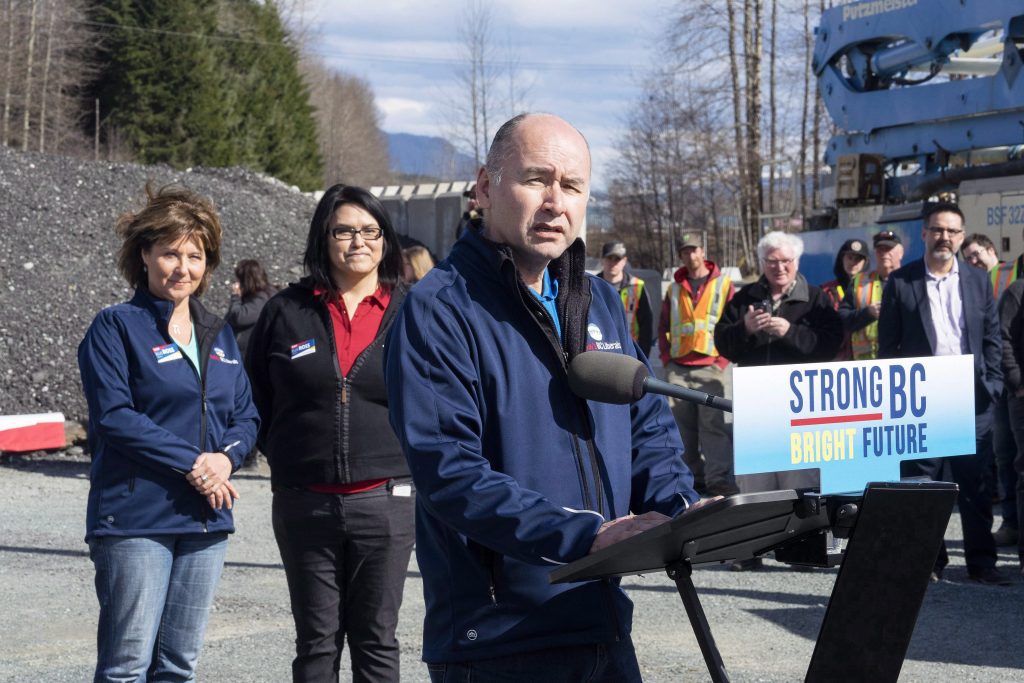
With a pragmatic style, he gained admiration from both business leaders and former premier Christy Clark, who has praised Ross because he “fought for an LNG industry that will be the cleanest, the greenest, and the safest anywhere in the world.”
By early 2024, Ross announced his move to federal politics, saying he wanted to take “the principles I’ve developed over the last 15 years” to Ottawa.
Now the Member of Parliament for Skeena-Bulkley Valley, he’s now one of the most prominent Indigenous voices in the House of Commons, and one of the few with deep experience in both community governance and heavy industry.
Recently, Ross said he plans to hold the federal government to its promise of making Canada an “energy superpower.”
“For the area and for Canada, I want to hold this government accountable for those words,” he told the Prince George Citizen. “Projects like LNG Canada and Cedar LNG can show the world how Indigenous leadership and environmental responsibility go hand in hand.”
Ross’s attendance at IPSS 2025 comes at a moment when Indigenous participation in major projects is reshaping the national economy.
More than two dozen First Nations now hold equity in energy, mining, or infrastructure developments. It is proof that reconciliation, in his view, must be measured not in lofty statements but in actual ownership.
“You’ve got to leave a lot of those old narratives at the door,” he told delegates. “We’re not victims. We’re builders.”
Now, from the carpet of Parliament Hill to the polished floors of the Vancouver Convention Centre, Ellis Ross continues to speak for both the Haisla and the wider coalition of Indigenous and non-Indigenous Canadians who believe in growth through partnership.
As IPSS Event Lead Margareta Dovgal put it, “He bridges worlds—the boardroom, the band office, and the floor of the legislature.”
When Ross steps back onto the IPSS stage this November, expect the same mix of candour and conviction that has defined his career. “
We’re not talking about reconciliation anymore…we’re talking about prosperity, and making sure it lasts.”