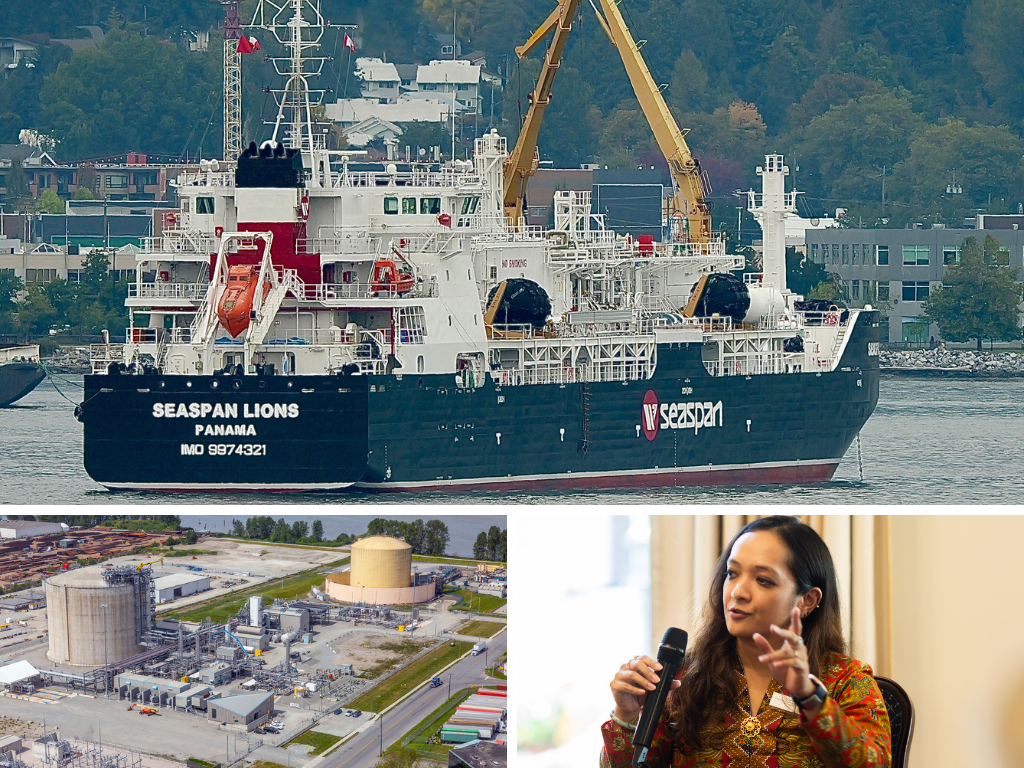
At the Resource Works’ Get It Done conference on Sept. 22, Bloomberg New Energy Finance’s Global Head of Gas, Fauziah Marzuki, spotlighted British Columbia’s Tilbury LNG facility as an example of how Canada’s natural gas can serve both global shipping and domestic energy security.
The main-stage conversation with former premier Christy Clark and Stewart Muir, President & CEO of Resource Works.
Marzuki outlined where natural gas fits into the world’s energy future. She noted that while gas use in buildings is flat and industrial demand continues to grow, transport is the sector where natural gas stands out across all major outlooks. Shipping, she explained, has “very, very few other cost-competitive replacements,” which is why LNG bunkering has “tremendous potential.”
BC is already positioned to benefit. As a fuel provider, Tilbury is “at the forefront for ferries and early adoption,” Marzuki said, and “a lot of ships are going to be fueled by LNG in the future. If Vancouver and your ports can actually position themselves for LNG bunkering, I see that as a strategic advantage.” While she stressed that B.C. cannot rival Singapore for shipping volume, she emphasized the province “absolutely can leverage it as the North America Pacific transit route.”
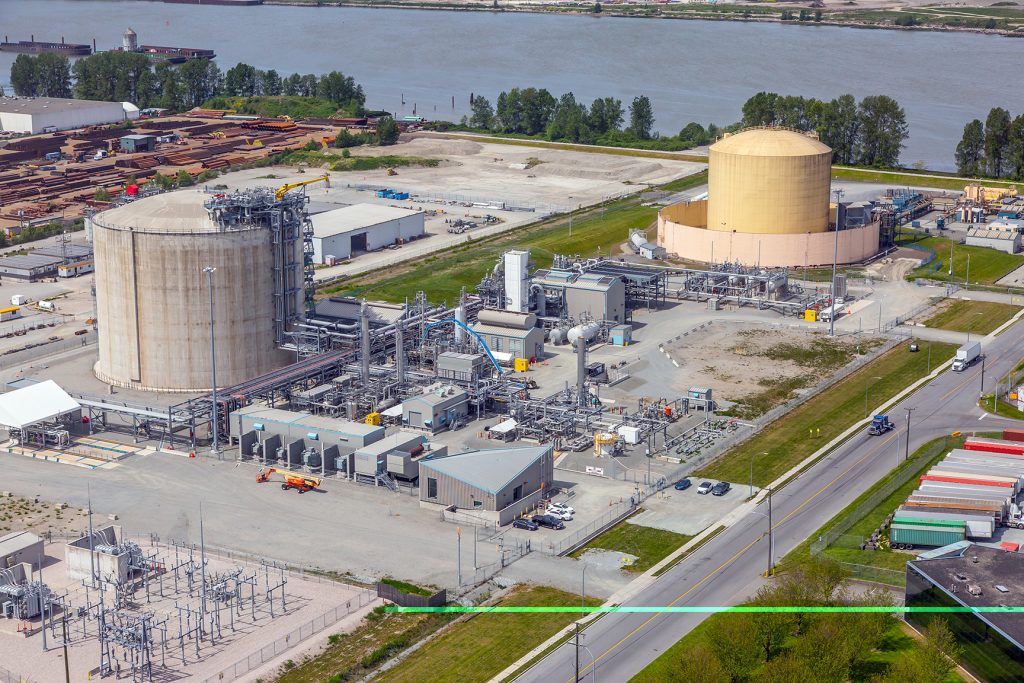
The FortisBC Tilbury LNG facility in Delta.
That vision is already visible on the water. FortisBC supplies natural gas from Northeast BC which is liquified at Tilbury, and made available for marine fueling. The LNG is then loaded onto Seaspan Lions, a dedicated bunkering vessel operated by Seaspan.
The Lions sails out to refuel ferries, container ships, and visiting international vessels in local waters. Each transfer a reminder of how Canadian energy ties the province’s resource base to global trade.
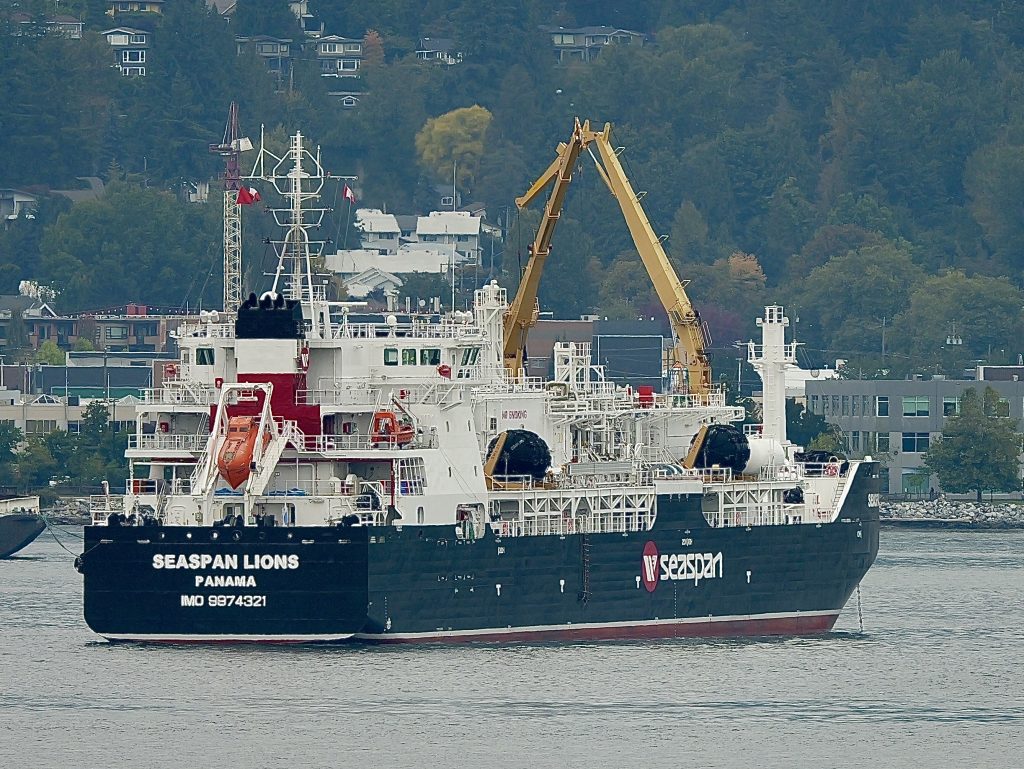
The Seaspan Lions bunkering vessel at anchor.
Marzuki also said Tilbury-style facilities could help supply Pacific Island nations that require smaller parcels of LNG for local power plants. These aren’t markets for mega-projects, but nimble developers “with the right ecosystem” could capture them.
At home, she highlighted natural gas’s role in “peaking services,” the ability to meet sudden spikes in demand during cold winters or supply crunches (a role Tilbury has played for BC since 1971). Small liquefaction and storage facilities across the country could relieve pipeline congestion, reduce price volatility, and ensure energy security. “It’s a whole recipe that works really well together: ensuring domestic demand, shoring up consumption, and using gas to decarbonize some hard-to-abate sectors,” she said.
Taken together, her remarks underscored that Canadian LNG is not only a local resource. It can be a stabilizer for families at home and a contributor to cleaner shipping and resilient trade abroad.
To read more about Clark and Marzuki’s panel at Get It Done BC, click here.