Is the Trans Mountain a fake, like some say the moon landing was faked?
It’s hard to interpret otherwise a persistent claim being made in media by British Columbia’s premier, David Eby.
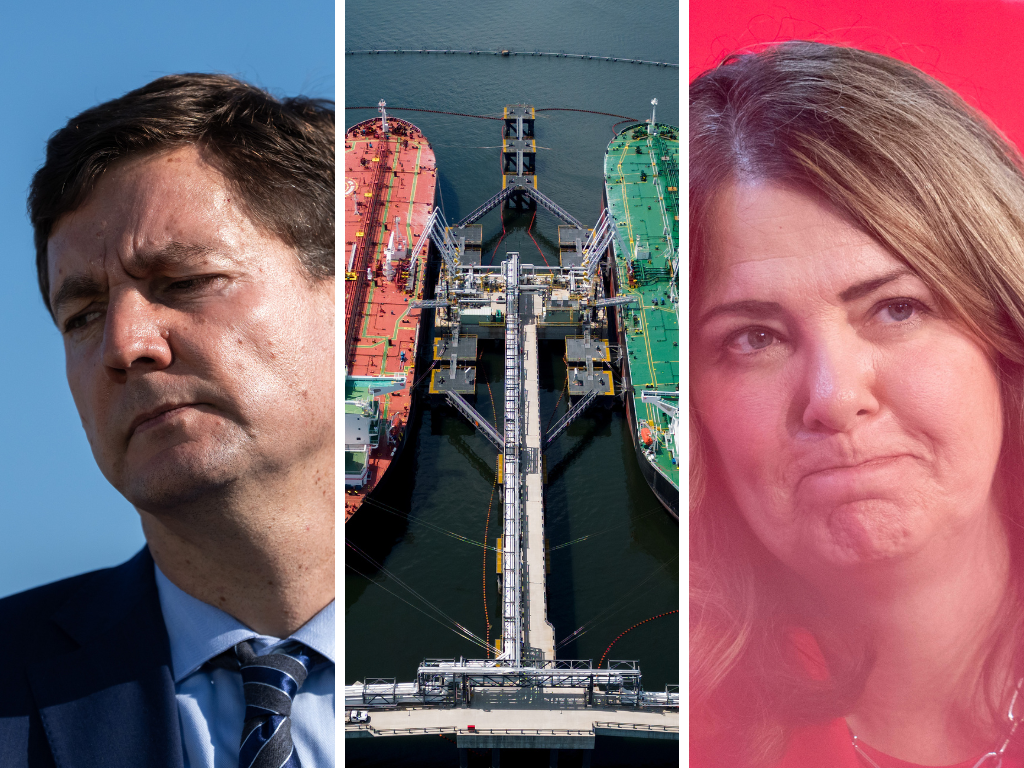
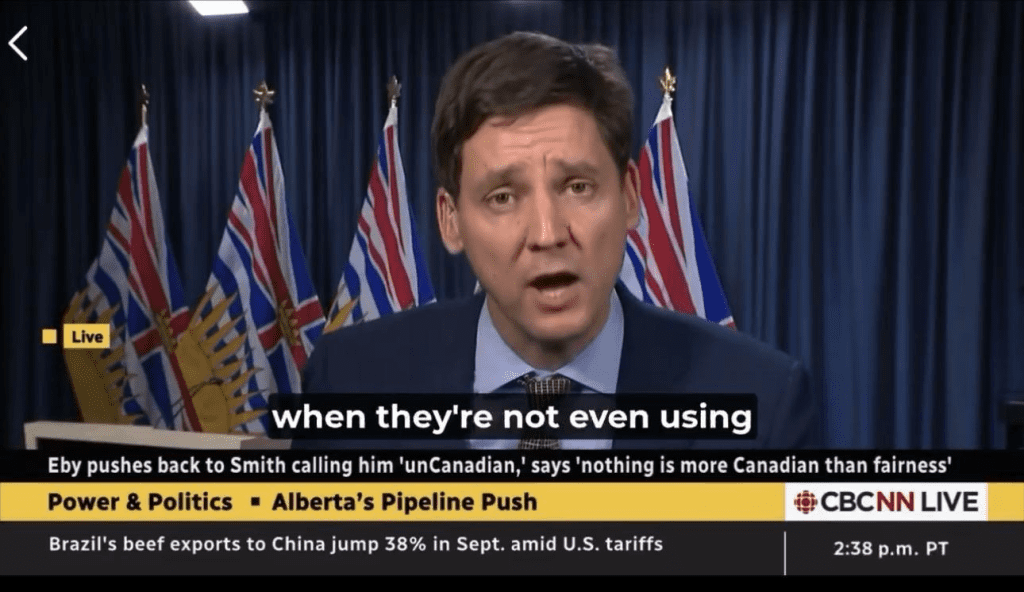
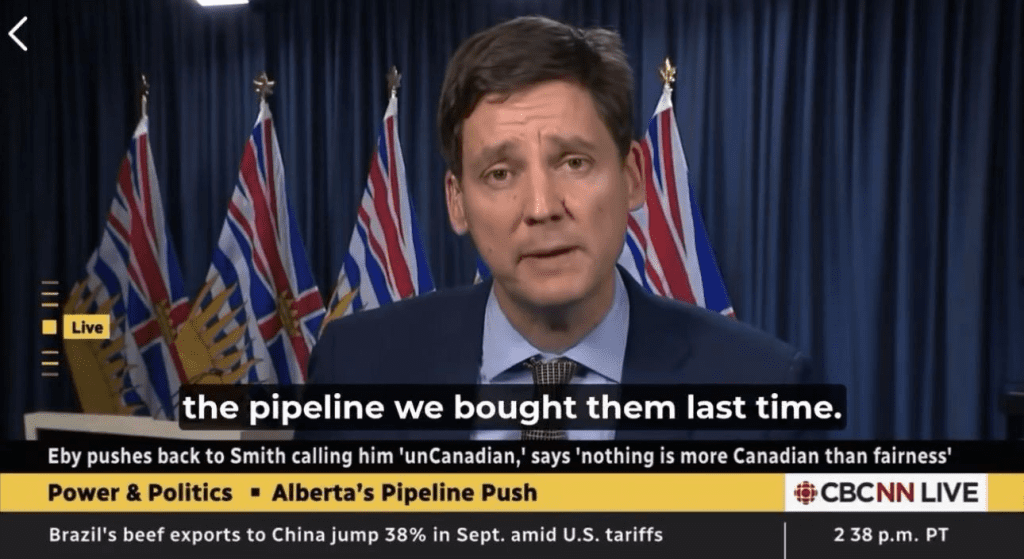
This week he said that Alberta is “not even using” the new Trans Mountain pipeline from Edmonton to Metro Vancouver.
Could that be true? We decided to look into it.
Here’s what we discovered.
Since May 2024 when the Trans Mountain expansion project was opened, Alberta oil has flowed steadily down the pipeline from its origin in a suburb of Edmonton.
Credible international news organizations have reported that the new pipeline is 85% full. Indications are that by the period 2027-28, it will reach as close to 100% full as it’s possible to.
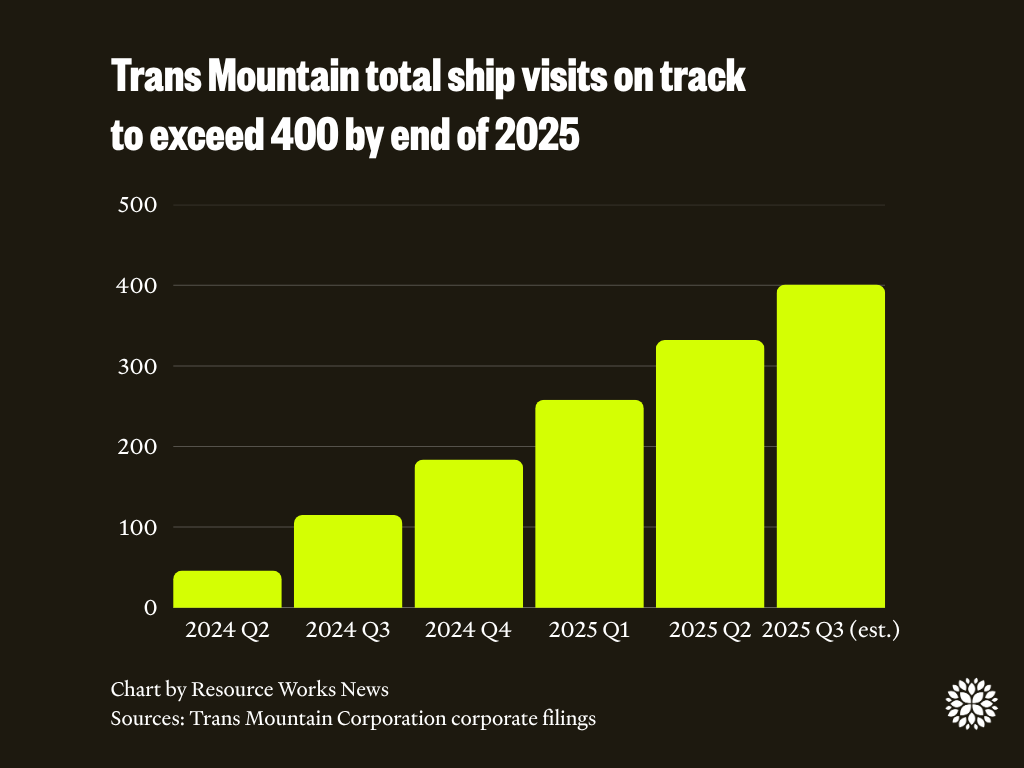
The number of ship calls to the Westridge coastal loading facility in Burnaby is on track to reach 400 by the end of the year. This strongly supports the contention that Alberta oil is flowing through the pipeline.
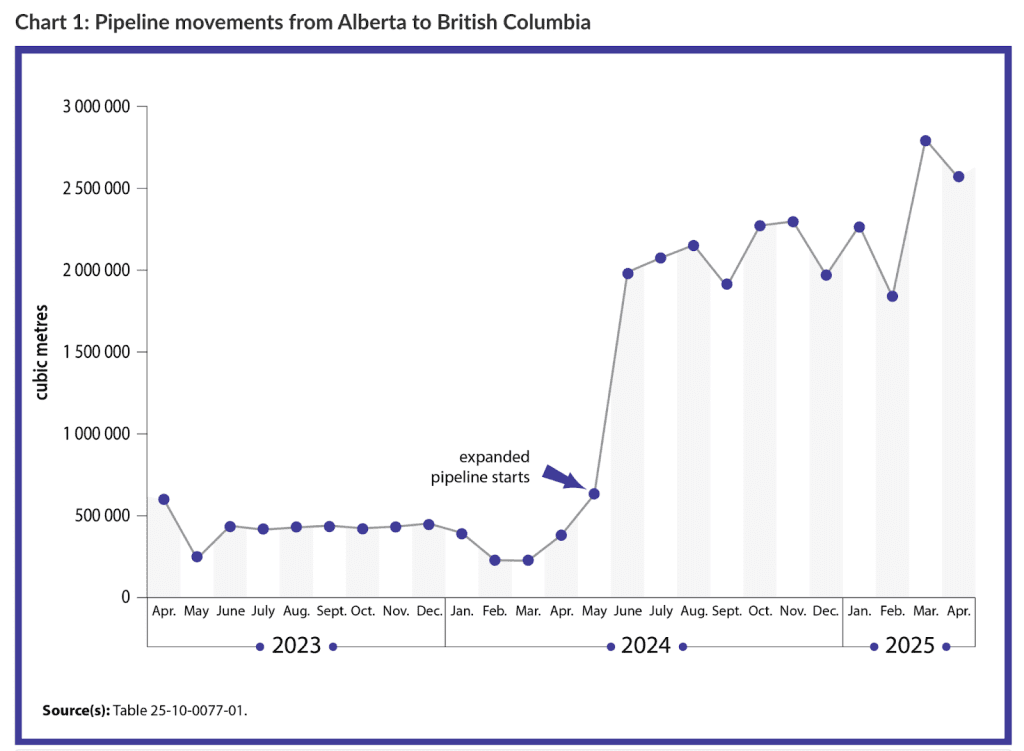
https://www.statcan.gc.ca/o1/en/plus/8439-trans-mountain-pipeline-delivering
I often say Trans Mountain is “paying Canada’s rent,” and I mean it literally. Ottawa owns the pipeline through Trans Mountain Corporation, and it’s already sending more than a billion dollars a year back to the federal treasury in dividends, interest, and fees.
It’s also boosting export revenues by letting Alberta oil reach world markets instead of being trapped at a discount — raising royalties, taxes, and paycheques across the Prairies. And every tanker that sails from Burnaby keeps tug crews, port workers, and coastal suppliers in business. That’s real money flowing through the economy — the kind that actually pays the rent for Canada.
In total, Resource Works examined nine claims that would all need to be true if Premier Eby is telling the truth about the pipeline being empty:
Truth Test: “Alberta isn’t even using the pipeline we bought them last time.”
| Category | Claim or Implication | Evidence / Data | Source(s) | Finding / Truth Rating |
| 1. Pipeline utilization | TMX is unused or empty. | Trans Mountain reports 757,000 bpd throughput on an 890,000 bpd capacity system (≈ 85 %). | Trans Mountain Q1 2025 Financial Results; Reuters (30 Jul 2025). | ❌ False — pipeline is heavily used and approaching full capacity. |
| 2. Export volumes | Few or no shipments. | 306 vessels loaded at Westridge Marine Terminal by Q2 2025 (~20–25 per month). | Trans Mountain Q2 2025 Results; CER Market Snapshot (Sept 2025). | ❌ False — consistent, large-scale exports are underway. |
| 3. Financial returns | No financial benefit to Canadians. | $729 million returned to federal government YTD 2025; projected >$1.25 billion for year. | Trans Mountain Q2 2025 Results. | ❌ False — major positive fiscal returns already realized. |
| 4. Shipper commitments | No demand for pipeline capacity. | 80 % of capacity contracted to long-term shippers; 20 % reserved for spot. | S&P Global Commodity Insights (Feb 2025); CER Snapshot. | ❌ False — demand is locked in by long-term contracts. |
| 5. Operational timeline | Project still inactive or delayed. | Commercial service began May 1 2024; steady throughput growth each quarter. | Trans Mountain Corporate Reports 2024–25. | ❌ False — fully operational since 2024. |
| 6. Regulatory data | No verified data exist. | Monthly throughput published by CER and Trans Mountain Corp. | Canada Energy Regulator (CER Data Portal). | ❌ False — independent regulators in fact consistently confirm the data. |
| 7. Market impact | No improvement to Alberta’s market access. | WCS-Brent differential narrowed; Asia exports up sharply. | CER Market Snapshot (Sept 2025); S&P Global 2025 report. | ❌ False — there is clear evidence of improved market access. |
| 8. Ownership context | B.C. or Alberta “owns” the pipeline. | Owned by Government of Canada via Trans Mountain Corporation. | Finance Canada; Trans Mountain Corp. Ownership Statement. | ⚠️ Misleading — federal ownership doesn’t mean Eby “bought Trans Mountain for Alberta.” |
| 9. Provincial benefit analysis | No benefit to B.C. or Alberta. | Royalties, tax revenue, and employment gains in both provinces; marine services in B.C. | TMX Economic Impact Assessment 2024; CER regional reports. | ❌ False — both provinces gain fiscal and employment benefits. |
Last year, on three occasions I visited the Westridge Marine Terminal, twice on tours of the land-based facilities and the third time from the water. Ships were docked at the terminal on all three occasions, and I was told by staff that they were being loaded.
I didn’t actually see any oil at the oil terminal, but…
I have to admit I did not actually see (or smell) any oil. But I’m also aware that it is very much in the interest of the Trans Mountain Corporation to never expose any oil to where it can be seen, touched or smelled, since this would result in stiff fines and other harsh repercussions.
At this point, I have to say that there is no supporting evidence whatsoever that Alberta is using the Trans Mountain pipeline as a moon landing style hoax for some nefarious goal. There is no sign of a massive fraud that required collaboration among energy regulators, Alberta oil producers, the pipeline company, the international business press, numerous federal ministers, trade union leaders, numerous environmental organizations that expend enormous efforts to try to curtail shipments of the oil that they say moves through the pipeline, and the many First Nations that have actively supported from and benefit from the project in its completed state.
Of course, I’m well aware there is a political context here. Since October 1, Premier Eby has been engaged in a war of words with Alberta Premier Danielle Smith. She announced that she is determined to see get built another new pipe from her province to a federally regulated port somewhere on the Pacific coast.
And to be clear, this isn’t about giving Alberta a free pass. Premier Smith isn’t blameless either — she’s been happy to turn complex national issues into provincial sound bites when it suits her. The difference is that Canada can’t afford leaders on either side of the Rockies who substitute theatre for truth.
Premier Eby is right when he says British Columbians should not be forced to give up opportunities because another province wants to do something. Labour market fears are legitimate as we’ve seen in the recent past. But when it comes to infrastructure and investment opportunities, time and again Canadians have learned the hard way that “a bird in the hand is worth two in the bush.” There is no guarantee that today’s opportunities, pushed away, will materialize again at any point in the future.
There’s also a public context. At no moment in recent times have British Columbia residents been more supportive of the idea of building more oil pipeline infrastructure. The following slide from a poll by Innovative Research Group (shared by pollster Greg Lyle at a recent event organized by Resource Works) is consistent with other findings:
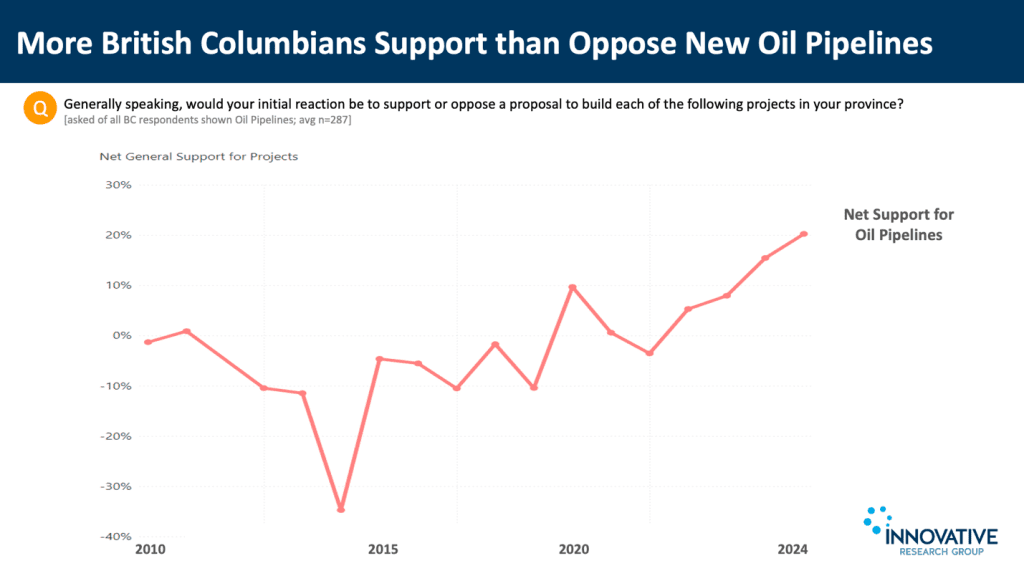
Even without out this quite exceptional condition, the current situation deserves a vigorous public conversation. It also deserves the truthful use of information.
My final verdict is this: We can all be fully confident that the Trans Mountain Expansion is indeed 85 per cent full, that hundreds of tankers have already sailed, and that more than a billion dollars has flowed back to Canadians.
Bottom Line
The facts show a functioning, profitable national asset:
- Operational since May 2024
- 85% utilized and rising
- Hundreds of ships exporting Canadian oil
- Over $1 billion flowing back to the public purse from Trans Mountain – that’s even before counting the upstream employment and impacts
This Resource Works analysis is based on public reports from Trans Mountain Corporation (2024 & 2025), Canada Energy Regulator (2025), Statistics Canada, S&P Global Commodity Insights, and Reuters.
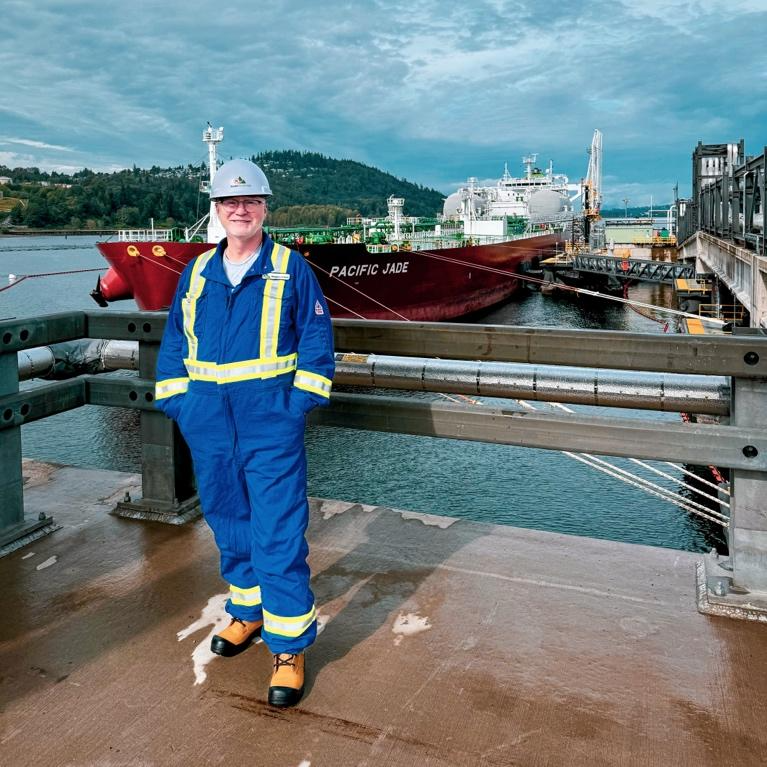
Stewart Muir, visting the Trans Mountain pipeline’s Westridge Marine Terminal.