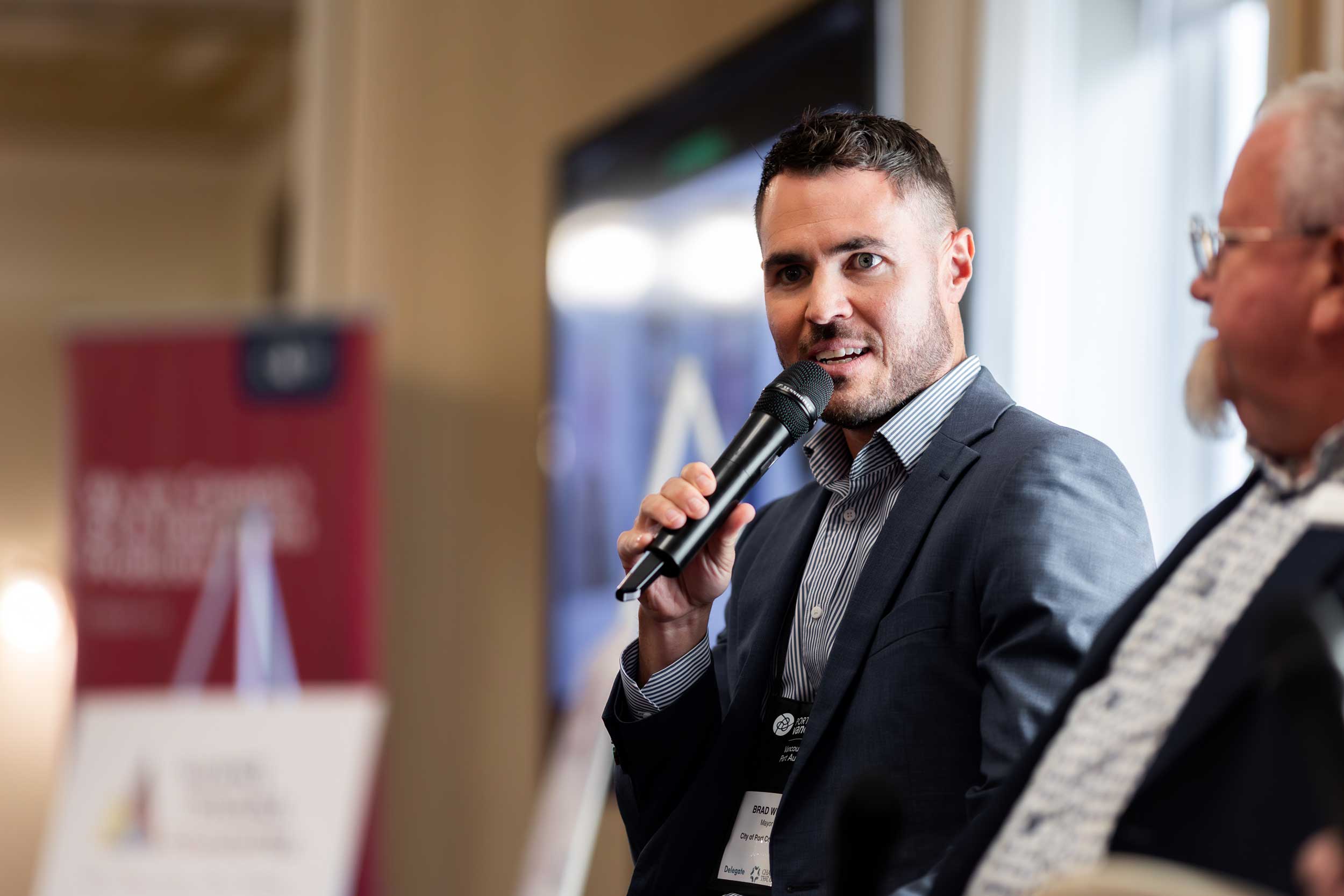
After being elected mayor of Port Coquitlam in 2018 and attending his first Union of BC Municipalities meeting as mayor, Brad West was dismayed by the attitude so many of his municipal colleagues expressed towards B.C.’s resource sector.
“I remember there were all sorts of motions from all these different cities, and it was basically they wanted to ban everything,” said the 40-year-old mayor and father of two boy. “And I thought to myself, Jesus, these people – they’re not living in the real world.”
West had served as a city councillor for 10 years before he was elected mayor in 2018. In addition to that job, he is chairman of Metro Vancouver’s Mayors’ Council.
Despite being a big city politician, West has emerged as an unexpected champion of rural B.C., its resource industries and blue collar workers. He is one of only two urban mayors in B.C. belonging to the Alliance of Resource Communities, which is made up of mostly rural leaders advocating for rural B.C.
An urban mayor with rural roots
West is dismayed by the attitudes of B.C.’s urban elites, who don’t seem to understand that B.C. – despite its hi-tech and film and TV sectors – is still a resource economy. All those “dirty jobs” that the political elites would like to see phased out through a “just transition” – miner, logger, frac hand – pay the province’s bills.
“There are people in all sorts of positions of power and influence that, I think, don’t understand how the economy works, and who, I think, are completely detached from reality,” West said in a recent interview.
“There’s certainly a cohort of people in this province who won’t be satisfied until every mine is shut down, every sawmill is closed. And I suppose we’re all going to work in coffee shops and whale watching.”
From steel towns to city hall
West’s working class upbringing has given him a grounding in the resource economy that many of his urban peers seem to lack, including a respect for blue collar work.
West was born and raised in Port Coquitlam. His father died when he was 10, and his mother, who worked for London Drugs, ended up taking on a second job to support her two children.
West recalls she once clocked 43 days straight of working without a day off. She later got a union job that allowed her to work a single job for a decent wage.
“So that kind of background and upbringing has always kind of imprinted on me such a strong belief in the dignity of work,” West said.
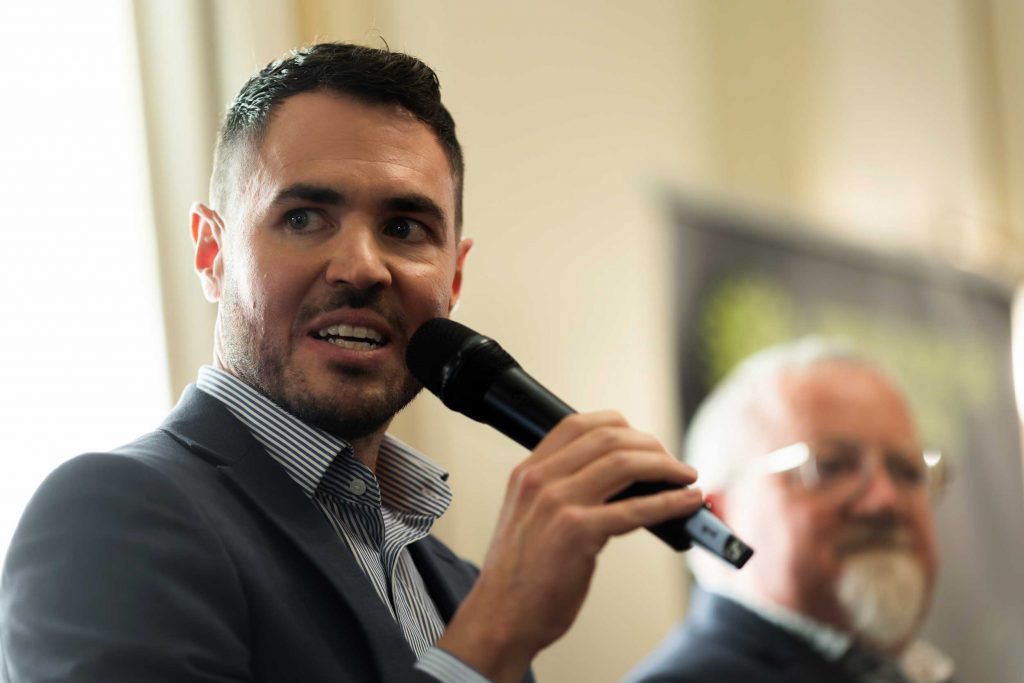
West studied communications and media studies at the University of Victoria, got interested in politics and ended up working for the United Steelworkers union in communications – a job that took him into the mill towns of rural B.C.
“That experience had me visit just about every corner of the province,” West said. “So whether that’s mining in the Elk Valley, Highland Valley copper mine, the sawmills in the north or on the island, it brought me into those resource communities.
“I saw my own childhood and the sacrifices that my mom made reflected in so many of those people in those places. You know, just a very quiet resolve to go into a mine or into a sawmill or into a factory, put their head down, work their ass off, and be able to provide a better life for themselves and their family.”
Taking a stand for resource workers
Left-leaning political parties like the NDP in Canada, Democrats in the U.S. and Labour in the UK were long considered the parties of the working class, but in recent years appear to have abandoned that base to embrace environmentalism and identity policies.
“I think, really, inherent in this is an attitude of elitism, and looking down upon working class people and blue collar people,” West said. “The NDP doesn’t even know how to talk to working people, let alone represent them now.
“I think they’re no longer interested in paycheques – they’re interested in pronouns.”
This attitude was on full display in 2021 when members of the Metro Vancouver Regional District put forward a proposal that Metro Vancouver become a signatory to a fossil fuel-free treaty that called for the end of the exploration and production of coal, oil and gas in B.C. and the “just transition” of workers impacted by the phase-out.
West put forward a forceful argument against it, pointing out that these industries support tens of thousands of jobs in B.C.
“It’s really easy to say that there should be a just transition, and we’re going to move workers into different industries when you’re not the one losing your job,” West said at the time.
Ultimately, the mayors rejected the proposed treaty.
Calling out economic elitism
West said there is an unsettling lack of understanding of basic economics among many political leaders, especially urban politicians, who don’t seem to understand how the economy works or where their tax revenue comes from.
He said B.C.’s economic growth has become too dependent on real estate, which is not a sustainable economic model. That’s why he has become such a passionate champion for rural B.C. and resource industries.
“I have been quite outspoken in my support for resource communities because, when a sawmill closes outside of the Lower Mainland, we’re impacted too,” West said. “A lot of business and employment in the Lower Mainland is dependent upon resource activity throughout the province.”
Nelson Bennett’s column appears weekly at Resource Works News. Contact him at nelson@resourceworks.com.