Ian MacGregor has spent a lifetime taking things apart to understand how they work, then putting bigger things together.
In a wide-ranging Power Struggle conversation with host Stewart Muir, the North West Refining chairman leads viewers through his underground Canadian Museum of Making, and back out to Alberta’s industrial frontier, where he argues that engineering discipline and clear rules, not slogans, will decide whether Canada actually decarbonises at scale.
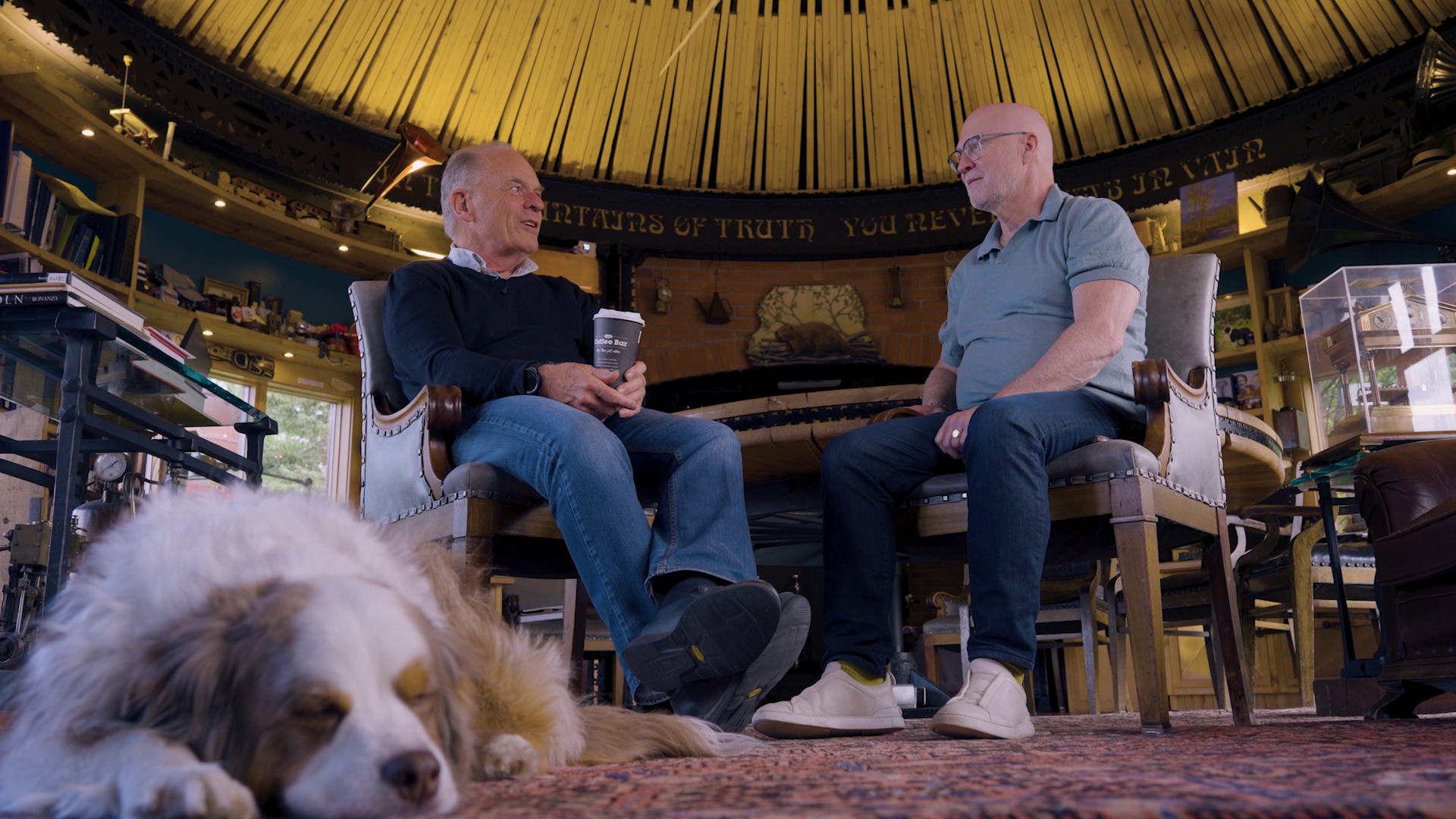
MacGregor’s museum, tucked into the foothills near Cochrane, is less a vanity project than a working classroom. It houses steam-era engines, early electrical curiosities, and painstakingly restored tools, laid out to show the human leap from handcraft to industry. He began collecting in 2001, rescuing pieces that would have otherwise gone to scrap, including a storied Sowerby Bridge engine. Today, the collection is recognised for rare machinery and metallurgy, and for its hands-on approach to learning.
The conversation shifts from artefacts to Alberta’s present. As MacGregor tells it, Canada will only meet its climate ambitions if it builds, and sequences, real infrastructure.
“There’s no one solution to this stuff, there’s thousands or hundreds of thousands of small solutions,” he says. “So if you set the carbon price right … we’re not trying to mess with how you do it … you have to verify, scientifically verify, that you’ve made a difference.”
From his vantage point, the lesson of the last decade is that big projects succeed when business, investors, and communities can count on stable rules, bankable timelines, and pipes that actually connect.
MacGregor’s own career underlines the point. North West Redwater Partnership’s Sturgeon Refinery north of Edmonton was designed from day one with carbon capture in mind, anchoring the Alberta Carbon Trunk Line, a 240-kilometre pipeline sized to move up to 14.6 million tonnes of CO₂ a year as new projects connect. That system links the refinery and Nutrien’s Redwater facility to secure storage and enhanced oil recovery sites in central Alberta.
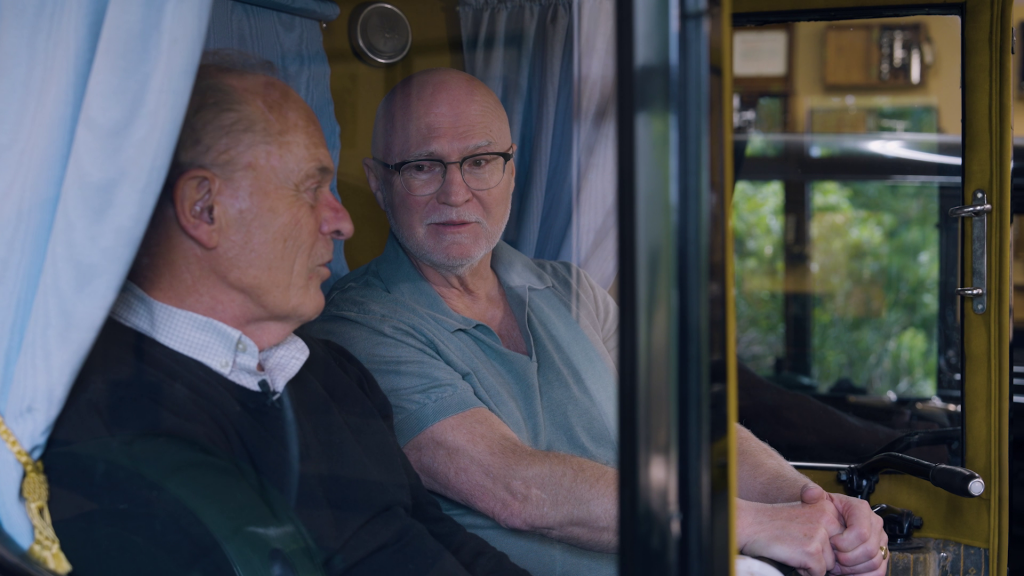
Ian MacGregor gives Power Struggle host Stewart Muir the grand tour.
Wolf Midstream reports the ACTL currently gathers about 1.6 million tonnes of CO₂ per year, with capacity to handle far more as emitters add capture. North West’s latest public reporting says the refinery’s carbon-capture efforts have removed over five million tonnes of CO₂ in the past four years, a proof-point that capture can scale when it is built into projects from the start.
In 2024 alone, Sturgeon captured more than 1.2 million tonnes, according to the partnership’s Mission Matters report.
MacGregor frames carbon management as industrial housekeeping, separate, purify, pipe, and store. It is the same disciplined thinking, he notes, that made Canada an energy powerhouse in the first place, but he is blunt about sequencing.
“These are colossal loads, if you care about, you know, climate change, surely to Christ, you’re not going to let somebody put 15 gigawatts of gas fired power on unless it’s carbon mitigated,” he says, pointing to Alberta as “where you got all the things you need,” water, gas, and sequestration.
On Power Struggle, he sketches siting logic for energy-hungry data centres and new industrial loads, reliable gas supply, abundant water, and proximate sequestration geology. Get those three right, and Canada can welcome new industries while cutting emissionS. Get them wrong, and plans will stall.
The museum thread returns as metaphor. In one gallery, a 19th-century engine sits beside a 1917 electric car, a reminder that technology paths are rarely straight lines.
“That’s what North America is about in the world, we’re ingenuity, we figure this stuff out,” MacGregor says.
Progress, he argues, comes from people who build, not from executive orders. That applies to reconciliation, too, he emphasises that major projects move best when Indigenous partners have ownership and a decisive role in governance, because that alignment speeds everything from permitting to workforce development.
“I think we have to involve Indigenous people as our true partners … start getting them to be the owner of these things,” he says. “They should be the owners … we have to do something.”
Alberta’s CCUS build-out is a provincial priority, with the ACTL providing open-access transportation to encourage new capture sources, while Ottawa has added capital support for CCUS research and deployment, including new funding through Natural Resources Canada.
To reduce investor risk, the federal Canada Growth Fund has begun signing carbon-credit offtake agreements that guarantee a floor price for captured CO₂, a move aimed at unlocking private investment in capture and storage projects around Edmonton and beyond.
MacGregor is not claiming perfection, refineries and pipelines draw scrutiny, and Alberta’s broader emissions landscape faces tough trade-offs, but he resists fatalism.
If Canada wants durable emissions cuts, he says, it must make space for industrial people to do industrial things, fix leaks, capture carbon, expand pipes, add generation, and standardise storage. Then, let museums like his teach the next generation how we got here, so they can get us further.
Check out Ian MacGregor’s full appearance on Power Struggle.