Common sense on the land base
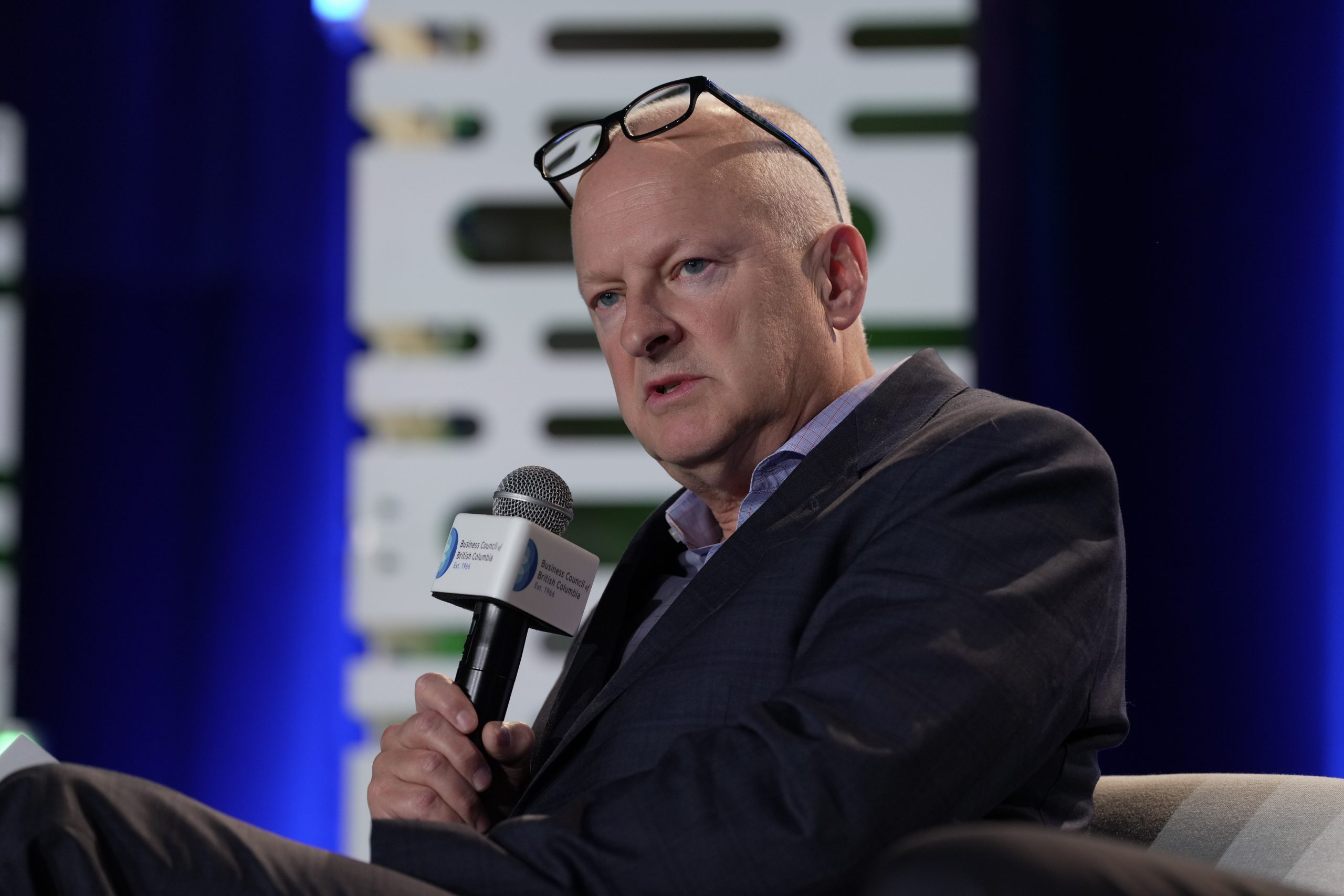
At the B.C. Business Summit 2025, James Gorman, Senior Vice-President of Corporate Services at West Fraser, offered a clear-eyed view of the challenges facing Canada’s forest sector and the policy choices that could restore its competitiveness. “We’ve been in a softwood lumber dispute with the United States since 2016,” he said. “As of August, most companies face 35 percent duty rates, and with the new Section 232 measure, that’s another 10 percent. So you’ve got a 45 percent headwind just to get into the U.S.”
Gorman noted that Canadian domestic demand is small relative to production capacity. Only about three percent of total Canadian mill capacity is needed to serve the home market. “We’re therefore highly dependent on U.S. housing demand,” he said. “Flat markets can’t take these high duty rates, and the result is significant headwinds for Canadian producers.”
Despite these pressures, Gorman said British Columbia still has one of the world’s most robust forest resource bases. But the system that allocates and prices fibre needs reform. “First Nations are receiving more decision-making power, but not meaningful revenue sharing,” he said. “It should be 50–50. That would unlock fibre, create stability, and bring First Nations fully into the forestry economy.”
Unlocking potential through fair trade
Gorman said a “no net loss” approach to the timber-harvesting land base is vital to investment confidence. He pointed to the Chief Forester’s determination of a sustainable annual cut at 45 million cubic metres as a benchmark that should be upheld.
He also called for renewed federal focus on a Softwood Lumber Agreement, noting that 75 to 85 percent of Canadian lumber production goes to the U.S. “The things that would make the biggest difference for us are meaningful revenue sharing with First Nations and renewed trade access to the U.S.,” he said. “Without those, B.C. feels hostile to capital.”
For Gorman, the productivity fix starts with a fair deal for Indigenous partners, a stable resource base, and market access that rewards effort, not bureaucracy. “If we get those things right,” he said, “forestry will once again be a driver of shared prosperity for British Columbia.”