Common sense returns to the national conversation
If the B.C. Business Summit 2025 made one thing clear, it was that the public is catching up to what business leaders and resource communities have known for years: responsible resource development is essential to Canada’s future prosperity.
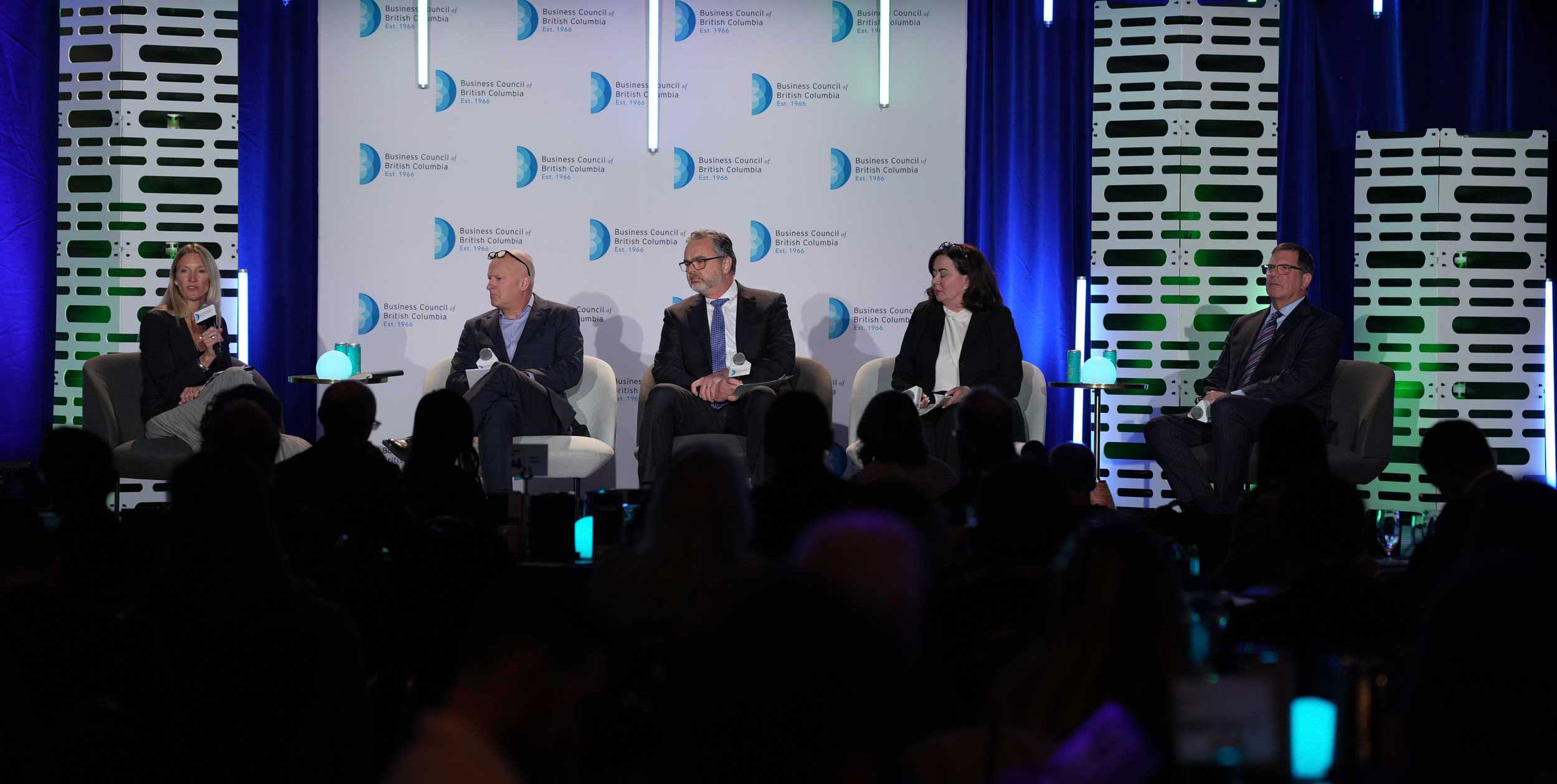
Moderator Shannon Young of Petronas Canada opened the natural resources session by pointing to recent polling showing that Canadians — and particularly British Columbians — are recognizing “the importance and value of natural resources and exports, both for the economy and for battling climate change globally.”
That finding echoed throughout the discussion. Across industries, participants described a notable shift in public sentiment: a growing understanding that economic resilience, energy security, and climate progress are not opposing forces but interdependent goals.
A broader view of the public interest
Mike Davies of Trans Mountain said the change is visible across regions. “There’s been a very significant rural–urban divide in Canada,” he said. “Those who work on the land base — in places like Quesnel or Grande Prairie — have long understood the importance of resource development. What’s new is that we’re starting to see a shift in urban attitudes.”
He called it a moment of opportunity. “There’s a greater consensus in the public about Canada needing to take advantage of its natural resource advantages,” Davies said. “The question is whether governments can seize it, and whether we’ll see it reflected in policy.”
Davies urged policymakers to think of the public interest as something broader than a checklist of environmental or procedural goals. “The public interest extends well beyond those important objectives,” he said. “It includes security, economic welfare, the rule of law, transparency, and democratic participation. Good policy that’s built in the public interest shouldn’t have to be jettisoned to get things done.”
Rising trust in resource development
James Gorman of West Fraser echoed that message, arguing that Canadians increasingly understand that natural resource industries are central to prosperity, reconciliation, and climate solutions. “There’s a greater consensus in the public about Canada needing to take advantage of its natural resource advantages,” he said. “The challenge now is to align policy with that reality.”
Both speakers emphasized that a more informed, engaged public could help reset the country’s approach to growth. “If we can get the public to think more broadly about how to get projects done and how to regulate and build policy in this country again,” Davies said, “that will really help.”
The summit’s recurring theme — “unlocking productivity to power prosperity” — was not just an economic argument. It was a cultural one: a call for Canada to rediscover its confidence, embrace common sense, and trust itself to build for the public good.