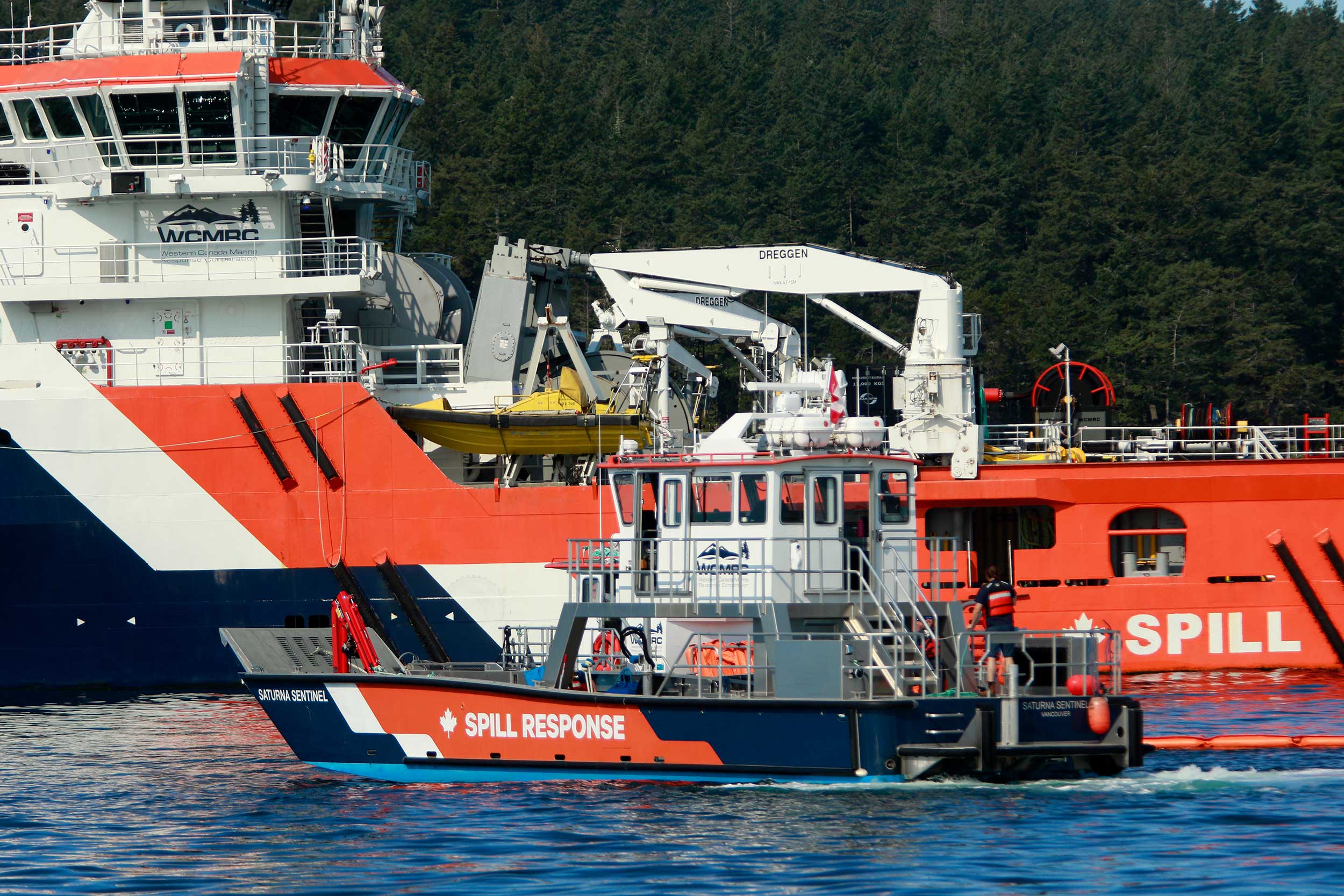
Every vessel that sails the Salish Sea does so under the quiet watch of the Western Canada Marine Response Corporation (WCMRC) — the country’s largest marine-oil-spill response organization.
Headquartered in British Columbia, WCMRC operates a fleet of more than 80 specialized vessels and maintains a network of response bases stretching from Beecher Bay and Nanaimo to Prince Rupert. Its mission is simple but weighty: to deliver safe, rapid, and effective spill response across 27,000 kilometres of coastline, protecting marine life, communities, and commerce.
The September 2025 exercises off Vancouver Island tested that readiness in real time. Crews from multiple bases staged complex on-water operations — deploying containment boom, coordinating vessel and drone surveillance, and rehearsing shoreline protection strategies alongside local Nations and coastal communities. These drills simulate the speed, precision, and teamwork required should a real incident occur, ensuring WCMRC’s responders can contain and recover oil within hours, not days. More than a regulatory requirement, these exercises represent a commitment to stewardship.
Born from a decade-long transformation that doubled response capacity and halved reaction times, WCMRC has evolved from a little-known technical outfit into a cornerstone of Canada’s environmental safety infrastructure.
Each exercise is both practice and promise — proof that the people charged with defending this coast are ready when the call comes.