The minority Liberal government’s fall budget faces a decisive vote on Tuesday, with the outcome set to shape the fate of Canada’s fast-track agenda for ports, mines, energy and power lines. With the NDP open to abstentions and the Conservatives non-committal, the numbers remain fluid, but the policy stakes for major projects are clear.
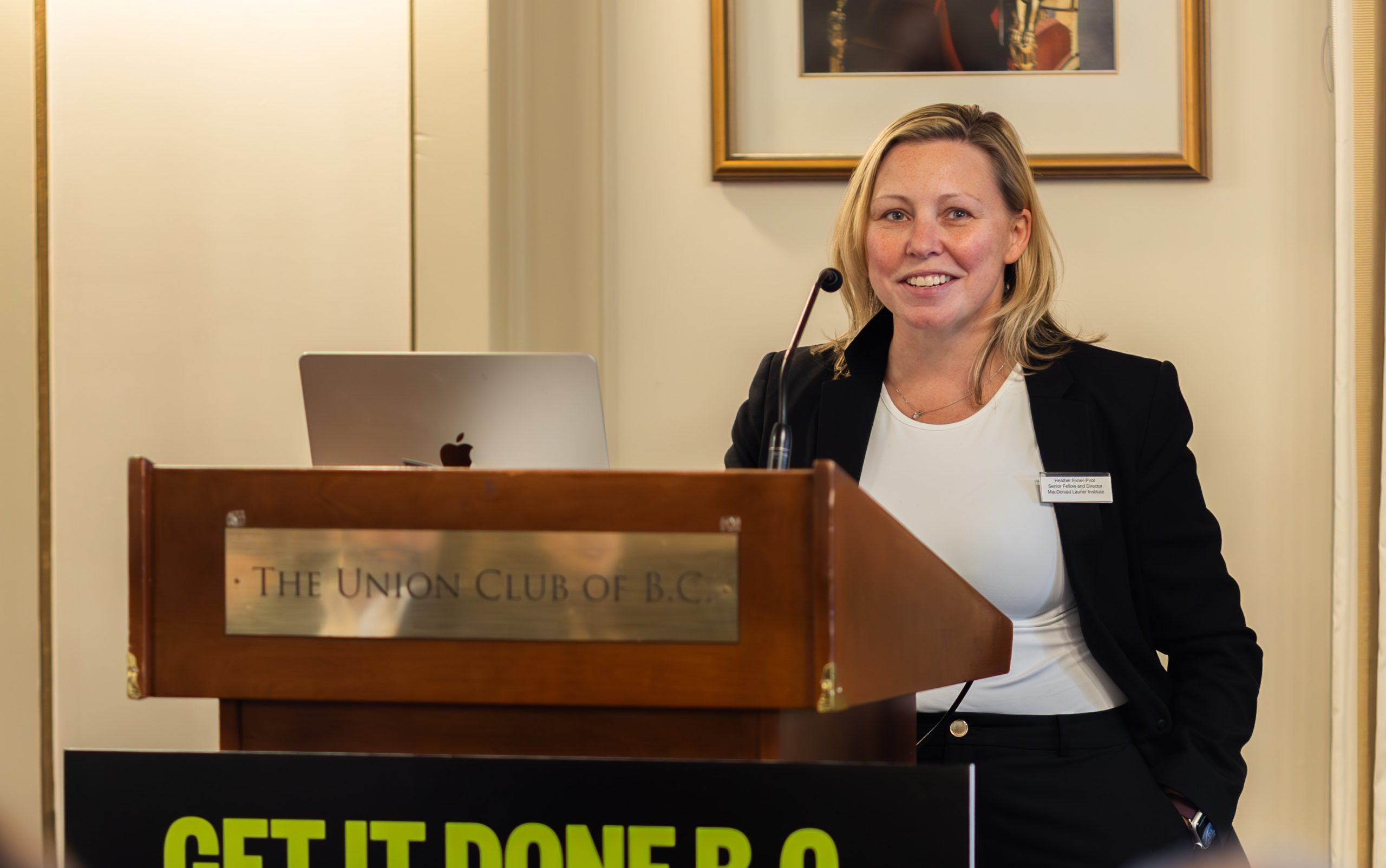
Heather Exner-Pirot, Director of Energy, Natural Resources and Environment at the Macdonald-Laurier Institute, says investors are watching whether Ottawa can align its budget with a credible build-out plan. In an interview with Resource Works, she summed up the mood bluntly: “Everyone’s just waiting for the budget.”
On whether any barriers to building had actually been removed yet, Exner-Pirot was clear: “There are 520 major projects in the major projects inventory, and what have they done to make those easier to develop? Nothing yet, right?”
At the centre of the build file are the Building Canada Act and the new Major Projects Office, which the government says will accelerate approvals for projects deemed in the national interest.
Exner-Pirot told The Canadian Press the decision to headquarter the office in Calgary sends a “huge signal,” adding, “This is obviously a very public acknowledgment, a formal acknowledgment, that most major projects in this country come from the [fossil] energy sector.”
She has also warned that process fixes will not deliver growth if other policies pull in the opposite direction.
“What good is a pipeline if the emissions cap means you can’t fill it? What good is a railway if the Impact Assessment Act means you can’t mine products to ship on it?”
Budget choices on electricity, oil and gas, and transport labour loom large. Exner-Pirot has argued that the Clean Electricity Regulations are constraining reliable generation just as data-centre demand surges, and that the EV sales mandate is outpacing consumer uptake. In a Financial Post op-ed, she wrote that four regulatory fixes could boost growth “without any new spending or legislation,” concluding, “All they require is political will.”
The budget’s governance signals will matter as much as line items. On critical minerals, Ottawa has allowed United States government stakes in Canadian projects even as it restricts other forms of state ownership. Exner-Pirot told The Globe and Mail that such arrangements blur lines, saying, “You can’t regulate a project that you have an economic interest in.” She has said that credibility with allies and capital markets depends on predictable, even-handed rules rather than ad hoc exceptions.
Politically, the government is pitching a split focus on capital investment and operational restraint. Public-sector unions are bracing for program cuts, while industry groups want clarity on timelines, permitting and Indigenous partnerships.
Exner-Pirot says the test is whether Ottawa makes concrete changes that move projects from press releases to shovels.
“This isn’t hard to figure out. It’s oil, it’s gold, it’s natural gas, it’s potash, it’s uranium. You can make a case for copper, for nickel, and for iron ore, but how much do we export? What deposits do we have?” Exner-Pirot told Resource Works.
On hydrocarbons specifically, she noted lingering uncertainty, saying it has taken “too long to not know what the government thinks about oil pipelines,” and called the investment climate “the million-dollar question.”
Indigenous leaders and environmental groups remain critical of the fast-track model, warning it risks sidelining free, prior and informed consent. Business groups have welcomed a single-window approach but caution that a two-track system could simply shift risk to projects left outside the “national interest” lane.
If the budget passes, attention will turn to whether Ottawa follows through with specific approvals, electricity deals, and port and rail investments. If it fails, an election would inject fresh uncertainty into boardrooms weighing Canadian projects against rival jurisdictions.
Resource Works News