

These three charts tell a big story. The green bars show demand for natural gas; the red lines show supply.
- Chart 1: North America currently has abundant gas due to the rapid expansion of shale in both Canada and the United States.
- Chart 2: In Asia, the rapid pace of economic growth requires a lot of energy of all types. Natural gas is in short supply because it is a sought-after lower-carbon solution that competes favourably with coal on cost, reliability and environmental performance.
- Chart 3: Europe is a somewhat different story. Demand is relatively flat but the problem is long-term supply. The gap will open up more slowly than Asia’s pressing shortage, but will still have to be met.
LNG Canada, the export terminal underway in Kitimat, BC is the first major project for Canada. FortisBC already has initial export capacity underway at its Tilbury site in Metro Vancouver. Other projects are being proposed. If everything goes well, before long Canada could be a significant part of the energy picture for Asia and perhaps even Europe as well.
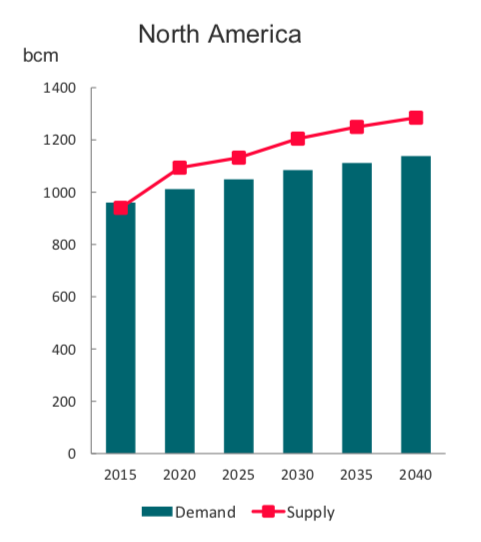
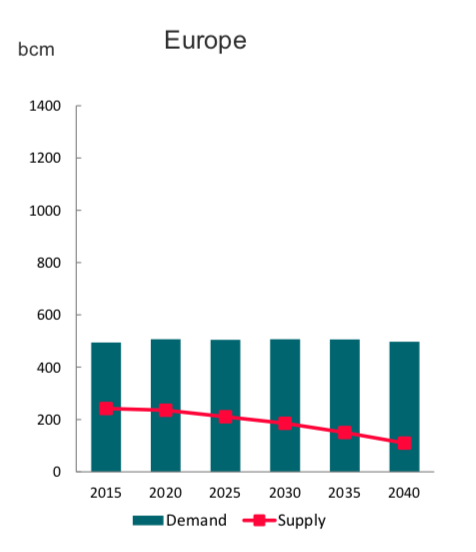
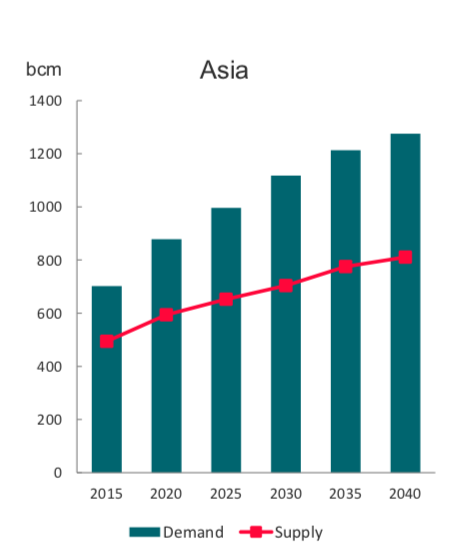
The charts are from Equinor, Norway’s state-owned oil and gas company. It’s betting big-time on natural gas and LNG, citing the fact that gas can reduce CO2 emissions by more than 50 per cent when replacing coal. Equinor also believes that gas can be decarbonized as hydrogen so that it will continue to be part of the energy mix over the long term. And it is also valuable as needed reliable back-up for added wind and solar.
Source: Equinor investor presentation