Gloom from some in the natural-resource sector, who fear it will become even more difficult, and perhaps impossible, to get big projects approved.
They ask: What exactly constitutes “free, prior and informed consent” (a phrase used eight times in the document)?
And they echo questions often asked about “social licence”: How do you get free, prior and informed consent? And how do you know when you’ve got it?
On the other side, some leave-it-in-the-ground campaigners seize with glee on such clauses as “Indigenous peoples have the right to the conservation and protection of the environment and the productive capacity of their lands or territories and resources.” Doesn’t that mean no development of anything, anywhere, without 100% Aboriginal consent?
To both groups, hang on a minute.
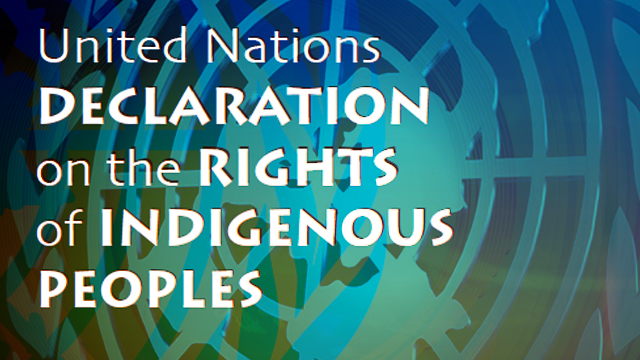
UNDRIP specifies that it is not international law but “a standard of achievement to be pursued in a spirit of partnership and mutual respect.”
So Canada may be endorsing UNDRIP, but the wording of UNDRIP is not Canadian law.
What matters is what Ottawa may legislate as a result of endorsing UNDRIP, and we have seen no draft legislation yet.
Prime Minister Trudeau has been quoted as expressing interest in a proposal from Phil Fontaine, a former chief of the Assembly of First Nations. Fontaine has given to Ottawa a report on how the government of the Northwest Territories has been using a process of “collaborative consent” with First Nations.
As reporter Marie-Danielle Smith noted in The Financial Post: “The idea is that ‘free, prior and informed consent’ becomes essentially moot when First Nations are co-proposing and co-drafting laws in the first place.
“‘It is an approach that leads to reconciliation,’ Fontaine wrote in the report. He recommended the federal government establish a similar system.”
A commentary from the law firm of McCarthy Tétrault LLP notes that the Supreme Court of Canada “has consistently held that the Crown owes a duty to consult, and where appropriate, accommodate Aboriginal peoples when their rights may be affected by a Crown action or decision.”
Ottawa is well aware, though, as it drafts any post-UNDRIP legislation, that (to use McCarthy Tétrault’s wording) “Such duties do not impose a requirement on the Crown to reach agreement with Aboriginal groups, nor do they grant a veto to Aboriginal groups.”
So, all in all, it’s far too early to be interpreting UNDRIP ourselves, either gleefully or gloomily.