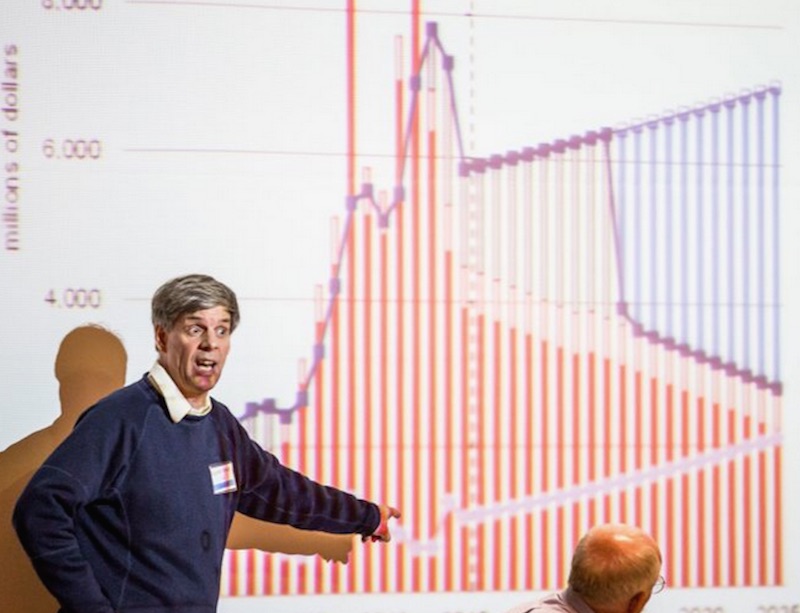
Alaskan economist Gunnar Knapp (pictured) presented a sobering look at state finances in a June 5, 2015 presentation entitled “Building a Sustainable Future: Conversation with Alaskans” at the University of Alaska Fairbanks. The presentation makes it clear why Alaskans are giving serious thought to LNG exports as a way to fill the gap left by crashing oil revenues.
For British Columbians, the experience of our neighbours has to be a sobering one. Although the province is running budget surpluses, over the long term it will be necessary to ensure there is a diversified economy in place. The current evidence suggests that we are able to sustain balanced budgets. Yet, as one columnist has pointed out, the province’s auditor general suggests that we still need to keep an eye on long-term infrastructure funding – an area that is heavily reliant on resource revenues.
Lesson for British Columbia: let’s not take our resource sector for granted. Compared to Alaska – and we don’t even need to mention Alberta – the province’s forestry, mining, energy, agriculture, aquaculture and commodity infrastructure sectors are in relatively good shape.
10 lessons from Alaska
Based on slides drawn from Professor Knapp’s June 5 presentation.
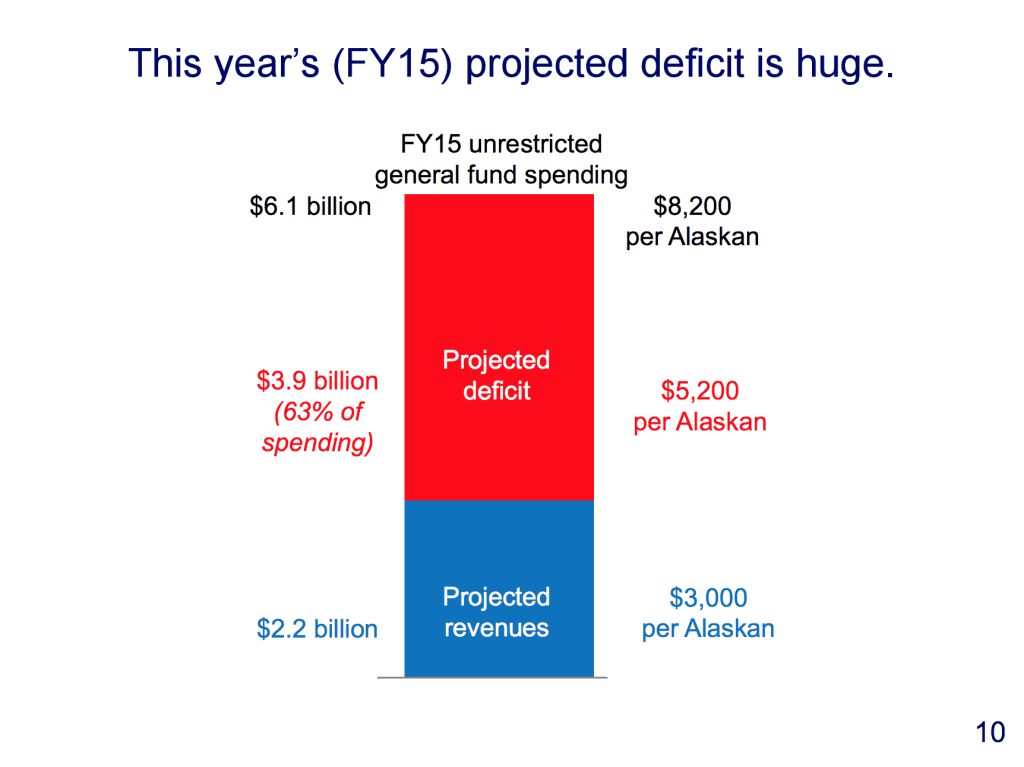
1. If your population keeps growing and your revenues keep shrinking, you are in big trouble.
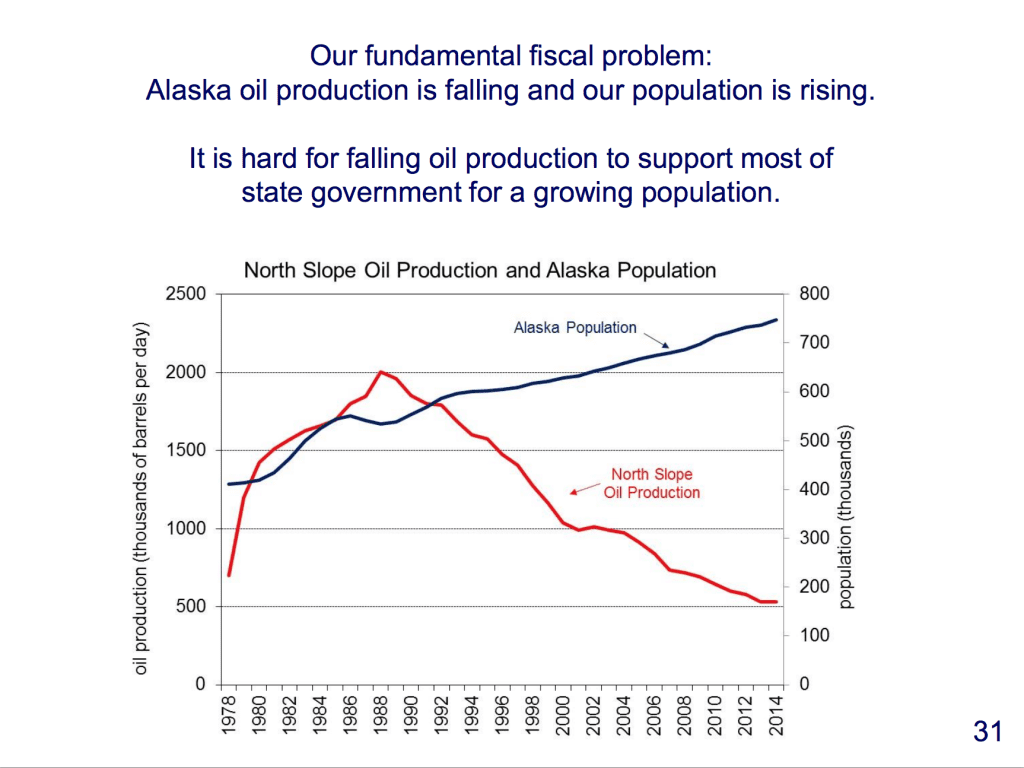
2. The state’s spending is completely untethered from its current earnings.
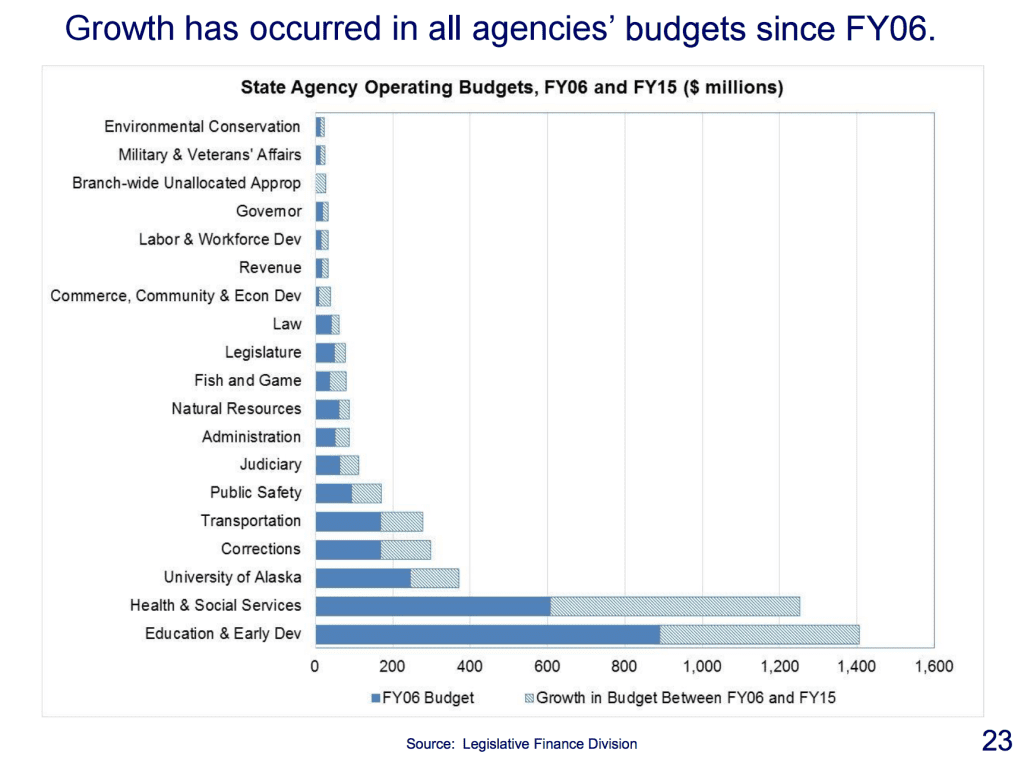
3. Health and education have monstrous appetites for cash.3. Health and education have monstrous appetites for cash.
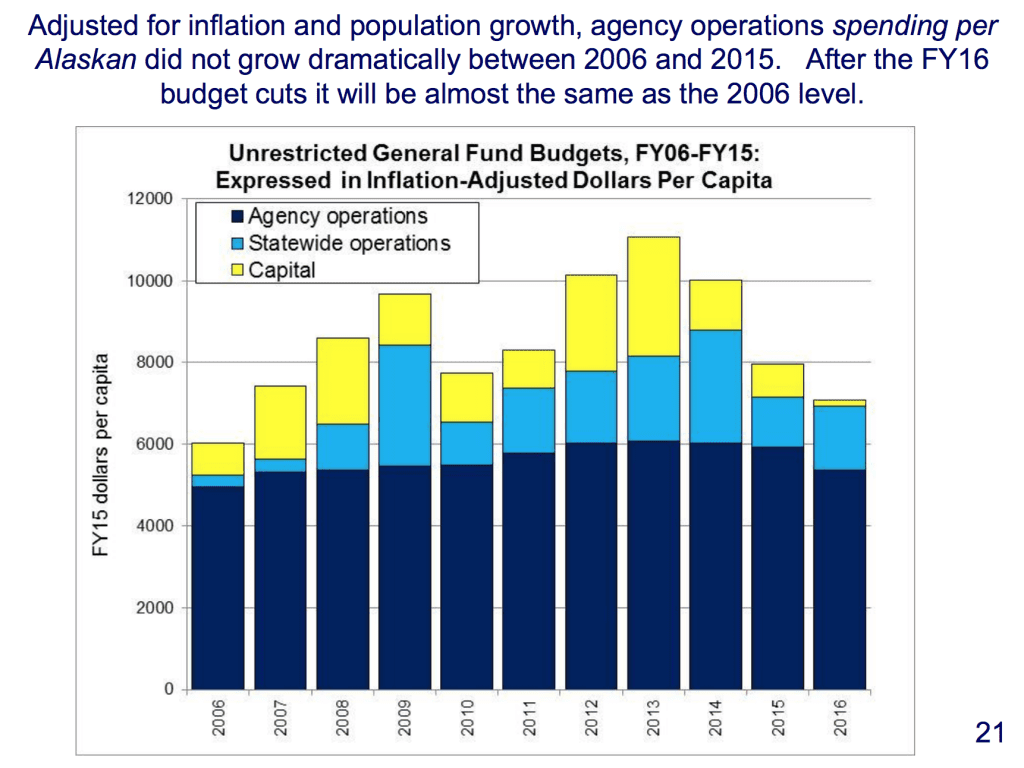
4. Even with a prudent approach to spending growth, a state like Alaska can get itself into big trouble.
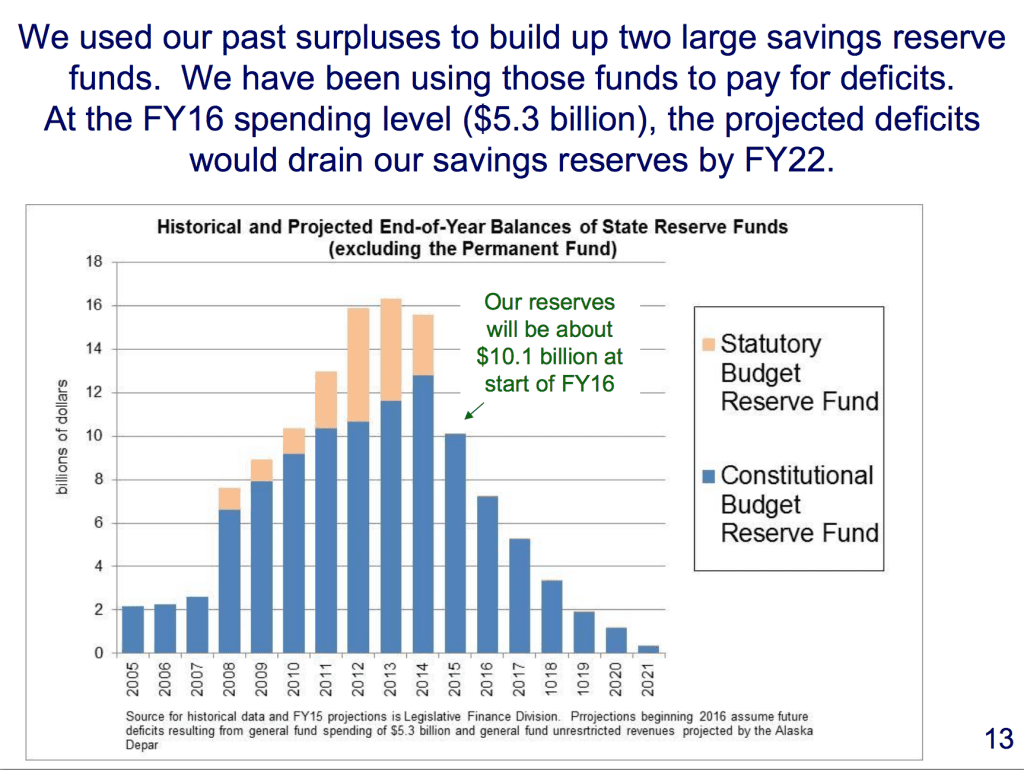
5. Alaska will drain its hard-won savings within five years if it does not do something dramatic.
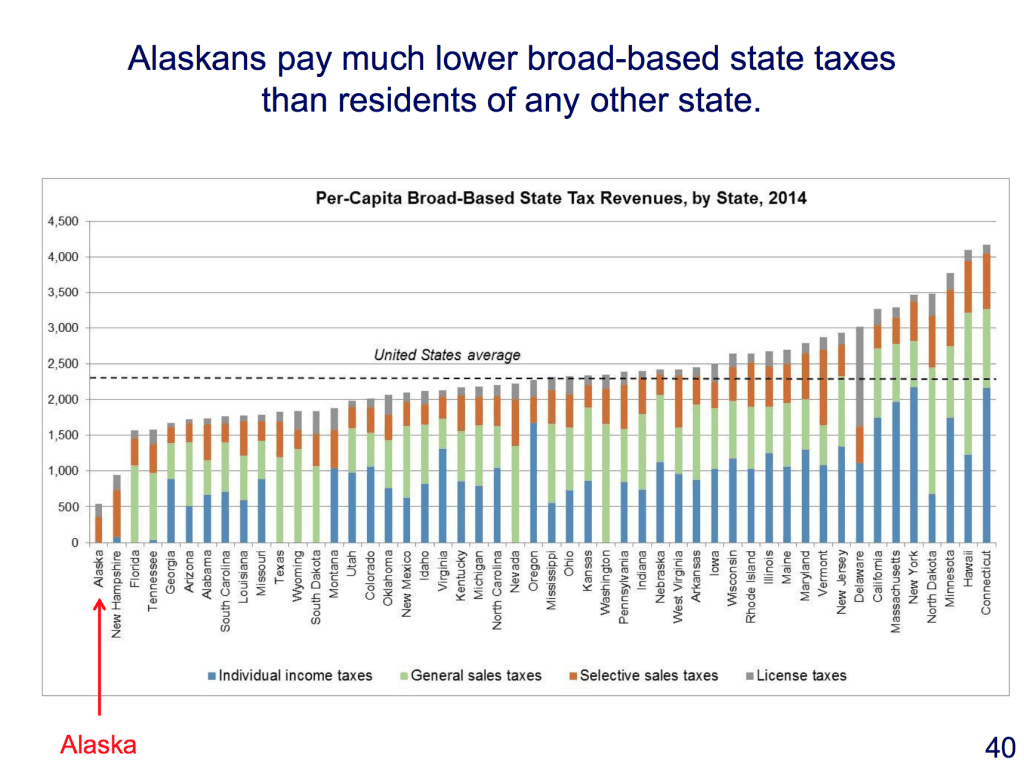
6. Having a locked-in resource royalty fund is a great way to go.
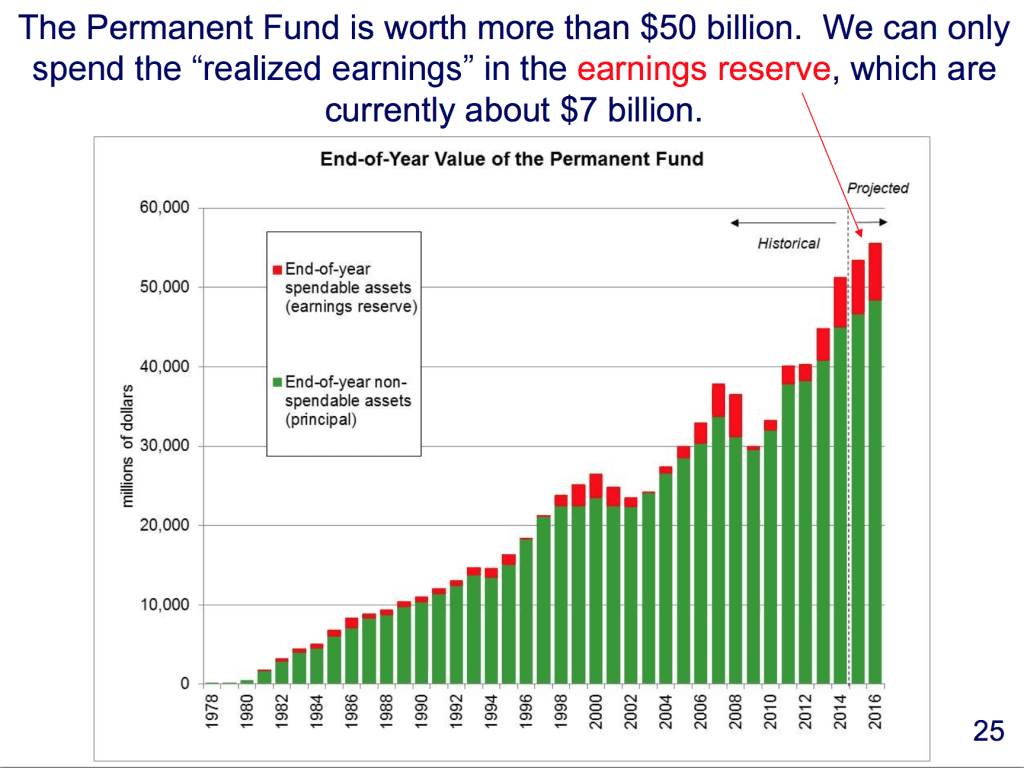
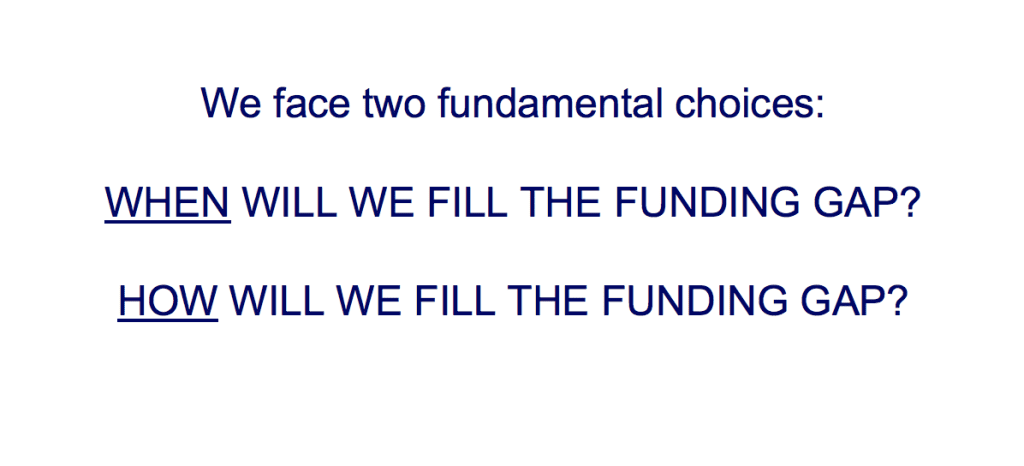
7. When it comes down to it, the choices are stark ones.
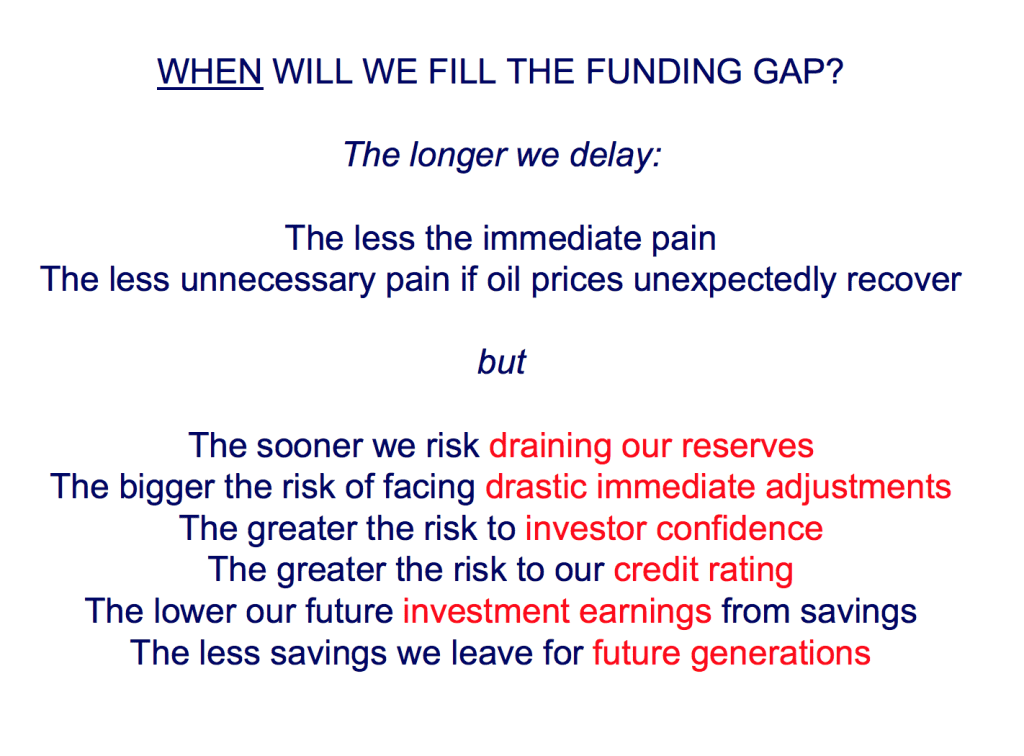
8. Hoping for a quick recovery in energy prices is risky.
9. There are just three options to fill the funding gap.
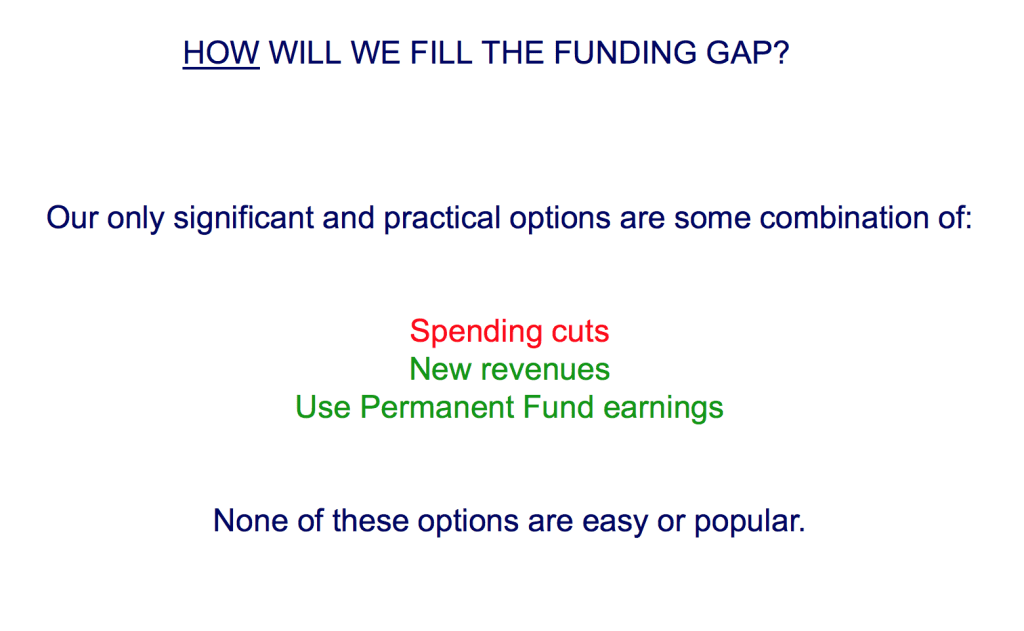
10. With the lowest taxes of any American state, passing on some of the pain directly to taxpayers is going to be tough to resist.