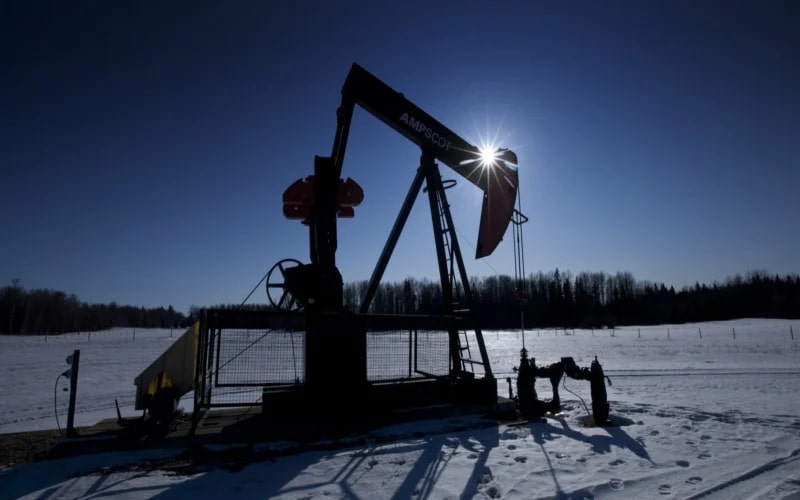
10. We have a lot of gas to sell
Two of BC’s biggest natural gas reserves (the Montney reserve and the Horn River Basin) were recently assessed as having 11.3 trillion cubic metres of marketable natural gas. For perspective, Canada’s total natural gas demand in 2012 was 88 billion cubic metres, suggesting that these two reserves could supply the whole country with LNG for more than 100 years. In short, BC has extra gas to sell.
9. BC’s well-established energy sector
BC has a sophisticated private energy sector with a long history of extracting natural gas. This chart shows BC natural gas production between 1966 and 2003. (Source material here)
8. Our strong institutions
Canada is recognized for having stable and responsible systems for resource development. A global review of resource economies by the consulting firm McKinsey & Co. in 2013 ranked Canada highest on a range of measures.
7. Asia is willing to pay more for gas than North America
Thanks largely to a revolution in mining gas from shale formations, the price for natural gas in North America has dropped dramatically. Meanwhile, prices in Asia have climbed steadily. (Data from BP’s Review of World Energy)
6. We can easily ship to Asia
BC’s position on Canada’s West coast puts us in an ideal position to bring North America’s abundant natural-gas supplies to Asian customers.
5. The demand for natural gas is set to grow
The International Energy Agency predicts the use of natural gas in Asia will almost triple between 2012 and 2040. Almost two-thirds of this growth is expected from China.
4. Sellers will enjoy long-term contracts – but only those who survive
An analysis of the LNG sector produced recently by Ernst & Young notes that LNG sellers will insist on long-term sales contracts at good prices to make up for the enormous cost of building, supplying and maintaining LNG terminals. But who will win these nice contracts? Certainly not everyone. That’s because there are currently more LNG projects being proposed around the world now than will actually be needed. The Ernst & Young report finds that if all of them were built, there would be an oversupply of LNG. So the race is on to see which LNG projects make it big, and which fall off the map.
3. We can put some of those profits to public use
If private companies can profit from selling cheap BC gas into high-priced markets in Asia, then the people of BC deserve a cut. After all, it’s our gas to begin with. One estimate produced by Ernst & Young for the BC government in 2013 shows that the LNG industry is expected to contribute between $80 billion and $160 billion to government revenue over 25 years. To illustrate what those numbers mean, if we averaged those revenues out, it would come out to about $5 billion per year, which is roughly what BC spends funding post-secondary education.
2. The private sector is investing
The fact that private-sector investors are mobilizing behind BC’s LNG projects is an important sign that the economic fundamentals are sound. As summarized recently by the Business Council of BC, there are 13 LNG proponents currently on the books that have spent an estimated $2 billion so far on their projects. It will take far more than that to actually build the LNG terminals and their support systems, and we’re still waiting to see those large investments. And as with most large, long-term resource projects, there’s a lot of uncertainty about what will happen. And that leads us to the number-one point:
1. Industry is taking the risks
It would be one thing if the BC government were spending billions of dollars out of current budgets to subsidize the LNG sector, or spending huge amounts today assuming that the LNG sector will provide revenues tomorrow. The prospects for a BC LNG industry are still too uncertain to make those kinds of rash decisions. But that’s not what’s happening.
Certainly the BC government is spending something to facilitate the development of the sector, hosting conferences and putting on trade missions and the like. But it falls on industry to make the truly big, risky investments – which is just as it should be. As the Business Council of BC points out: “Ultimately, it will be private capital, not taxpayer funds that are exposed to the investment risks associated with major LNG projects.”
There’s no denying the fundamental uncertainties surrounding this idea of selling BC LNG to Asia. But so long as industry proponents are assuming the risks they’re supposed to, that’s no compelling economic reasons for BC not to pursue the opportunity.
Peter Severinson is the research director for Resource Works.