
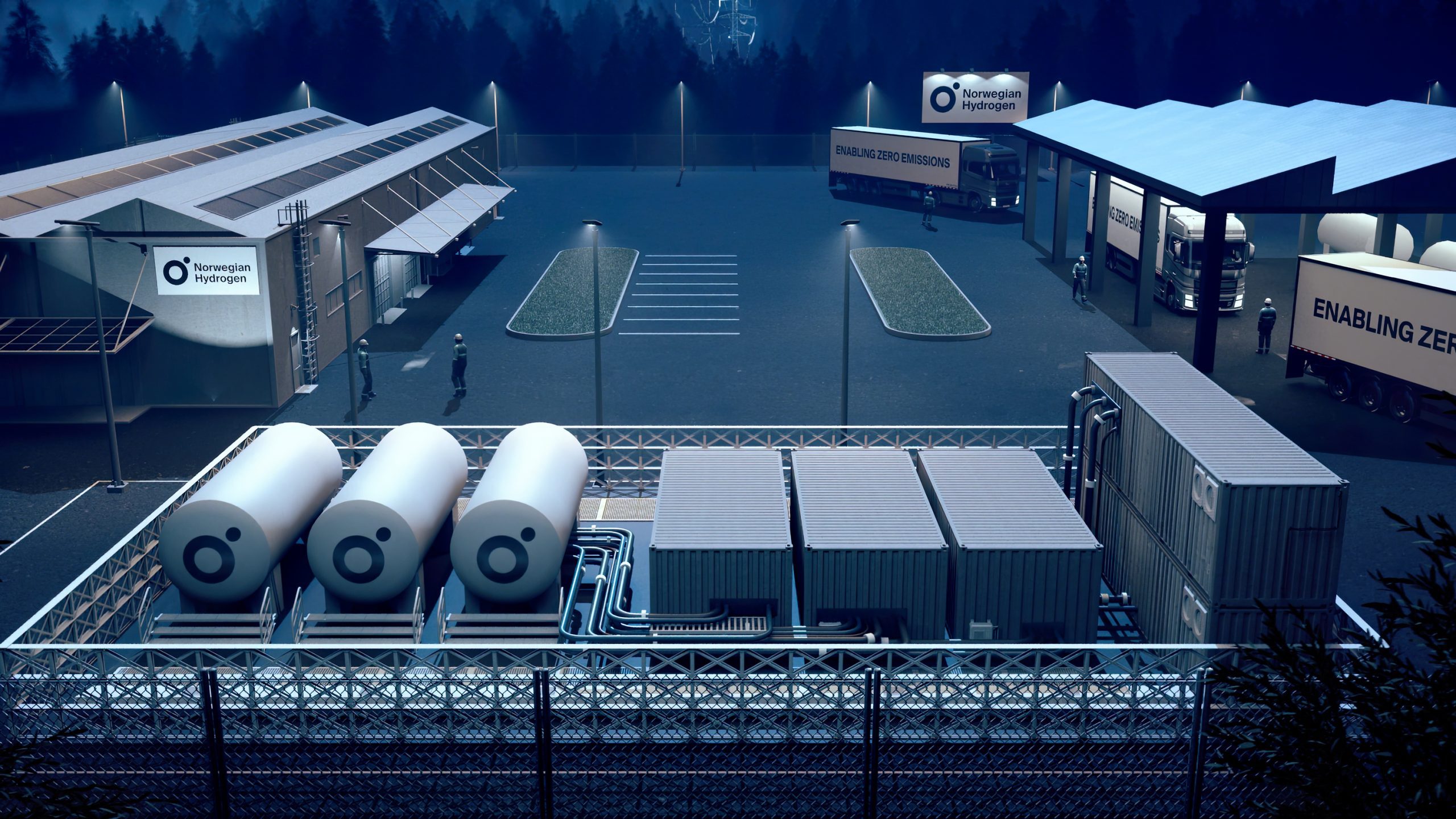
Norwegian Hydrogen (NH) is among the many standout exhibitors at the Global Energy Show in Calgary.
They have made the trip over the Atlantic Ocean and most of the North American continent to show off Europe’s cutting-edge approach to green hydrogen and renewable energy innovations.
Based in Alesund, Norway, NH also has offices in Oslo, Copenhagen, Stockholm, Helsinki, and Hirtshals, reflecting its strong and growing presence across the Nordic world. NH has a simple goal: build up a large network of green hydrogen production and distribution hubs to help industries of all kinds hit their zero-emission goals.
Hydrogen energy is created by extracting hydrogen gas, usually from water or natural gas, for use as a fuel. Green hydrogen specifically is produced through electrolysis, a process where electricity from renewable sources like wind or solar splits water into hydrogen and oxygen.
Once used, green hydrogen only emits water vapour, making it a revolutionary clean energy source that could be tailor-made for electrifying industries like marine shipping, heavy-duty ground transportation, and industrial manufacturing.
NH’s main project is the Hellesylt Hydrogen Hub. Located near Norway’s famous Geirangerfjord, the hub has been operating since 2024 and is expected to produce about 500 tonnes of green hydrogen annually with local hydropower.
The hub is set apart from its competitors due to how it not only produces hydrogen, but utilizes its side-effects and byproducts for the benefit of the area where it is located, and the communities that reside there. The excess heat generated during electrolysis is used for heating in the local region, and the oxygen byproduct aids the region’s aquaculture.
There are lessons for Canadian jurisdictions here about how the energy industry can help contribute to local economies while offering modern innovations.
Provinces like British Columbia and Alberta have begun dipping their toes into the hydrogen scene, albeit on very divergent paths regarding the type of hydrogen. Alberta, Canada’s undisputed energy powerhouse, has fully embraced blue hydrogen, which differs from its green counterpart.
Blue hydrogen is derived from the combination of natural gas and the carbon capture, utilization, and storage (CCUS) process, which plays to Alberta’s strength as a holder of vast natural gas reserves.
Both the Calgary Region Hydrogen Hub (CRH₂) and Alberta’s Hydrogen Roadmap showcase how the province is committed to constructing a diverse ecosystem for hydrogen innovation, such as the province’s recent $3 million investment into studying how to turn forestry biomass into hydrogen fuel.
In BC, green hydrogen is the primary focus, and once the ecosystem for it gets off the ground, will make use of the province’s large, albeit dwindling, hydropower. The Clean Energy and Major Projects Office (CEMPO) includes the province’s former Hydrogen Office, which works on getting projects approved, encourages investors, and facilitates Indigenous involvement.
There is much that provinces should learn from NH. Both Alberta’s CRH₂ hub and BC’s regional hydrogen developments could take cues from Hellesylt’s integrated, localized approach as a model going forward, as a way to blend renewable production with local distribution and usage.
The NH model showcases how the byproducts of hydrogen production can be used for home heating and providing oxygen for industry and agriculture. Canadian hydrogen strategies have not gone that far yet, but they should, as such hydrogen products could be economically beneficial for local communities.
NH has built partnerships with businesses, governments, and other stakeholders, which Canadian provinces can also learn from. The company’s method for creating multi-sector hydrogen ecosystems that play by clear rules and prioritize strong relationships between the public and private sectors, and communities, is an excellent guide to speed up the development of major projects.
While hydrogen has only enjoyed a modest presence at this year’s Global Energy Show, expect that NH will have plenty of company in the years to come, and both BC and Alberta should make sure they are part of that.