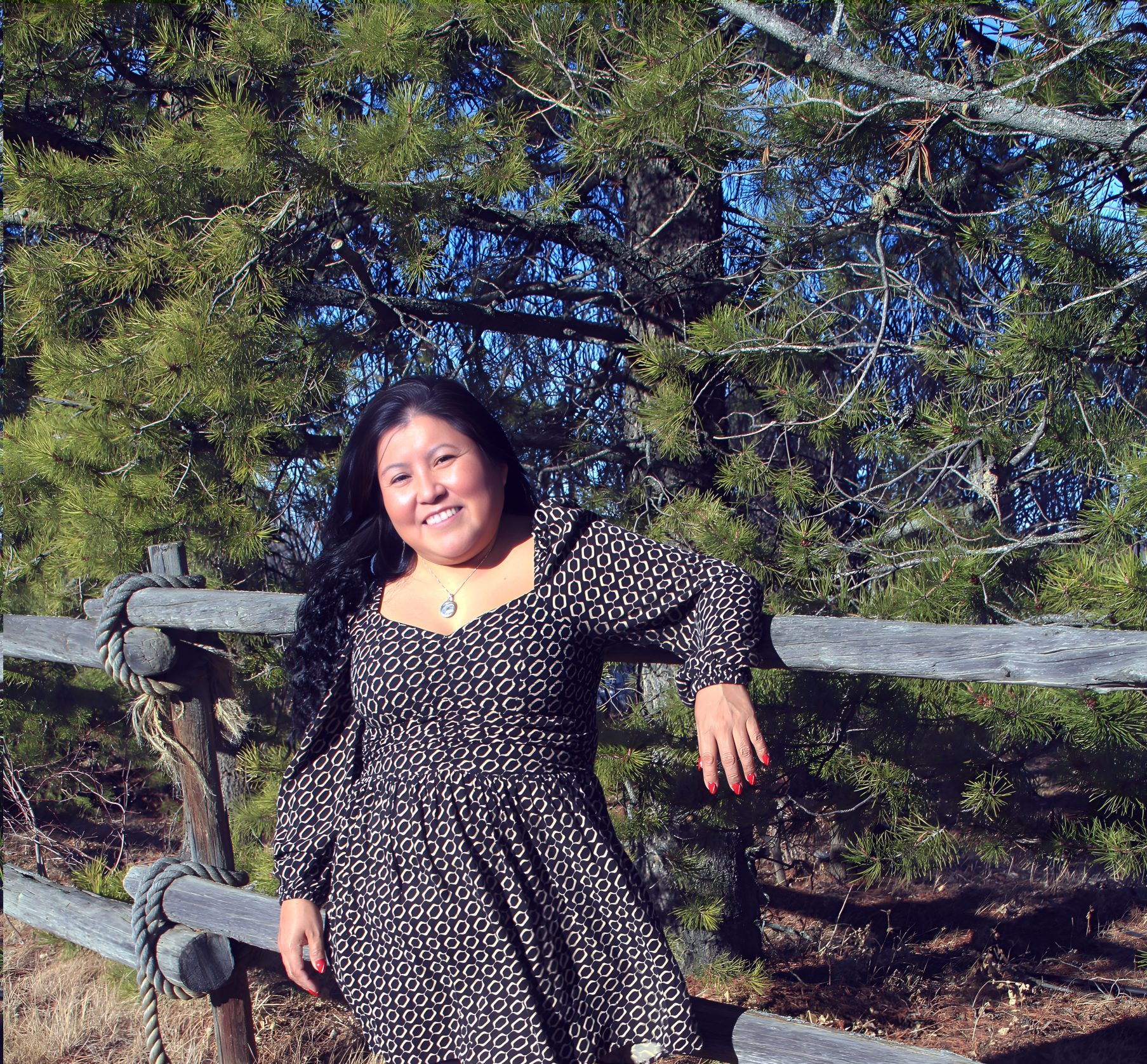
Chief Valerie Askoty’s journey is a testament to the strength and resilience of the Prophet River
First Nation and its people. Born and raised in northeast BC, Chief Askoty’s early years were
marked by hardship and perseverance. Growing up in in a rural area near Fort St. John, she
spent her childhood in a modest cabin without modern conveniences like water or power. These
humble beginnings laid the foundation for a deep connection to the land—a connection that has
guided her through a life full of challenges and triumphs.
Her childhood was not without its struggles. At the age of 13, Chief Askoty moved to the to the
Prophet River First Nation reserve, where she experienced the shifts and separations that are
all too familiar in the histories of many First Nations communities. Because her local school only
went to grade 7, if she wanted an education she had to endure travelling great distances from
home to be a boarder with other families, enduring life as an unwanted presence in other
people’s homes. Despite these early challenges, Chief Askoty’s determination shone through.
She was the first in her family to graduate from high school—a milestone that marked the
beginning of her lifelong commitment to education and self-improvement. She has spent her
lifetime of always pursuing opportunities, first for her education, then for work, and now as Chief
she is seeking opportunities for her Nation.
Her first job, working in a restaurant on the edge of the Prophet River nation, introduced her to
the world of oil and gas—a sector that was the lifeblood of the region. Because the restaurant
also provided catering to a local industry work camp, the restaurant was able to operate
successfully. In a community where opportunities were scarce, the oil and gas industry provided
the essential labor jobs that many members relied on – especially the many who were not able
to achieve an education. For Chief Askoty, every job she had, from cleaning to waiting tables,
was a stepping stone that built her understanding of the intricate relationship between the
community and the industry.
Over the years, as the Prophet River First Nation faced the devastating legacy of residential
schools, loss of cultural identity, and the subsequent social issues of alcoholism and addiction,
the community struggled to reclaim its voice. The oil and gas industry, once a distant and
impersonal force in the lives of the people, began to forge a more respectful and cooperative
relationship with the Nation. No longer were decisions made in isolation—a turning point came
when a project proposal that once bypassed proper consultation was challenged by Chief
Askoty herself. That moment sparked a new era of dialogue and partnership.
Under her leadership, the Nation has developed programs that foster education, infrastructure,
and community engagement. Industry partnerships have yielded tangible benefits: from
scholarships and job opportunities for youth to infrastructure improvements like recreational
facilities and even a Zamboni. These partnerships have not only brought economic opportunities
but have also helped protect the land from environmental risks such as wildfires—a modern
echo of traditional teachings that emphasize caring for the earth.
Today, Chief Askoty divides her time between Fort Nelson and the Prophet River reserve,
managing extensive responsibilities while always keeping the community’s welfare at the
forefront. Her personal sacrifices reflect the broader narrative of a community that has endured,
evolved, and now thrives.
For residents of southern BC, Chief Valerie Askoty’s story is a reminder that the challenges and
successes of Northeast BC are not distant tales, but integral parts of the province’s fabric. Her
leadership embodies the spirit of resilience and the potential for meaningful partnerships
between industry and First Nations—a relationship that, when built on mutual respect and
genuine dialogue, creates opportunities for all.
About the author:
Julie Rogers coordinated and conducted interviews across Northeast BC, distilling perspectives into clear, compelling stories that ground our report in lived experience. Julie Rogers, APR, is an award-winning communications strategist, speaker, and trainer, with 20 years’ experience in municipal government communications. Having lived and worked in communities across Northeast BC, she understands the people and projects that fuel Canada’s resource economy. As principal of Julie Rogers Consulting, she helps organizations craft plain-language communications strategies, design inclusive engagement plans and turn complex issues into stories that build trust.
This profile is part of the series commissioned for Resource Works’ Shaping the Peace report, a socioeconomic study of Northeast British Columbia.