A couple of weeks ago, I was feeling a little despondent about the chances that the present federal government would take seriously its constitutional role in facilitating nation-building infrastructure across provinces, particularly something as ambitious (and contentious) as an oil pipeline.
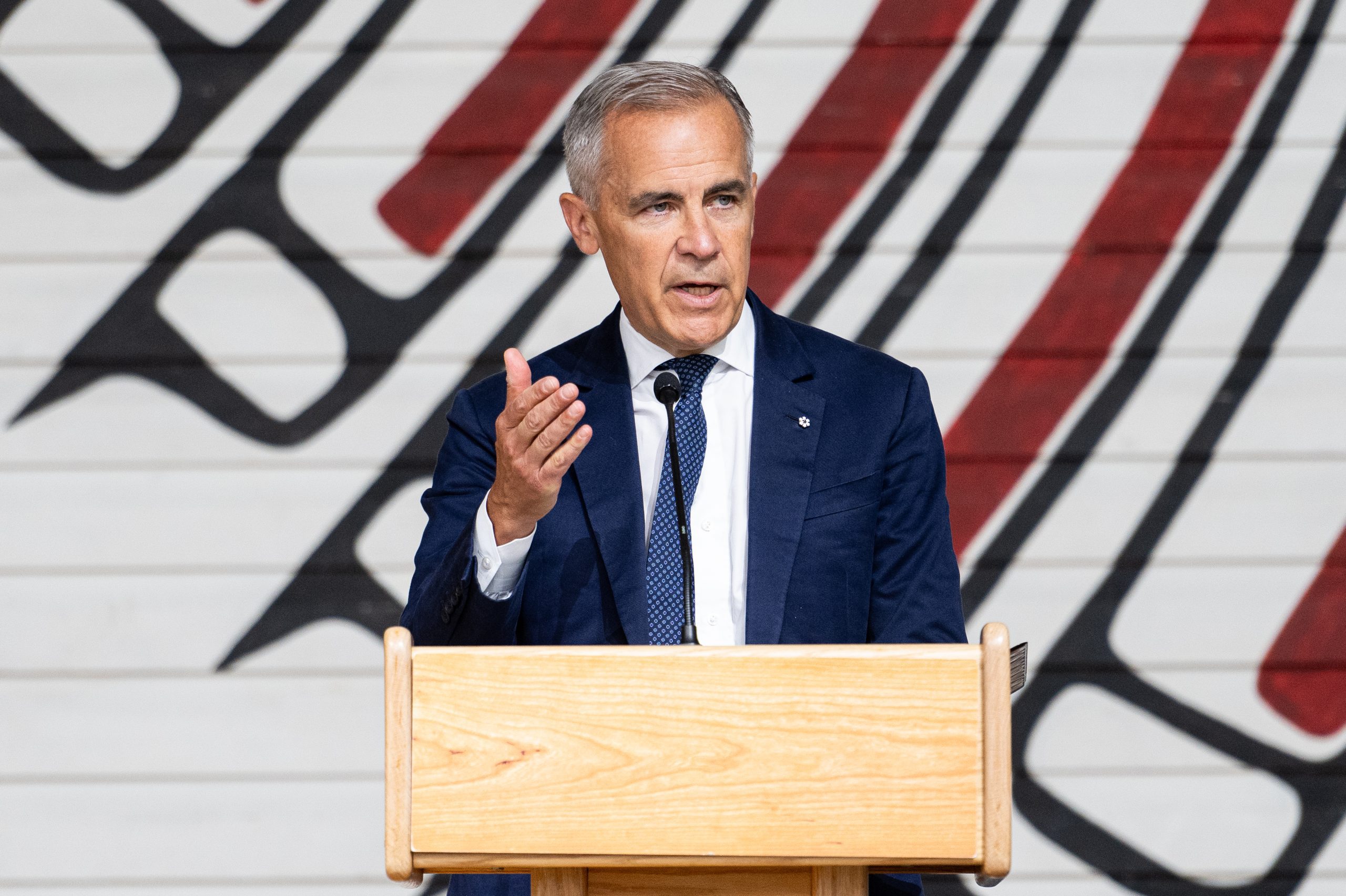
This week, I’m feeling a little more upbeat. On July 6, Reuters reported Prime Minister Carney saying this:
“Given the scale of the economic opportunity, the resources we have, the expertise we have,” Carney said, “it is highly, highly likely that we will have an oil pipeline proposed as a project of national interest.”
In my adult life, I don’t think we’ve seen a true nation-building project. I was still a kid when the St. Lawrence Seaway and the Trans-Canada Highway opened.
One project I’ve been marginally involved in might qualify as nationally significant: the building of a container terminal at the Port of Prince Rupert (opened in 1914) in the early 2000s. It wasn’t a nation-building effort, but it took a crisis to set it in motion.
The situation in the early 2000s was not as intense as it is today, but it did involve major trade disruption. The emergence of China as a global manufacturing hub was upending shipping patterns. Every container terminal on the West Coast was operating over capacity, severely compromising supply chains. Not acting would have been a regretful missed opportunity.
What made the Prince Rupert proposal viable was geography and infrastructure. It sat at the Pacific terminus of the most underutilized section of a transcontinental railway in North America, an asset that had waited nearly a century to be put to good use, except during World War II.
Fairview Container Terminal was an economic lifesaver for Prince Rupert and the Indigenous communities surrounding the Port of Prince Rupert. Consultations with First Nations were anything but smooth. However, the terminal laid the groundwork for a significant improvement in the relationship between the Prince Rupert Port Authority (PRPA) and local Indigenous governments.
Today, Peter Lantin, a member of the Haida Nation, chairs the PRPA’s Board. Local Indigenous companies are investing in housing projects, owning and operating key hospitality and retail businesses, making up a significant portion of light industrial capacity, holding equity in heavy industry, and spearheading major projects, such as the South Kaien Import Logistics Park.
While the project carried national significance, it didn’t meet the threshold of a genuine nation-building effort. However, it still necessitated a broad coalition, stretching from Prince Rupert, through the Rockies, across the Prairies, and into the manufacturing heartlands of Ontario, Quebec, and the American Midwest, to rally support and address the concerns of others along the way.
The campaign, led by the Prince Rupert Port Authority and the City of Prince Rupert, had to reach beyond politicians, regulators, economic development agencies, and direct beneficiaries. The proposed port facility would be a key asset, but without a railway, it would not be.
The Canadian National Railway formed the backbone of the project, stretching across Canada and deep into the United States, with spur lines reaching thousands of communities, farms, and factories.
The subjective, business, social, and environmental concerns, especially those raised by people along the line, rested with CN Rail.
Some steamship lines and North American logistics providers were skeptical that a container terminal without a large adjacent market could succeed. A few also questioned whether CN Rail would commit the resources needed to support the terminal at scale. Meanwhile, some of CN’s existing customers worried they’d face delays, as containers were prioritized.
The issues became local as traffic volumes increased, resulting in a host of impacts on communities along the line. Container trains are generally longer than other trains, which compounds the impacts: more noise and vibration, longer waits at level crossings, and expanded rail yards in villages, towns, and cities. Safety concerns grow, especially at unregulated crossings and within rail yards.
Traffic growth also brings environmental consequences: twin tracking, new bridges, and overpasses. These changes often occur in remote areas, where they can disrupt wildlife and sensitive habitats.
The more difficult challenges were political. Addressing the legacy issues between the railroad and the First Nations whose land the railway crosses remains an ongoing and often complex process. But there has been real progress.
In this case, CN Rail determined that acquiring the government-owned BC Rail was critical to its participation. Like transmission lines, railways require a degree of redundancy. CN believed that if the line between Prince George and Prince Rupert were ever unavailable, it needed a secondary route to Vancouver that it controlled directly. The concern was that if the shared tracks with Canadian Pacific Kansas City Limited (CPKC) in the Fraser-Thompson Canyon became inaccessible, CN would have no fallback.
The BC government of the day agreed to the sale of BC Rail to CN, despite strong objections from the BC NDP.
All of this is a long way of saying that even a utility, stretching through countless communities, across rugged terrain, and multiple jurisdictions, requires a broad coalition to succeed, especially if it is controversial and undertaken in the national interest. Too often, both right- and left-wing ideologues, if not kept at room temperature, lose sight of the national interest.
I’m confused by Premier Eby’s comment that there should be no federal funding for an expected proposal for an oil pipeline to the North Coast, an infrastructure project deemed to be of nation-building scale. There’s no opposition to the pipeline itself, only to federal funding.
We haven’t heard any provincial premier complain about the billions in federal investment in port and airport authorities in Metro Vancouver, Victoria, Nanaimo, and Prince Rupert. The federally funded ports and airports now represent the single largest industrial sector in urban British Columbia.
While the benefits of those facilities are felt across the country, the direct gains, jobs, municipal infrastructure, and local economic activity, are concentrated in BC. Would oil piped to the North Coast not provide the same kind of broadly shared benefit, not limited to Alberta?
Hopefully, Premier Eby, and the NDP more broadly, will reach the position they now hold on the Site C Dam, LNG, and TMX (which they rightly support dredging to bring to full production).
These points are not criticisms. I’m impressed by his flexibility when considering natural resource projects in the context of provincial and national interests, and from a workers’ perspective.
We shouldn’t be so hesitant to supply democratically produced, cleaner-than-average oil to Asia. It creates leverage to secure many other export opportunities across the Pacific.
Jim Rushton is a 46-year veteran of BC’s resource and transportation sectors, with experience in union representation, economic development, and terminal management.
Photo credit to THE CANADIAN PRESS/Spencer Colby