Canada is at a crossroads of unprecedented proportions, burdened by the weight of the past and presented with opportunities for greatness.
This moment can’t pass quietly, and it demands Canada be a country that builds big, ambitiously, and quickly.
When U.S. Commerce Secretary Howard Lutnick recently said there’s no hope of tariffs being lifted on Canadian goods this summer, his message was clear: President Donald Trump’s economic pressure is here to stay.
The tariffs, including penalties ranging from 10 percent on Canadian oil and gas and 25 percent on almost everything else, have woken Canada up, and the mood has shifted across the country. Canadians are looking inwards, and are determined to fortify their economic sovereignty rather than waiting for goodwill to be restored with their southern neighbour.
Industries, especially softwood lumber, feel this pressure on a daily basis. Major producers like Canfor are staring down duties of 45 percent, and Trump’s national security agenda threatens even higher penalties.
Canada cannot cave to these economic ultimatums; it must steel itself and decide to chart its own course in a way that is independent of Washington’s whims.
Remarkably, Canadians are prepared to meet this moment with boldness. Recent polls show an unbroken public mood eager for economic strengthening and expansion.
Despite intense national debates around environmental issues and Indigenous land rights, Canadians are overwhelmingly behind nation-building. A Nanos poll says 75 percent support a national energy corridor from Alberta to the east. 96 percent want to expand international trade, 91 percent want to increase oil and gas exports, and 89 percent want to build more refineries and LNG terminals.
Ottawa has heard this call loud and clear, and is responding with action like Bill C-5 to dismantle interprovincial trade barriers and fast-track critical infrastructure projects. The federal criteria for projects “in the national interest,” economic vitality, viability, prioritizing Indigenous interests, and environmentally responsible growth leaves plenty of room for big and innovative thinking.
Among these, LNG Canada Phase 2 and Cedar LNG in British Columbia are beacon projects that will bring significant provincial economic growth and give Indigenous communities a stake in their own success. LNG Canada Phase 2 alone increases Canada’s LNG export capacity and counters Trump’s push for Alaska’s $44 billion LNG pipeline to Japan, but the vision goes further.
Canada must greenlight projects that meet Asian market demand for oil and fast-track carbon capture infrastructure like Alberta’s Pathways Alliance CCUS project. Renewable and nuclear developments like the Gull Island hydro dam in Labrador, Nova Scotia’s offshore wind projects, and small modular reactor supply chains need to be supported without delay.
Strategic electrification and transformational transportation projects that include the Eastern Energy Partnership (formerly the Atlantic Loop), Manitoba’s Kivalliq Hydro-Fibre Link to Nunavut, and high-speed rail from Windsor to Quebec City are the future. From energy exports to modern transit infrastructure, Canadians want leadership from Ottawa and the provinces.
But there are still many obstacles. Trump’s “America First” Alaskan gas export strategy is in direct competition with British Columbia’s LNG ambitions, and tariffs are squeezing lumber producers’ profit margins. Foreign Affairs Minister Anita Anand says economic diplomacy is the way to pivot Canada to the Indo-Pacific trade networks, but provincial leadership is just as important.
Premier David Eby’s promise to streamline resource development in British Columbia and Quebec’s growing openness to national energy projects show the appetite and need for interprovincial cooperation. But clarity is lacking in BC, and Eby’s pipeline stance needs to be resolved now. British Columbia and all provinces can’t afford to wait or hesitate; the moment demands immediate action.
This chaotic chapter presents Canada with a rare and powerful opportunity. Canadians want bold economic leadership, and Ottawa has shown it is willing to deliver with its recent infrastructure announcements. Now is the time to make Canada a strong, prosperous, and resilient nation, no matter who’s in the White House.
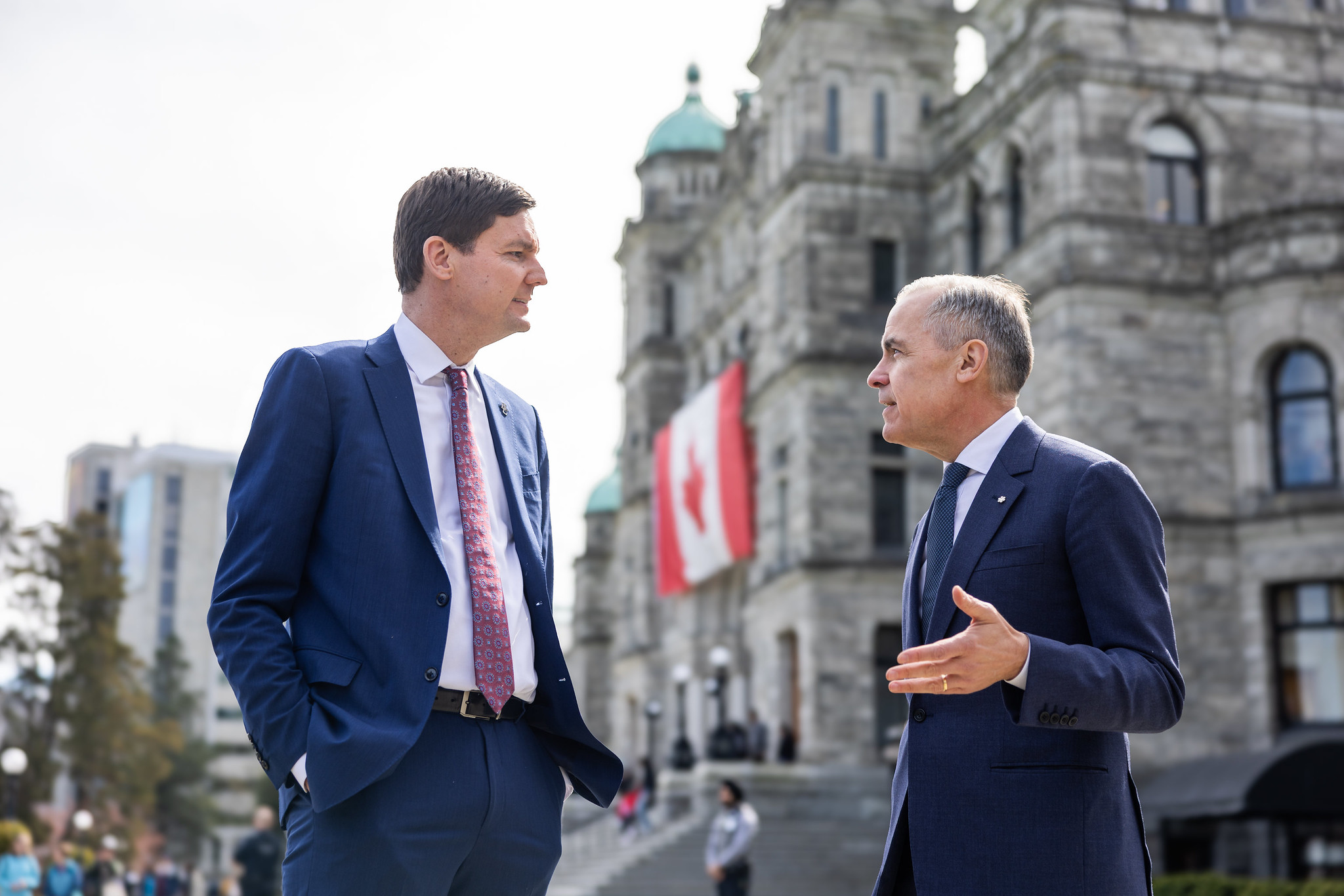
Photo credit to the Government of British Columbia