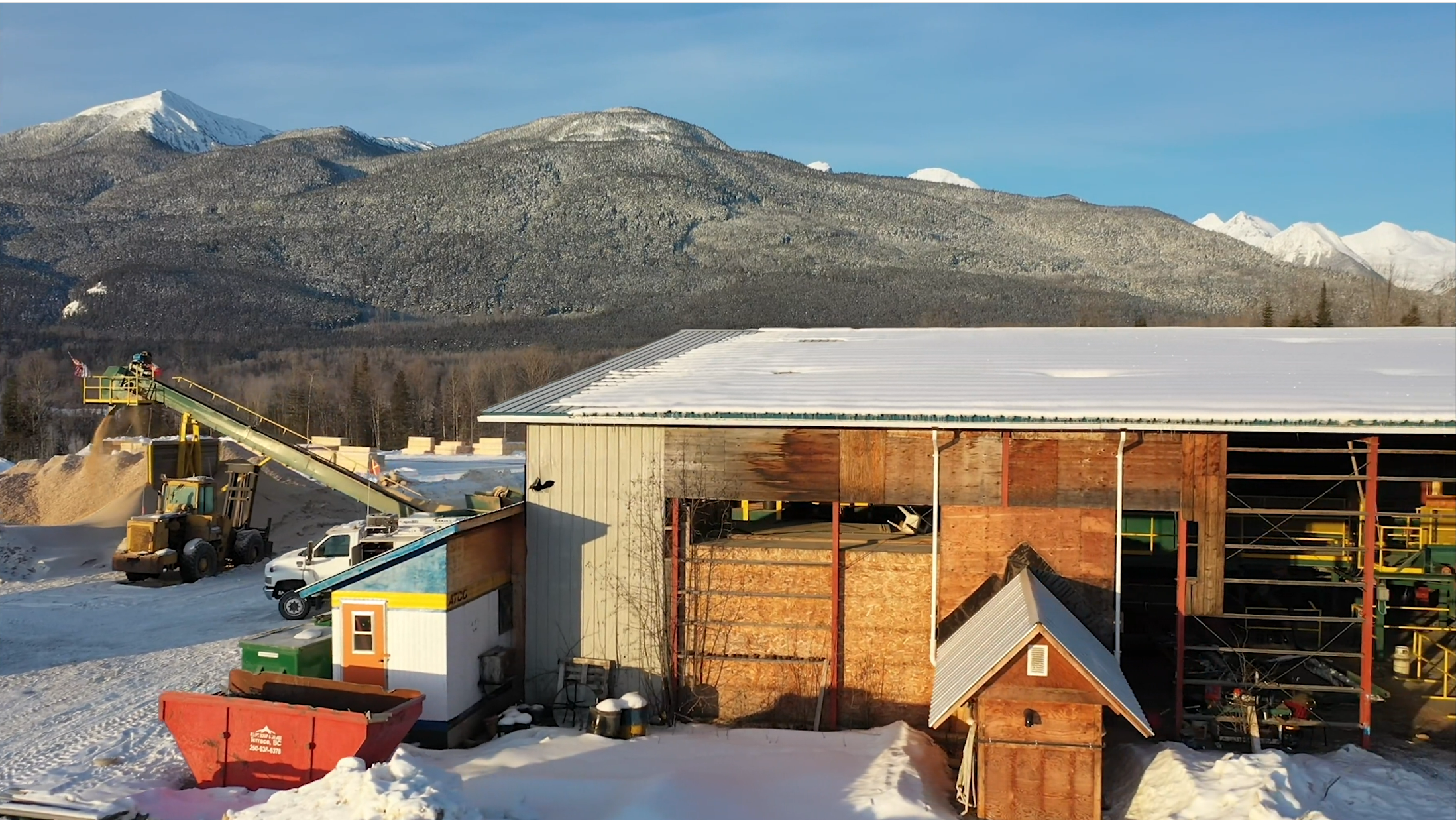
The prospect of sharply higher US tariffs on Canadian forestry exports poses a significant risk to British Columbia’s forest sector, which has long played an essential role in the province’s economic development. While the sector’s direct share of provincial GDP has fallen over time, it remains vital to rural access and supports many interconnected industries and communities. This long-term decline, driven by tenure complexity, evolving domestic policies, and wildfires and pest disturbances, could be significantly accelerated by a substantial new tariff shock.
This report is not a standard policy analysis. Instead, it is a forward-looking scenario exercise that explores an important “what-if”. What if British Columbia’s forestry sector were to shrink significantly? The goal of this analysis is exploratory, not to predict outcomes or offer prescriptive recommendations, nor to inform any specific trade position, but to help stakeholders anticipate potential pressures and vulnerabilities.
The analysis focuses on the potential indirect consequences of a forestry downsizing, not on direct impacts to employment or output, but on how other sectors and communities could be exposed to disruption:
- Infrastructure degradation affecting mining exploration, energy operations, and utility maintenance, with increased costs if access roads become unusable.
- Disrupted emergency response systems, particularly for wildfire management and rural community safety.
- Compromised residue supply chains affecting pulp producers, wood pellet manufacturers, and biomass energy facilities.
- Reduced outdoor recreation access limiting tourism revenue in rural areas.
- Decreased economic opportunities for Indigenous communities through diminished revenue-sharing agreements and contracting.
- Environmental risks from abandoned roads, including erosion and stream sedimentation.
- Strained transportation and export logistics as reduced forest shipments threaten rail viability, long-haul trucking, and port throughput.
- Disruptions to agriculture from lost access to range lands and shortages of sawmill by-products like livestock bedding.
The report encourages policymakers to look ahead and consider how the loss of forestry activity might impact broader provincial systems. Infrastructure built for one industry now serves many. The report concludes with three guiding principles for response: adaptive infrastructure stewardship, targeted investment in critical access routes, and decentralized decision-making that empowers local and Indigenous governments.
Jerome Gessaroli is a senior fellow with Resource Works. His writings have appeared in several major publications, with a focus on economic and environmental matters from a market-based principles perspective. He leads the Sound Economic Policy Project at the B.C. Institute of Technology and is lead Canadian co-author of Financial Management: Theory and Practice, a widely used textbook.