Imperial Metals’ shares shot up 12% last week, on Aug. 7, following a BC Supreme Court decision denying an injunction application challenging the regulatory approval of a plan to raise Mount Polley’s tailings dam. It was a minor victory for Imperial Metals. But the company isn’t quite out of the woods yet, says Imperial Metals CEO Brian Kynoch. If the Mount Polley mine is to continue operating and employing 390 workers, it needs a permit from the B.C. government to allow for a mine life extension. “If that doesn’t come soon, we may be put in jeopardy of significantly revising operation plans, or even ceasing operations if the amendment process is not expedited,” Kynoch warned at a press conference last week, after the court ruling.
Imperial Metals, which owns and operates the Mount Polley open-pit copper-gold mine between Williams Lake and Quesnel, also owns the Huckleberry mine, which is currently shut down, and 30% of the Red Chris mine. Mount Polley has operated since the late 1990s. As the mine’s deposits become exhausted, an expansion is needed to extend its mine life. But to safely accommodate the expansion, the company needs to raise its tailings dam by four metres. An application to raise the dam was approved by the minister of Environment, but was challenged by the Xatśūll First Nation, which sought an injunction — an injunction dismissed last week. Raising a tailings pond enclosure is, or should be, routine stuff. Most open-pit mines need to maintain and upgrade tailings ponds. It’s not the sort of thing that should trigger a legal challenge.
Mount Polley, however, is subject to special scrutiny, and criticism, owing to the dam’s failure in 2014, which caused millions in damage.
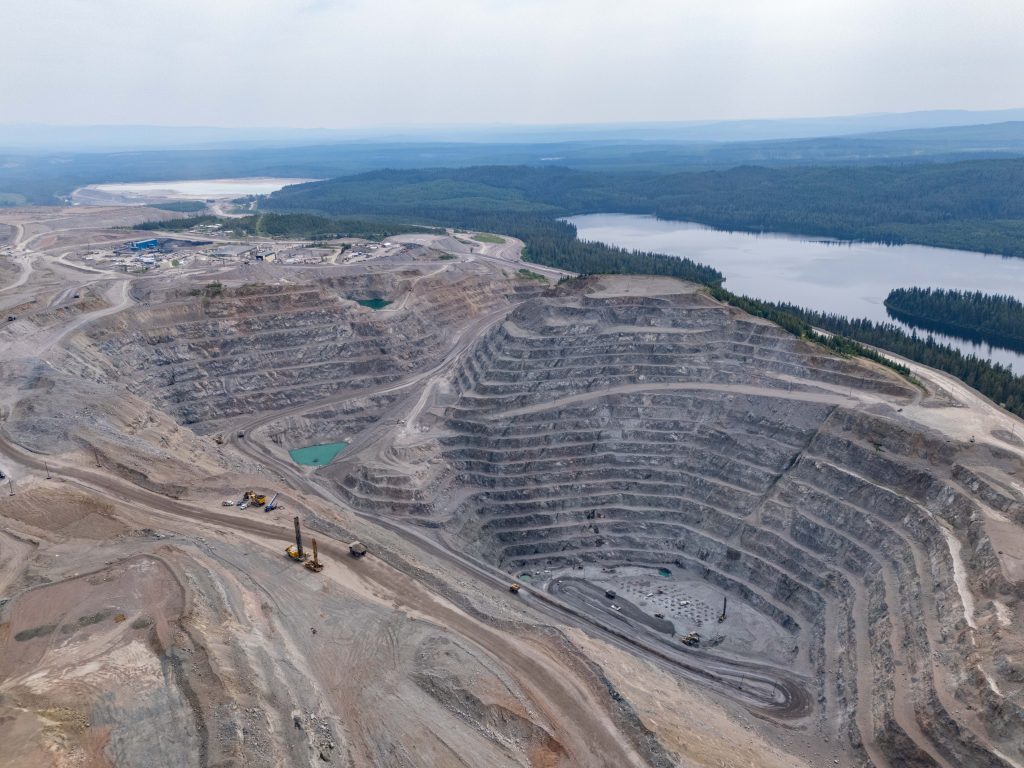
But anyone concerned about tailings dam safety should not be objecting to its fortification. Having the dam at a proper height to manage excess water during spring freshets is a safety issue. Does anyone really want inadequate tailings storage at Mount Polley? Had the Xatśūll’s recent injunction application been granted, it could have led to the mine shutting down, because you can’t continue to produce ore and tailings without proper tailings storage. “If you have no place to store your tailings, you can’t be milling stuff,” Kynoch told me.
It’s worth noting that the other First Nation in the immediate vicinity of Mount Polley mine — the Williams Lake First Nation — supports the mine and applauds the recent dismissal of the Xatśūll’s injunction application. “We support and hold up the court’s decision to dismiss the petition,” Williams Lake First Nations Chief Willie Sellars said in a press release. “Mount Polley is a vital part of our regional economy, offering stable jobs and contributing to programs that benefit both WLFN members and the wider community.”
We often hear about a regulatory environment in Canada that makes it almost impossible to get things built in Canada. Even our political leaders have acknowledged the problem. But even after projects receive “social licence” and regulatory approval to get built, they can continue to face ongoing attempts to shut them down. “There are significant challenges facing project advancement in British Columbia today,” Kynoch said.
“Well-considered decisions made by expert regulatory authorities following extensive consultations are frequently contested, at great expense, increasing risk to projects through permitting delays and causing uncertainty for operators and their employees and contractors.” Providing Imperial gets the permit it needs for its mine extension, the mine will have about eight more years of operating life. With copper prices close to US$4.50 per pound and gold at US$3,300 per ounce, Kynoch said he expects 2025 to be a pretty good year. “Next year it will be a little bit skinnier,” he added.
In its recent second quarter financials, Imperial reported income from mining increased from $39 million in June 2024 to $81.3 million in June 2025. The increase was attributed largely to increased gold production and higher gold prices. As for the Huckleberry mine, Kynoch said copper prices would need to be higher than they are now to make a mine restart economically feasible.
Huckleberry was shut down in 2015 due to low copper prices. “At the time, we said if the price stayed above $3 we could work our way through,” Kynoch said. But copper fell below US$3 per pound, so the mine was shut down. Today, copper prices would need to be above US$4.50 per pound to warrant a restart. “If I look at the cost of operating in 2015 to 2025, copper needs to be more than $4.50 to keep up with inflation,” Kynoch said. “Even though $4.50 sounds really good, it’s kind of like $3 copper in 2015.”
Nelson Bennett’s column appears weekly at Resource Works News. Contact him at nelson@resourceworks.com.