
BC is in the midst of a youth employment crisis. The numbers are ugly, and the human cost is becoming impossible to ignore.
Across the country, youth unemployment has surged to levels not seen in decades. In BC, it is worse. Statistics Canada data show that between May 2024 and May 2025, employment for 15 to 24-year-olds fell 5 percent.
During the same period, the provincial youth unemployment rate went from 10.5 percent to 16.6 percent, the biggest jump of any province and the second highest in the country behind Alberta. For young people in Kamloops, where the overall unemployment rate is 10.7 percent, the struggle is even worse.
For teenagers and young adults it is simple: résumés are sent out by the dozens, sometimes the hundreds, with little or no response. Entry-level positions in retail, hospitality, and food services, the lifeblood of youth employment, have dried up.
Even employers willing to hire complain that applicants lack the experience and communication skills they expect, a deficit partly caused by pandemic disruptions to schooling and early work opportunities. The result is a generation feeling locked out of the job market before they even get started.
At the same time, young people are facing an affordability crisis unprecedented in provincial history. In 1995, a student earning minimum wage could dream of saving for a first home. Today, despite BC’s minimum wage rising to $17.85 an hour, housing costs have increased nearly five times in 30 years, and the average home price is $942,686. The gap between wages and costs has many young British Columbians wondering if they will ever be independent.
The combination of youth unemployment and affordability makes this crisis different from those of the past, and it requires solutions that go beyond a few thousand more summer jobs.
One overlooked path lies in BC’s natural resource sector. For decades, resources such as forestry, mining, energy, and aquaculture have anchored the provincial economy. Too often, the conversation frames these industries as remote, outdated, or in conflict with urban prosperity. That is false.
Mining alone injected $18 billion into BC’s economy last year, supporting over 35,000 direct jobs across the province. Crucially, resource activity is not limited to rural communities. Over 1,125 businesses in the Lower Mainland earn $1.4 billion annually from mining contracts, supporting thousands of urban jobs in law, accounting, logistics, and engineering. Forestry, LNG development, and aquaculture show similar ripple effects. When resource industries thrive, so do urban economies.
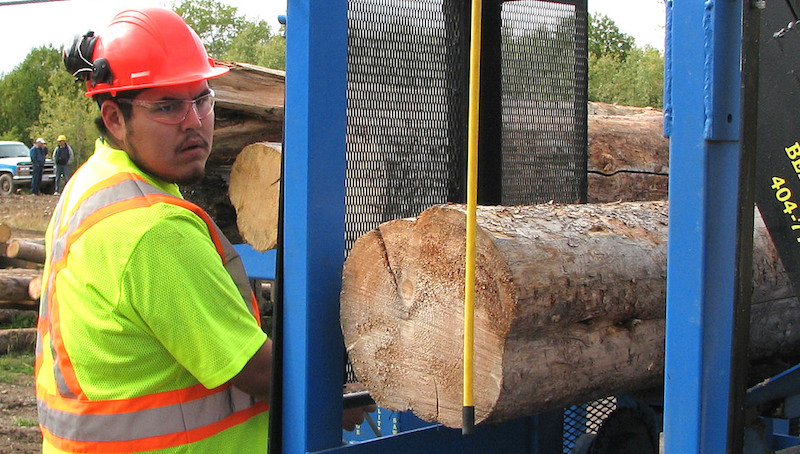
For young people, the potential is huge. Many resource jobs are high-wage, stable, and increasingly technical, requiring skills in engineering, IT, environmental management, and data science. BC’s critical minerals, 16 of Canada’s 31 identified by Ottawa, are essential to electric vehicles, renewable energy, and consumer electronics. That means opportunities for students trained not only in trades but also in STEM fields.
Meanwhile, Indigenous partnerships in mining, forestry, and aquaculture are offering new pathways for First Nations youth to build careers while contributing to community prosperity and reconciliation. Salmon farming alone supports thousands of jobs on northern Vancouver Island, many within Indigenous communities, and could double its economic activity if Ottawa lifts uncertainty over a looming ban on marine net-pens.
The challenge is not a lack of opportunity but barriers to accessing it. In mining, permitting can take a decade, freezing potential projects that could employ thousands of young British Columbians. In LNG, only one major project, LNG Canada, has been completed despite BC having gas reserves large enough to supply global markets for centuries. Salmon farming already contributes $1.17 billion annually to the economy and faces an uncertain future due to federal policy.
To tackle youth unemployment seriously, BC and Ottawa must accelerate the approval of responsible projects, invest in training programs linked directly to resource development, and communicate clearly that these are not “old” industries but innovative, technologically sophisticated sectors with room for the next generation. Prime Minister Mark Carney’s promise of “one project, one process” is a step in the right direction, but implementation will be key.
BC’s youth employment crisis is not going away on its own. Without urgent action, an entire generation will be sidelined from the workforce at a time when they should be gaining critical skills. The natural resource sector, already a backbone of the provincial economy, offers a real, scalable, and future-oriented solution.
Kamloops or Vancouver, Kitimat or Nanaimo, resource development means opportunity. We have a choice: sideline young British Columbians for years, or open the door.