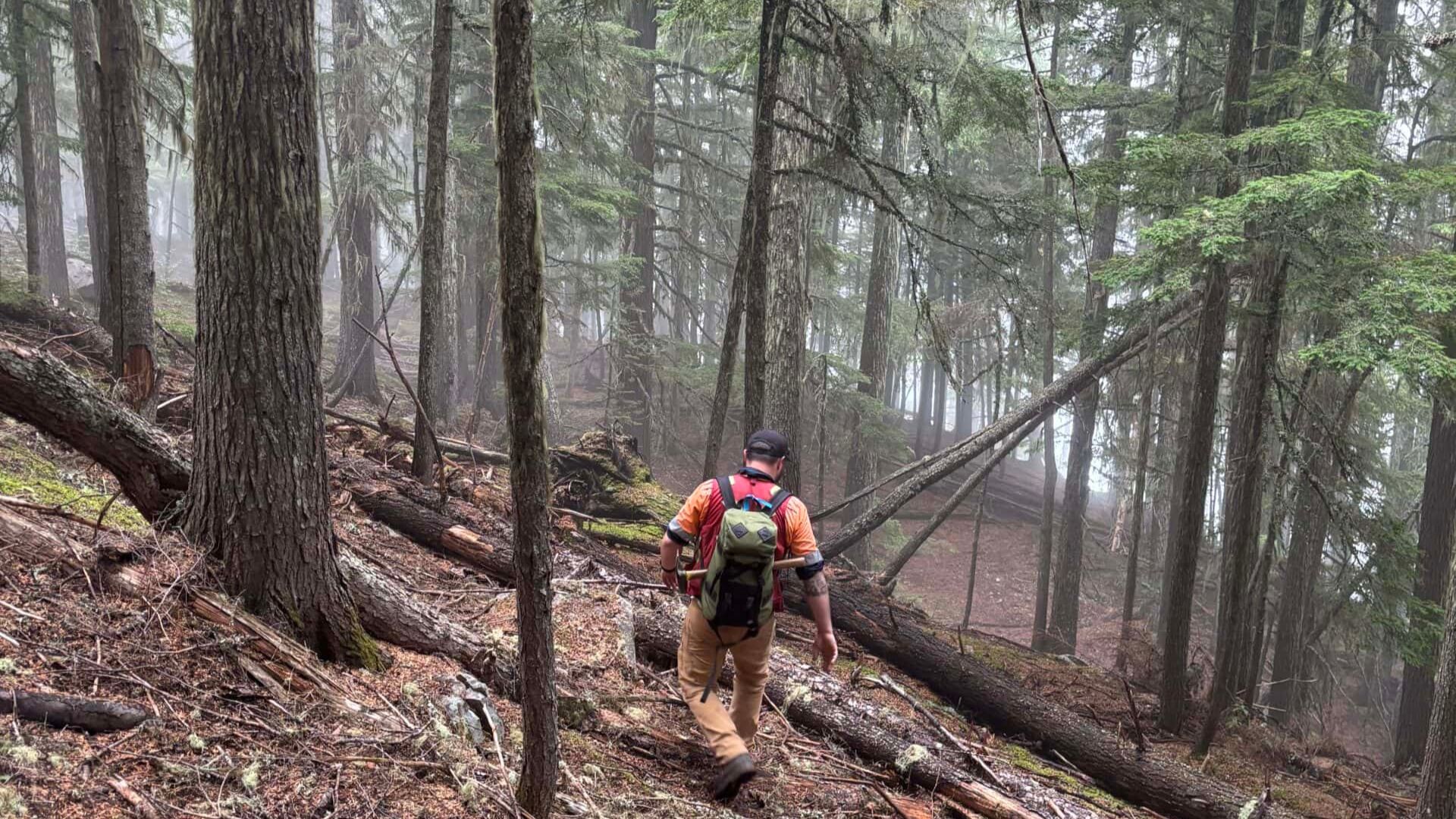
“None of BC’s mines happen without people walking around doing this,” says Jonas Rigaux as we traverse a steep rockslide that was formerly a forest service road (now decommissioned).
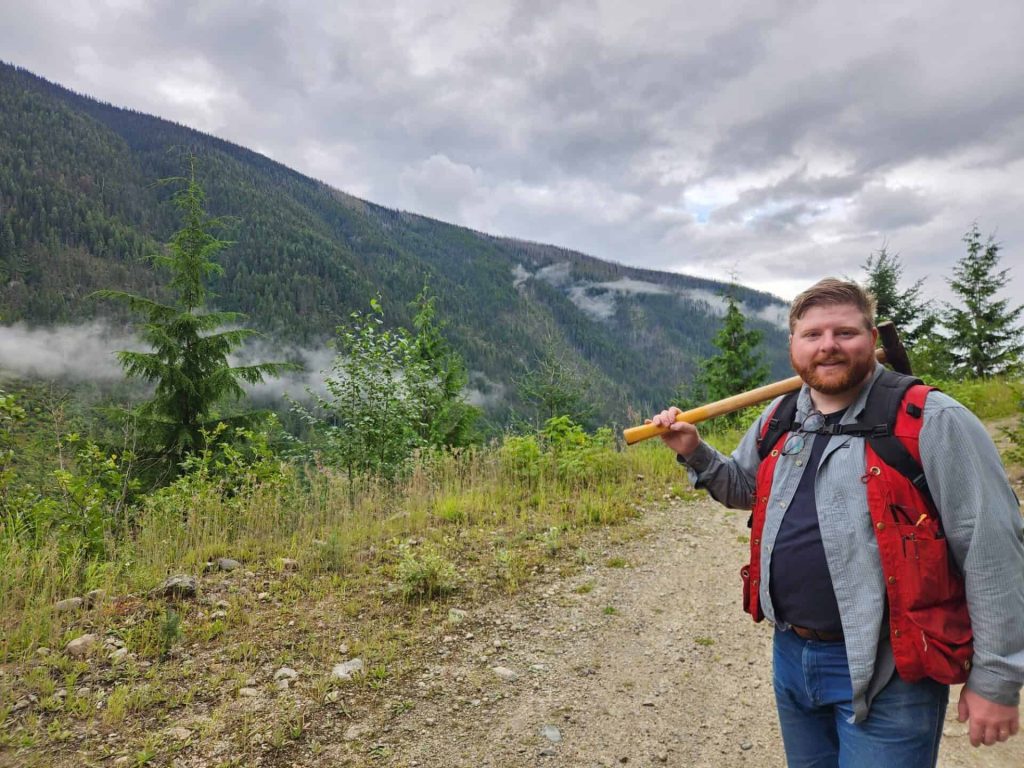
I’m drenched in rain and sweat, huffing and puffing as I carry gear laden cruiser vest, backpack, and a rock hammer. Jonas makes it all look easy and tells me plenty of stories about times where the work was much harder in countries that are much more dangerous.
Why am I doing this you might ask? Well, I spent the last week in the Kootenays to learn about a very fundamental part of mineral exploration. I went prospecting.
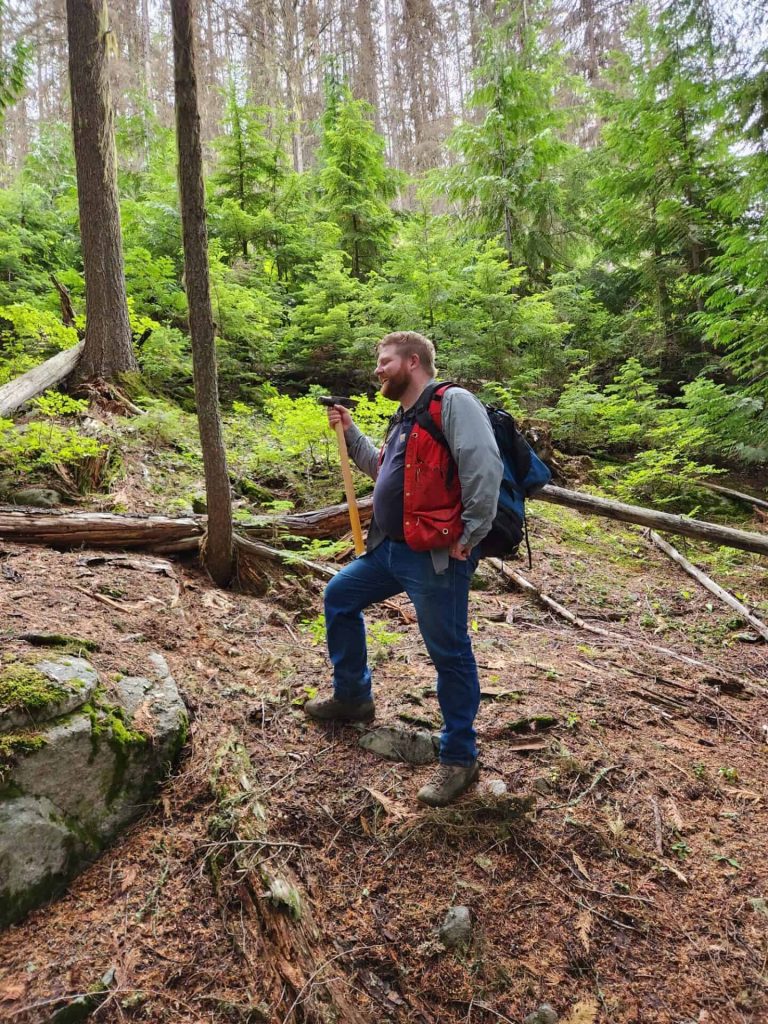
And while I found more thimbleberries than gold, or lithium, I learned a lot about the geological structures that made up the valley we were camping in over the week. I also learned how Association for Mineral Exploration (AME) members have been finding mines of the future for generations and the things making it harder in 2025.
My big takeaways were:
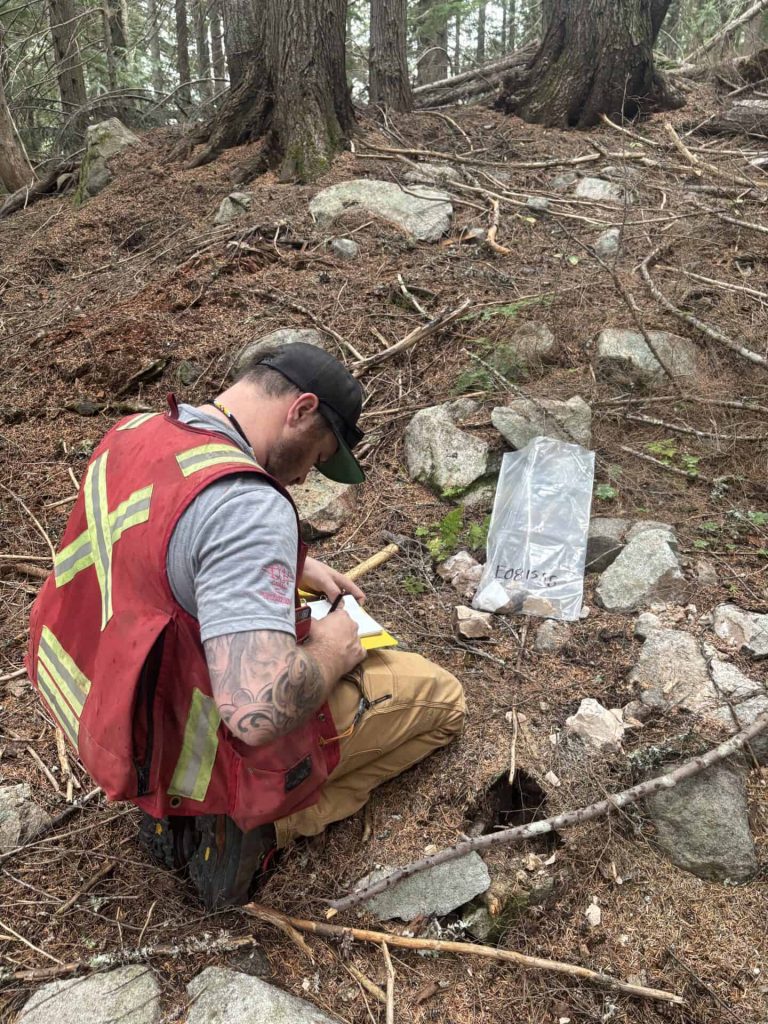
- Prospecting is hard work. Hiking up mountains, breaking off rock samples and carrying them with you through the bush in all conditions is tough. Prospectors deserve our respect for that alone.
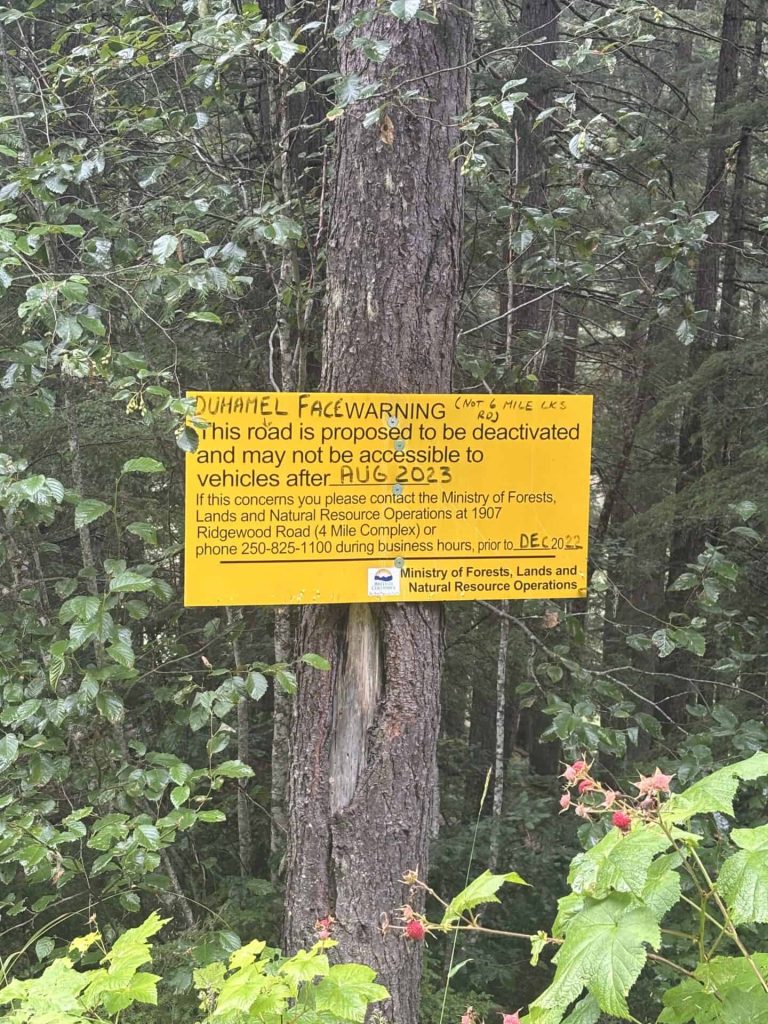
- Because its hard work, road access is critical for explorers getting into the back country and traversing it. As I learned firsthand, it’s a lot easier to walk up a forest service road than climb the side of a mountain.
- While we were exploring, we met people using the back roads to cycle, fish and even train dogs. It emphasized how important maintaining that access is for all British Columbians.
- Last of all, spending time in the mountains learning from an AME member helped put the work we do day in and day out into perspective. We have plenty of pioneer members who went out and found the mines we have today. But there are less people doing what Jonas is doing. Why? He says it’s harder to do the work and pay for all the things he needs to live while he does what he loves. It means he has to take dangerous jobs outside of the country when the work in BC isn’t there. And that’s a tough ask of any young person who wants to start a career.
My simple ask is that the BC government takes action to support prospectors. Ensuring claim staking moves quickly, land access is assured, and permits move quickly are just a few ways. We need to get more people into the back country of our province looking for the critical minerals we need. We need more prospectors like Jonas.
Thank you to Jonas for challenging me to get out into the mountains to build some perspective on the work we are trying to protect. When you use a mineral today – make sure you thank a prospector for their part in it.
This article is originally written by Jack Middleton, Vice President, Policy & Advocacy AME and appeared on the Association for Mineral Exploration website and has been republished with permission.