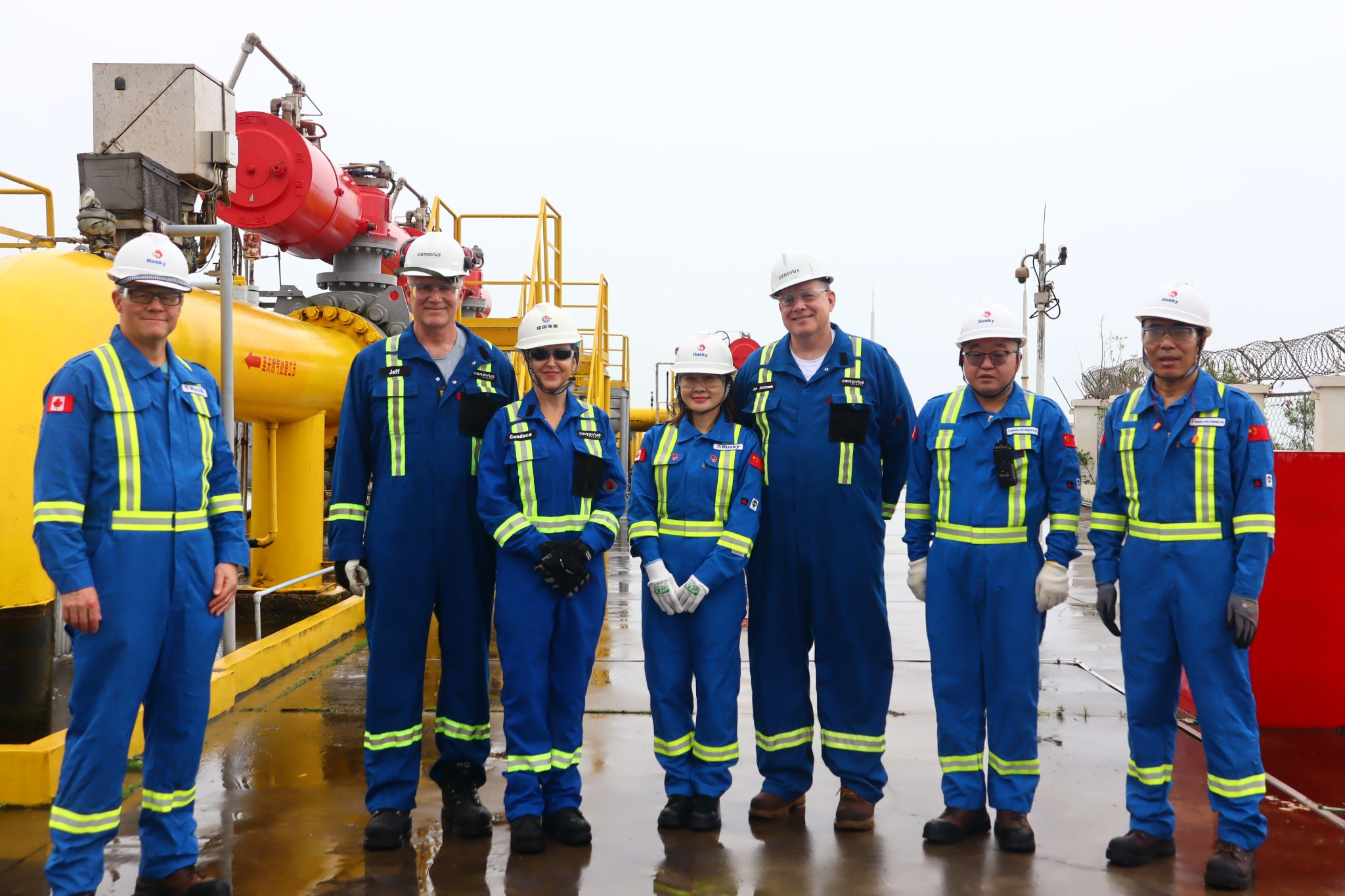

My recent trip to our operations in China and Indonesia was an incredibly valuable chance to see world energy trends up close.
Witnessing the dynamism and ambition of our teams in those countries was inspiring, and I am grateful to our kind hosts. But I couldn’t escape the stark contrast with the situation at home.
I should have returned feeling optimistic, but instead I came back feeling down. At the end of the day, seeing what other places in the world are doing only highlights one difficult truth: As an economic force, Canada is missing in action.
What most enriched my visit was meeting our own people. In China, our teams are incredibly happy working in this the energy industry. They are motivated, because they see the purpose in their work every day, delivering the foundational products that lift communities out of poverty.
That same clarity of purpose is evident in the market itself.
In Indonesia our local production is fully consumed in-country. Overall, they face declining natural gas reserves, and with a growing population the need for imports is critical. There is a desire for Canadian supply. We just need to get it there.
From a global perspective, the LNG we are now finally shipping is still a drop in the bucket. For Canada, however, it represents a massive and vital step forward.
Meeting Asia’s demand for natural gas can become an even greater opportunity if we choose.
Thinking about natural gas demand throughout the world, we receive $12/Mcf for our natural gas in China. We only receive $1-2/Mcf in Canada (pundits will say that is optimistic), even though we have abundant Canadian supply. Our limitations are infrastructure and offtake facilities.
It’s a competitive world. Markets around the world desire what we provide, whether that’s oil and gas, minerals, or agriculture.
Yet, here at home, some people seem unable to grasp this.
The Trans Mountain Expansion Project took a decade and more than $35 billion to build.
We still face a host of policies that box our energy industry in. It’s the Emissions Cap that creates fundamental uncertainty. It’s the North Coast tanker ban that limits our market reach. It’s the cumulative weight of policies like the methane regulations and industrial carbon tax that makes it nearly impossible to allocate capital with confidence.
And the world now sees Canada as a difficult and unpredictable place to do business. Investor capital is mobile, and it will flow to jurisdictions that provide clarity and predictability.
There are fewer burdens and lower costs involved in moving our product south to the United States, and the U.S. is a key consumer of our energy products. But while that path is easier, and existing pipelines can be expanded, it is not a long-term strategy for national strength if egress remains constrained.
Over-reliance on a single customer leaves us vulnerable, as we have learned within the last year. If Canada wants to become stronger and truly diversify for the long-run, we have to drive to tidewater.
Recent messages from political leaders have been correct, but the action hasn’t yet followed.
This isn’t about slowly moving impediments out of the way; this is about deeper, more effective change that enables us to compete, backed by genuine federal-provincial alignment.
How we decide to compete with the rest of the world, or not, is up to us. As the saying goes, “Do or do not, there is no try.” Saying we’re trying is not getting us there.
Jeff Lawson is Executive Vice-President, Corporate Development & Chief Sustainability Officer at Cenovus Energy.