
Canada’s Indigenous-driven economic opportunity is vast, but global capital and technology will determine how quickly it scales. That was the key message emanating from the Indigenous Partnerships Success Showcase (IPSS) Diplomat Leadership Luncheon, where envoys from ten global economies met with Indigenous leaders and Canadian business executives in downtown Vancouver, last week.
The roundtable, hosted by Resource Works with the Business Council of British Columbia, set the tone for November’s 6th annual IPSS conference, which will spotlight Indigenous-led projects reshaping Canada’s economy.
Canada’s Indigenous economy already generates more than $30 billion annually and is on track to reach $100 billion within the next decade. Prime Minister Mark Carney has consistently framed Indigenous-led projects as central to Canada’s energy transition, infrastructure modernization, and climate strategy.
From LNG (liquefied natural gas) and hydroelectricity, to housing, tourism, forestry, critical minerals and trade corridors, Carney has argued that Canada cannot meet its economic or environmental targets without Indigenous nations as full equity partners.
The luncheon brought that vision to life in real-time, with Vancouver’s Consular Corps and Indigenous leaders aligning on the need to match global capital and technology with Indigenous-led ventures.
“Today, the Indigenous economy exceeds $30 billion and is on track to triple to $100 billion,” said Stewart Muir, founder of IPSS. “That growth won’t happen by accident and without global financiers and technology, the potential will remain artificially constrained. IPSS is where the right investors can meet the right leaders to change that.”
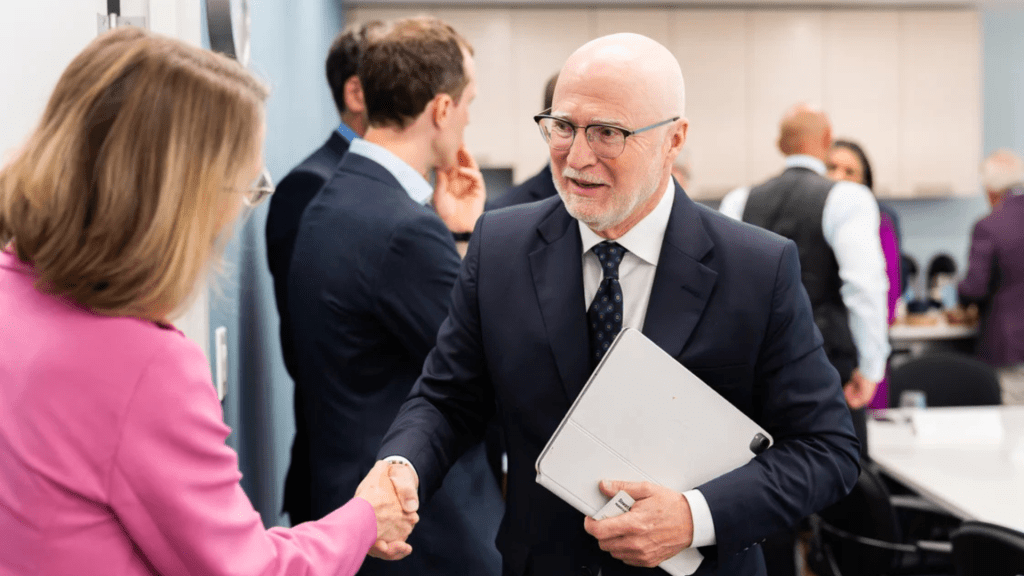
For Crystal Smith, former Chief Councillor of the Haisla Nation, the choice to back LNG Canada, the country’s flagship energy export project, required commitment. The fruits of success have been transformational.
“Our solution to managing poverty was to participate in major projects and to be a beneficiary in every capacity,” Smith told the room. “We want to be at the table. We want to be making decisions. We want that investment into our communities.”
Smith linked those decisions directly to cultural renewal in her traditional territory, adding: “It’s worth every challenge I went through.”
Deanna Lewis, CEO of Kalkalilh Communications, emphasized that Indigenous-led projects are about more than revenue. “We have to be accountable to our ancestors and to seven generations after us. Intergenerational wealth, sovereignty, and language…that’s what’s on the line.”
The luncheon drew envoys from India, France, Malaysia, Poland, Italy, Ireland, Greece, Thailand, the Philippines, and the United Kingdom, underscoring the global interest in Indigenous-led opportunities.
Others included representatives from the Port of Vancouver, Woodfibre LNG, the Council of Forest Industries, the Sound Economic Policy Project, the EU Chamber of Commerce in Canada West, the Energy Futures Institute and PricewaterhouseCoopers.

From the European side, Celso Boscariol, President of the EU Chamber of Commerce in Canada West, highlighted how CETA (Canada-European Union Comprehensive Economic and Trade Agreement) could accelerate Indigenous ventures.
“CETA offers five key features which help development on Indigenous lands and projects, removing 98% of tariff barriers, improving labor mobility, leveling the playing field in public procurement, regulatory harmonization, and accreditation of foreign credentials,” Boscariol said.
United Kingdom’s Consul General, Thomas Codrington, said his country has been actively working to bring Indigenous economic stories to London’s financial circles.
“It behooves us, as the United Kingdom, to be Canada’s best friend in reconciliation…finding ways to bring Indigenous stories back to the UK and situate them in the international context, where global investors can understand and engage with the opportunity.”
Ireland’s Consul General Cathy Geagan said that while appetite in Europe to invest in Canada has never been higher, many companies lack awareness of how to engage First Nations early and properly.
“There’s never been such an appetite in the EU to do business with and invest in Canada. If we could get a lot of that investment going to Indigenous people, that’s what we would like to do,” she said.
From Asia, both the Philippines and India drew on their own deep histories of Indigenous rights and protections to frame stronger cultural and economic links with Canada’s First Nations, Inuit and Metis peoples.
Their message was clear: Indigenous participation in development must be rooted in respect, consent, participation and traditional knowledge if it is to succeed at scale.
“The Philippines is home to 110 ethno-linguistic groups and since 1997 we had a national law or magna carta for Indigenous peoples that protects ancestral lands and domains and the rights of IPs to an informed and intelligent participation in the formulation and implementation of any project, public or private, that will impact upon the ancestral lands or domains,” said Philippines Consul General Gina Jamoralin.
Masakui Rungsung, Consul General of India saidthe Constitution of India protects Indigenous populations ensuring their consent is required for any project of national significance. “In many cases, Indigenous knowledge systems offer solutions more enduring than modern law, proof that traditional governance must guide sustainable development,” he said.
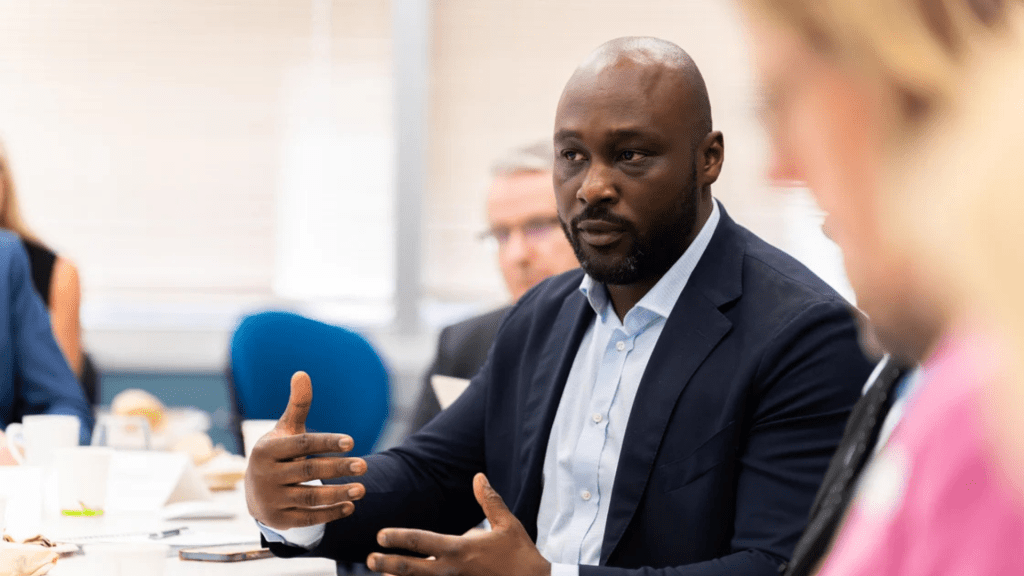
Lanre Okunnuga, a Vancouver partner with professional services firm PricewaterhouseCoopers, said many firms in the EU don’t know where to begin when it comes to getting involved with Indigenous-led projects in Canada. He suggested creating a central platform showcasing Indigenous projects, allowing companies around the world to see where their technology and expertise might fit.
The IPSS Diplomat Luncheon is already producing outcomes, with plans afoot for follow-up meetings between consular representatives, the EU Chamber of Commerce, and Indigenous leaders to advance investment pipelines.
The November IPSS conference will build on this momentum, with the Shared Prosperity Awards recognizing projects that demonstrate how Indigenous partnerships can generate wealth, protect culture, and position Canada as a global investment leader.
“Indigenous partnerships are not side projects,” Muir said in closing. “They are the future of Canada’s competitiveness in a resource-dependent world.”
Register for the event here.