
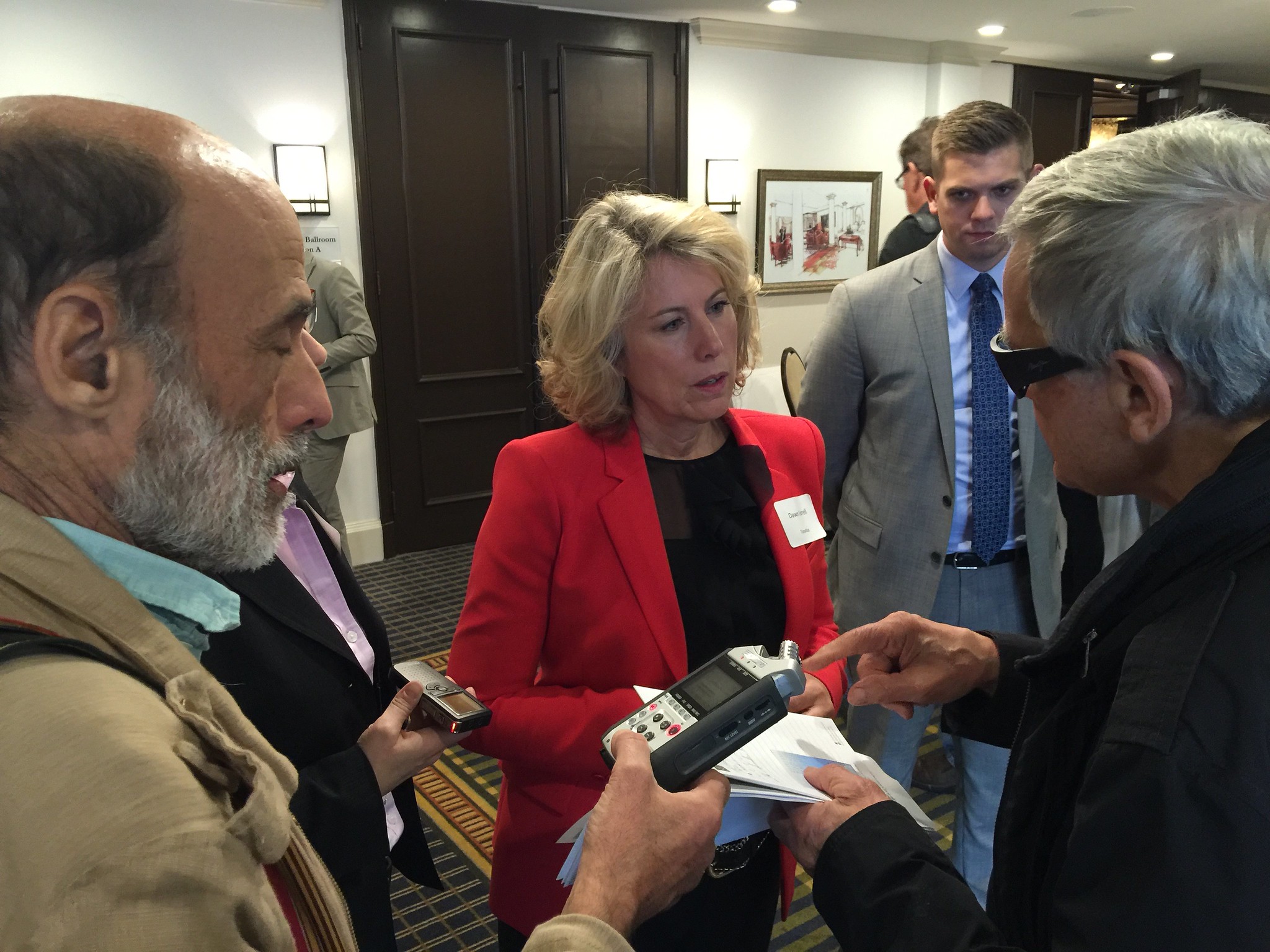
The federal government has officially announced the upcoming Major Projects Office, to be based in Calgary and led by Dawn Farrell as its first chief executive officer.
Farrell has earned an unimpeachable reputation. She helped led the completion of the Trans Mountain Expansion pipeline across British Columbia and held senior roles at both BC Hydro and TransAlta.
The Canadian business community has praised Farrell’s appointment, and politicians across the political spectrum have expressed their support, though there has also been criticism from some quarters.
It has to be stressed that building, staffing, and supplying an office is not comparable to a new pipeline, nor does it automatically guarantee one, let alone a port, a railway, or a liquefied natural gas terminal. Offices are easy to rent and staff, but nation-building projects are far more challenging.
Soon after Farrell’s appointment, the Business Council of Alberta described the office as “a vital step” towards the goal of greater prosperity and investment for Canada. This was echoed by both the Canadian Association of Petroleum Producers and the Canadian Chamber of Commerce.
Canada has endured years of delay, deadlock, and cancellations of major projects due to the regulatory maze imposed by Ottawa. This office is going to be a necessary tool to fix this.
Deeper problems still persist. Writing in The Hub this week, Heather Exner-Pirot of the Business Council of Canada and the Macdonald-Laurier Institute pointed out that while Canadians broadly agree on the need to be an energy superpower, the tactics are unclear.
For example, Prime Minister Mark Carney pledged an eye-watering half-trillion dollars in investment, but the movement of private capital in Canada is restricted by regulation, not public spending.
In April, thirty-eight Canadian oil and gas executives signed a letter sent to Carney containing specific requests to aid the industry. This included removing the emissions cap, abolishing the oil tanker ban on British Columbia’s northern coast, and overhauling Ottawa’s environmental review system.
They also called for devolving management of the carbon levy to the provinces and shortening the timeline for project approvals. These actions would not come at any cost to Ottawa, and would unleash billions of dollars in private investment.
Instead, however, the federal government has developed a two-track system consisting of a fast lane for its own chosen projects, and an unclear, muddy path for everybody else. Essentially, Ottawa can still pick winners and losers.
This is not helpful in a time of great global competition in which Canada is at risk of falling behind.
All is far from lost, however, as international partners want to grow their presence in the Canadian energy industry.
The Malaysian state energy company Petronas shipped its first cargo from LNG Canada in Kitimat in July, and is eager to back several more LNG projects in British Columbia going forward. They are not the only potential partners in Asia.
Japan is one of the world’s largest buyers of natural gas, and is actively seeking to procure long-term contracts. Developing LNG projects like Cedar LNG in Kitimat and Woodfibre LNG in Squamish are well-positioned to meet this need.
Nonetheless, the United States is determined to beat us to the punch, exemplified by President Donald Trump reviving the $44 billion Alaska LNG project that would see Japan sign on to buy it.
The United States dominates imports of LNG into Europe precisely because Canada failed to move when Germany asked for Canadian natural gas in 2022. This was a mistake on Canada’s part that cannot become a pattern.
Ottawa passed the Building Canada Act in June, which allows it to fast-track major projects that fall within the “national interest”, enabling it to override existing regulations.
Prime Minister Carney has suggested that the Port of Churchill in Manitoba could be expanded as a result, but critics have rightly pointed out that it would entail billions spent on a sub-Arctic port with a short season for shipping.
These same critics have also argued that removing barriers to private investment should be prioritized so that commercially feasible projects do not require subsidies to be built.
In addition to the Trans Mountain Expansion pipeline that was completed in 2024, Carney has suggested that another pipeline to the West Coast is “highly likely”. This would be nation-building infrastructure, but it requires political will and investors willing to put up the money, not just an office.
However, an office is a start and Dawn Farrell is a superb choice to head it.
So long as Ottawa resists the temptation to be satisfied with symbolism rather than substance, Canada has a bright future.
Photo credit to the David Dodge