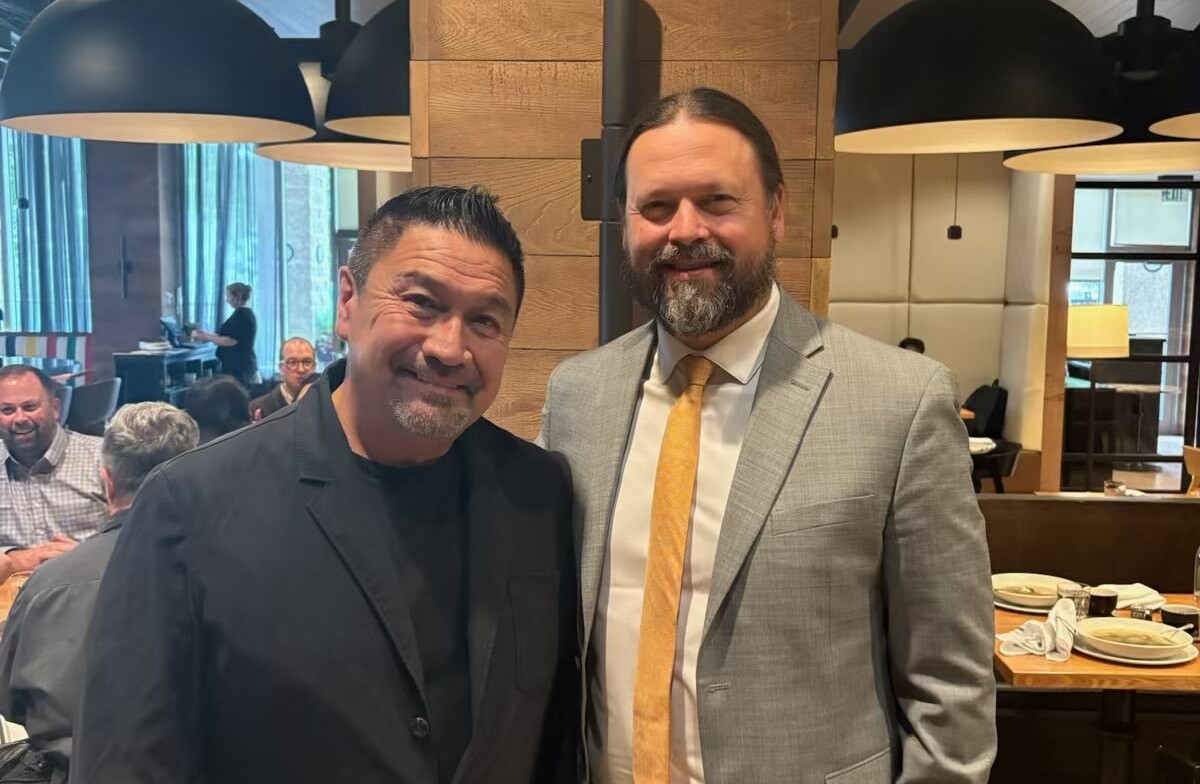
Entrepreneur Michael Birch (left), pictured with Malcolm Macpherson (right) at the 2025 AFN Annual General Assembly – photo credit to MICHAEL BIRCH
When Resource Works News reached Malcolm Macpherson in Winnipeg, he was on the floor of the Assembly of First Nations’ annual gathering. He didn’t pause. “The question here,” he said, “is how you turn all this heat and noise around nation-building into bankable partnerships and projects that respect rights, deliver returns, and actually get built.”
Macpherson, a Vancouver-based lawyer who heads the national Indigenous practice at Whitelaw Twining, is chair of the Indigenous Partnerships Success Showcase (IPSS) 2025. In Winnipeg, he was listening as chiefs and economic leaders described a moment that is more business focused than ever, yet firmly rooted in principle.
The AFN represents more than 600 First Nations across Canada. Chiefs in Assembly meet to set mandates on everything from infrastructure to economic reconciliation. If AFN is the place where priorities are debated and declared, since 2020 IPSS has been a leading gathering for where those priorities collide with capital, investors, and governments. It is where rights, money, and approvals either line up, or grind to a halt.
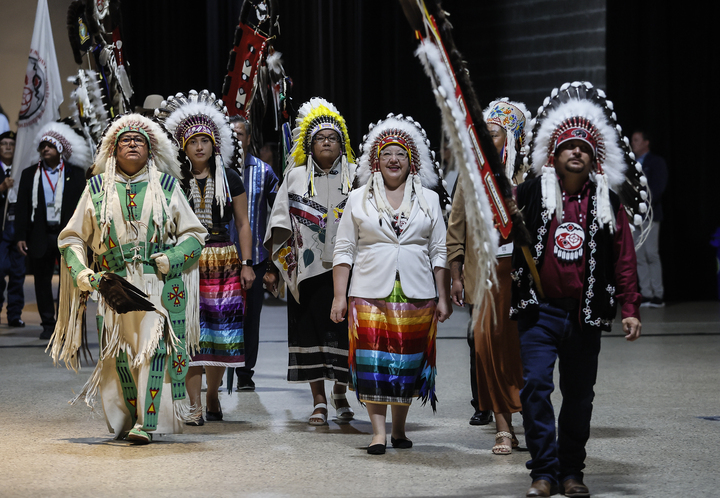
Photo credit to THE CANADIAN PRESS/John Woods
On the floor, Macpherson heard a steady refrain, ownership and jurisdiction. The treaties never ceded their interests and rights to the minerals below their feet, and the airspace literally above their heads to the stars,” he said.
This was not rhetoric. It was a demand. Participation must mean more than signing benefits agreements. It has to include equity stakes, governance seats, and a real regulatory voice.
“There’s a pragmatism to the discussions, a recognition that all boats rise with a rising economic tide here,” says Macpherson.
Pragmatism does not equal a blank cheque. Leaders in Winnipeg spoke positively about responsible growth in energy, critical minerals, transportation, and industrial projects. Yet they were clear, Bill C-5’s push for faster approvals could backfire if consultation is treated as a formality.
“They’d want to see responsible economic developments but not at any cost, not at the cost of running roughshod over constitutionally protected Section 35 rights,” says Macpherson.
The lessons from Winnipeg will shape IPSS 2025, set for November 13 at the Vancouver Convention Centre West. This year’s IPSS reflects adapting to the times, as reconciliation practice deepens and the scale of the business opportunity grows:
- The Gathering, space for Indigenous-led learning, culture, and relationships.
- The Leadership Summit, where Indigenous equity leaders, investors, CEOs, and policymakers hammer out practical steps.
- The Gala and Shared Prosperity Awards, a stage to celebrate partnerships that work and raise ambitions for what comes next.
That structure is intentional. Timelines for projects are tightening. Nations are moving into ownership in LNG, pipelines, fisheries, mining, and infrastructure. Investors want clarity before committing capital, and Bil C-5 factors into that.
“One of the challenges with Bill C-5 is the short time frame. Just look at the non-Indigenous sector, right? It typically takes a lot more than two years to get large or medium sized projects built, so it’s an ambitious time frame,” says Macpherson.
What he heard at AFN is that communities are not anti-development, they are against development that treats consultation as a box to check and First Nations as stakeholders rather than rights holders and partners. When Indigenous governments are co-authors of the business plan, projects move with more legitimacy and investors see clearer paths to return.
The pattern is already visible. The Haisla Nation’s leadership in LNG. The Mi’kmaq coalition’s purchase of a seafood giant. These examples show what happens when Indigenous governments are authentic partners, projects gain legitimacy, investors see clearer returns, and communities secure wealth for future generations.
Another theme in Winnipeg was concern about Ottawa’s top-down approach. Many chiefs warned that the federal “major projects” office risked pushing aside the bottom-up partnerships that have delivered the best outcomes.
Macpherson agrees. The state has a role in setting rules. But reconciliation and prosperity depend on Indigenous entrepreneurship and market certainty. “The goal is not to politicize investment,” he said. “It is to de-risk it, make clear who decides, on what timeline, under which rights and benefits.”
The constituency for shared prosperity is larger than the daily noise of politics. The AFN was where the principles were laid down. IPSS will be where those principles are tested against capital, timelines, and execution.
Macpherson’s view is sharp: growth and rights are not opposites. They are complements. The challenge now is to build the tables where both are respected, then sign the deals that make it real.
Please visit the IPSS website for more information.