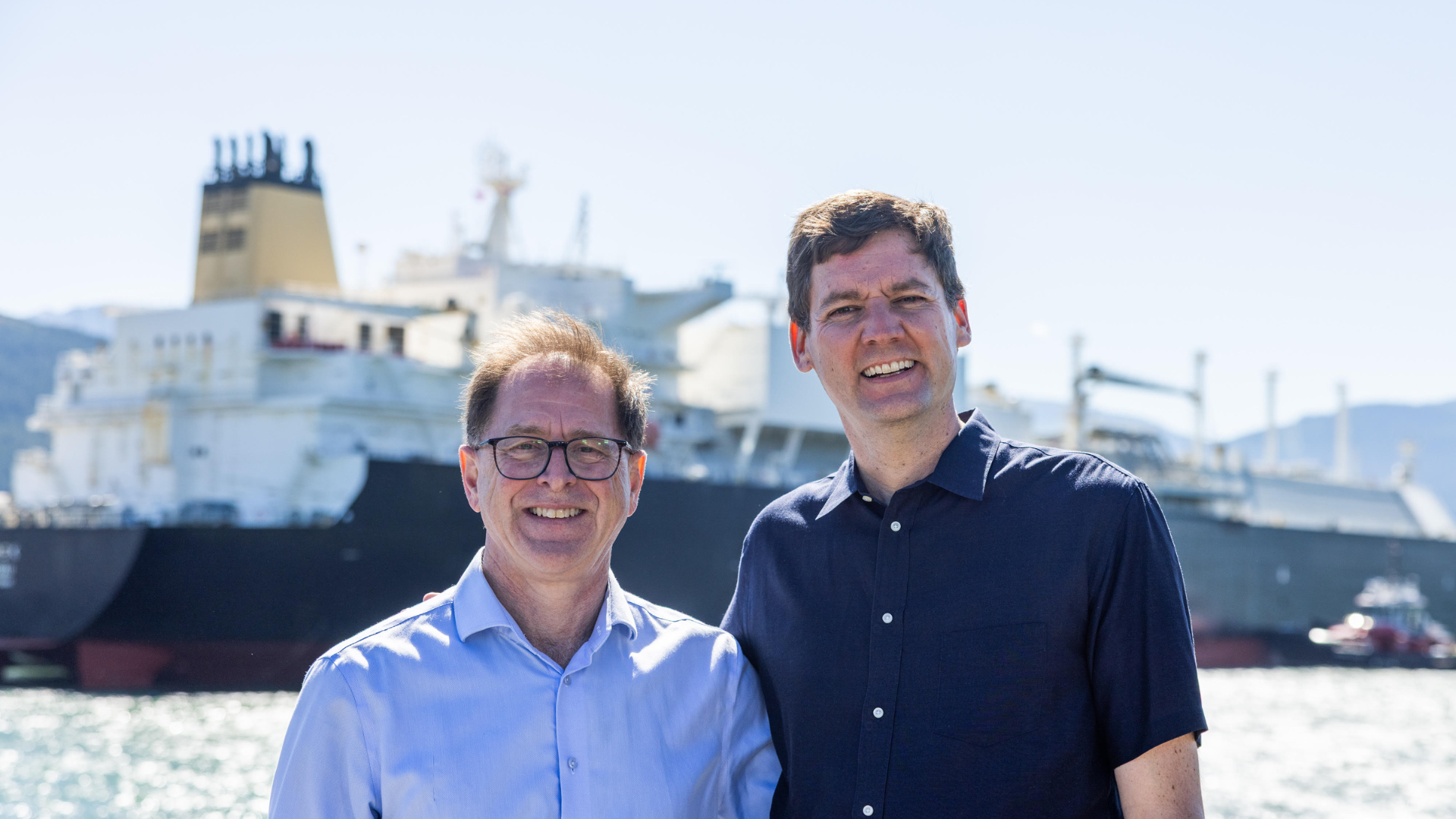
If Adrian Dix and David Eby are looking for permission to classify natural gas as clean energy, as the EU now does, new polling suggests they would have the consent of Joe Average in B.C.
New polling by Ipsos finds a majority of British Columbians support an LNG export industry and don’t want natural gas for home heating phased out.
The polling also suggests there is some public support for using natural gas to generate power.
As Globe and Mail columnist Adam Radwanski recently noted, B.C. Energy and Climate Solutions Minister Adrian Dix has been trying to execute a “tightrope walk” when it comes to economics, energy and climate policies.
Dix wants to maintain B.C.’s image as a climate policy leader, while supporting the expansion of natural gas exports in the form of LNG.
This balancing act includes supporting increased exports of LNG, while maintaining targets for phasing out natural gas for home heating domestically.
This may strike some as incongruous. The Chinese are welcome to burn our natural gas, but British Columbians shouldn’t?
The only logic to this policy comes from a carbon accounting standpoint.
If we burn natural gas here in B.C. to heat homes and to generate power, the emissions become a debit in B.C.’s carbon budget. If the Chinese burn it, it gets debited to their carbon budget, not ours.
But the atmosphere doesn’t really care where the CO2 comes from — it just wants less of it. And natural gas is a relatively clean energy source. So why not continue using it for heating and even power generation?
Natural gas should be classified as clean energy
There is a compelling argument to be made that B.C. natural gas and LNG could have a net benefit in terms of decarbonization.
As far as the general public is concerned, the tradeoff the B.C. government is making — supporting natural gas exports while moving to ban its use for domestic purposes — appears to be unnecessary.
Recent polling by Ipsos on behalf of the BC Energy Futures Initiative suggests British Columbians understand that natural gas is a clean energy source, and that there’s no need to sacrifice domestic energy security in the name of climate policy.
They feel that we can do both things — export LNG and use it to heat our homes or even generate electricity — with a clear conscience.
In a survey of more than 800 British Columbians on a range of energy issues, Ipsos found a majority of British Columbians support the production and use of natural gas both for domestic purposes, and for export.
The poll found six out of 10 British Columbians want a choice when it comes to heating their homes.
Of those polled, 63% said they want to be able to decide for themselves whether they heat their homes with natural gas and-or electricity, as opposed to being restricted to electricity alone.
And 45% said they favor scrapping the complete phase-out of natural gas thermal power plants in B.C.
The polling found strong support for B.C.’s nascent LNG industry, with 62% of respondents supporting additional LNG export facilities in B.C.
Broken down, the poll found that only 8% of those surveyed were strongly opposed to expanding LNG exports, while 27% were strongly in favour.
There appears to be a growing understanding that natural gas can have real environmental benefits, when it displaces more emissions-intense fossil fuels, like coal, diesel and heating oil.
The Intergovernmental Panel on Climate Change (IPCC) says simply by switching from coal to natural gas to generate thermal power can result in a 50% reduction in emissions.
It’s worth noting that the EU classified natural gas as a sustainable energy source in 2023. That was when it changed its sustainable finance taxonomy to include natural gas and nuclear power.
If the EU considers natural gas as a clean, sustainable energy source, why can’t we?
It appears the general public in B.C. understands the potential benefits of LNG exports in terms of decarbonization.
The Ipsos poll found that 52% of those surveyed favour the notion that LNG exports should be counted as a credit in B.C.’s emissions accounting ledger.
“A slight majority (52%) of B.C. residents say they support including BC exports of liquefied natural gas (LNG) in provincial emissions reduction targets because these exports may displace the use of higher emission diesel and coal in power plants in other countries,” the Ipsos survey notes.
What prevents this is the Paris Agreement.
According to the carbon accounting rules of Nationally Determined Contributions, participating nations can only take credit for emissions reductions that occur within their own national borders.
Under these rules, even if there are significant and verifiable emissions reductions in Asia as a result of fuel displacement using B.C. LNG, we don’t get to claim it in our own emissions budget.
Perhaps the best thing one can do with a rule that actually prevents one country from helping another country reduce its emissions is to ignore it.
At the very least, we should be getting credit for the fact B.C. is producing some of the leanest, cleanest natural gas and LNG in the world.
The LNG produced in B.C. will have some of the lowest emissions intensity anywhere, and it wasn’t just dumb luck that got us here.
Industry and the B.C. government have made strenuous efforts to reduce the CO2 and methane intensities of natural gas and LNG production.
We’ve accomplished this through innovation, engineering, and regulation — reducing methane leakage to achieve world class standards — and have been leveraging our clean hydro power to electrify the upstream gas and LNG processing.
So when B.C. exports LNG, we really should be getting some credit for its lower emissions intensity.
If Adrian Dix and David Eby are looking for the “social licence” for a more pragmatic approach to climate policies, acknowledging natural gas as a clean, lower carbon energy source, polling suggests they will have it.
Nelson Bennett’s column appears weekly at Resource Works News. Contact him at nelson@resourceworks.com.