Prime Minister Mark Carney’s opening round of fast-tracked “nation-building” projects misses the boat for Canada’s West Coast.
Liberal Party cheerleaders will disagree. They will point to B.C.’s two out of five score in the Carney government’s opening round of fast-tracked major projects as a West Coast win.
But committing to Phase 2 of LNG Canada’s Kitimat liquefied natural gas plant and an extension of B.C.’s Red Chris copper-gold mine is neither bold nor ground-breaking, especially considering that neither project has secured a final investment decision.
Anything bold or controversial, such as an oil pipeline from Alberta to B.C. tidewater, was not, and never will be, on the federal Liberal government’s national projects to-do list.
Welcome to Carney’s Canada. No gambling allowed.
But the country needs to start placing bets on its ability to compete internationally.
A suggestion, then, for projects that need federal government help, even though Carney’s prime ministerial banker’s suit might get spattered with debris from debate and disagreement in the public square.
How about assistance with West Coast port infrastructure to expand cargo movement capacity and accelerate efficiency for the benefit of local, regional and national economies?
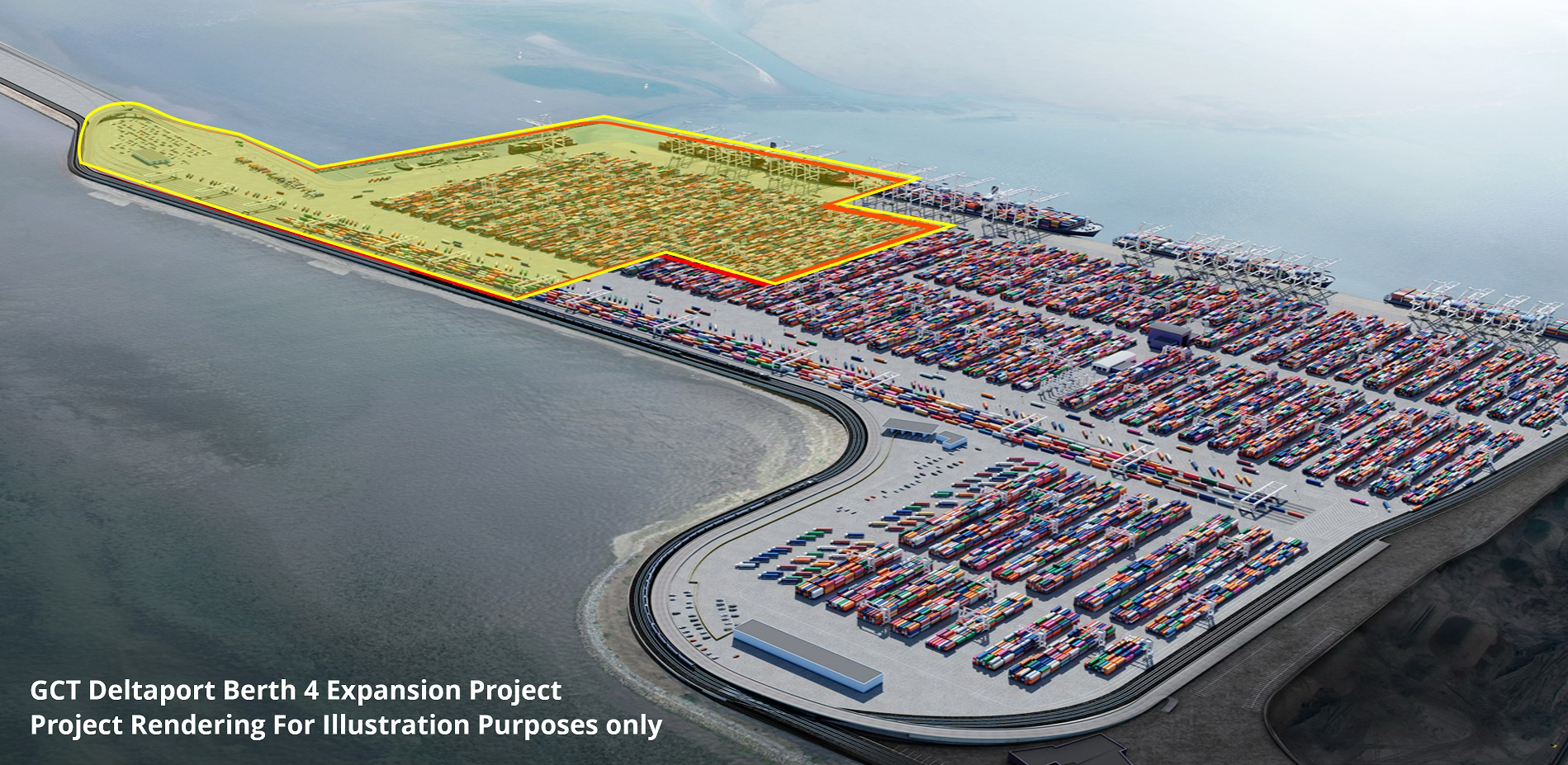
Global Container Terminals (GCT) has a modest proposal. It wants Ottawa to add the company’s Deltaport Berth 4 Expansion (DP4) to the country’s list of fast-tracked projects of national interest.
The company maintains that DP4 would add more than two million 20-foot-equivalent units (TEUs) to the Port of Vancouver’s container cargo handling capacity and create more than 10,000 jobs during its construction and operation.
Expanding West Coast B.C. cargo capacity sooner rather than later is critical today, considering the tariff turmoil kick-started by America’s April 2 trade war declaration and the U.S. port fees on Chinese shipping tonnage scheduled to come into effect on October 14.
Considering those and other geopolitical factors, an agile Canada has a unique opportunity to win future cargo business from its American competitors. But it won’t win anything tomorrow without making bold decisions today.
DP4 has opponents.
Atop the list: the Vancouver Fraser Port Authority (VFPA).
The VFPA’s $3.5 billion Terminal 2 expansion project is a direct competitor to DP4, and Roberts Bank does not need two major container terminal expansions.
Terminal 2 received federal government approval in April 2023 after clearing more than a decade’s worth of federal, provincial, and regional government hurdles.
But it still has no private-sector partner or committed operator.
It also requires the creation of a 108-hectare industrial land mass immediately west of GCT Deltaport in deeper water away from intertidal habitat to reduce its impact on the Tsawwassen-area marine environment.
Terminal 2 would add an estimated 2.4 million TEUs to the port’s annual container handling capacity in a single mega-expansion.
The DP4 project is less expensive and less environmentally disruptive.
GCT has argued that DP4 would provide 80% of Terminal 2’s container capacity increase at roughly one-third of the cost and deliver a more incremental response to the projected rise in cargo traffic. Marine habitat lost to filling and dredging would also be roughly half of what Terminal 2 will require.
It would also be a GCT project.
So, we have a debate over which project makes the most financial, political and environmental sense.
But we have no debate over the need to increase B.C.’s container cargo-handling capacity.
Vancouver, Canada’s largest container port, currently handles approximately 3.5 million TEUs annually. That number is forecast to jump to anywhere between 6.7 million and 9.7 million TEUs over the next 20 years.
The increase could arrive sooner and faster if U.S. port diversions accelerate.
But without the ability to be a reliable alternative, Canada will fumble another transpacific trade expansion opportunity.
That would be another blow to a country already weakened by decades of low productivity, ill-founded job market entitlement and small-minded leadership.
Nation-building needs nation builders.
Where are they in Carney’s Canada?
Originally Published in Substack Shipping News (SSN)
www.linkedin.com/in/timothyrenshaw
@trenshaw24.bsky.social