Resource Works’ inaugural Get It Done BC forum this past Monday, Sept. 22nd, 2025, on the margins of UBCM week in Victoria, felt less like an event and more like the start of something significant and disruptive. And it was, bringing together over 150 municipal, Indigenous, and industry leaders joined for a full-day conference at the Union Club of BC. Spoiler: we expect to host it next September in Vancouver.
We were grateful for the support provided by sponsors, including the Canadian Association of Petroleum Producers (CAPP), Mining Association of BC, and the Coast Forest Policy Coalition, as well as GCT Global Container Terminals.

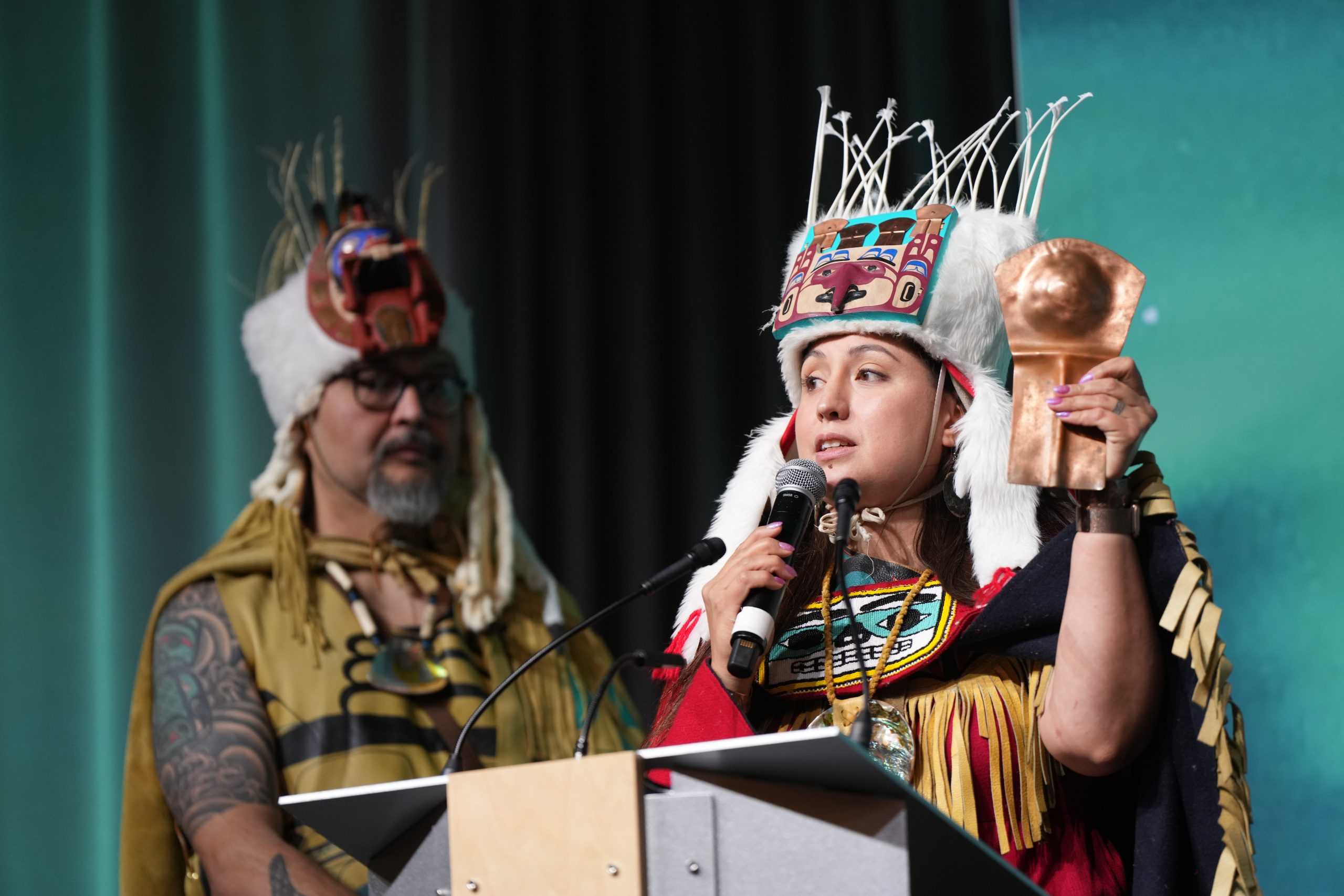
Campbell River Mayor Kermit Dahl, Port Coquitlam Mayor Brad West, and Nanaimo Mayor Leonard Krog, took to the stage with moderator Dallas Smith (President of the Nanwakolas Council), announcing a new initiative, the Alliance of Resource Communities. A grassroots movement, it demands policies that enable the real economic results that communities need.
Let me be candid: we are in trouble as a province. Jairo Yunis, Director of Policy at the Business Council of British Columbia, led off the day with a sobering presentation on the sorry state of the provincial economy.
Three quarters of the room, give or take, was comprised of elected officials, but this was not a room content with the fact that BC’s public sector is driving jobs growth province-wide as private sector job creation slows—a reality Jairo and his colleagues have repeatedly shared.
In other words, things have gotten dire in the productive, tax-paying economy. The taxpayer-funded bureaucracy has been left to pick up the slack. Unfortunately, that’s only sustainable when there is a robust enough tax base to support it. Today, it’s just robbing Peter to pay Paul.
It would be easy and convenient to blame global commodity cycles — or the pandemic — for the current situation. That’s a tired excuse, and I’m getting tired of hearing it.
Monday’s event was replete with evidence from those on the ground about what’s really going on. Some of the greatest economic pain in BC today is being felt precisely in communities where bad policy decisions have compromised private investment, and, in turn, stable, family-supporting employment.
Commodities boom and bust; anyone worth their salt in natural resources gets this.
What BC forestry communities have undergone is far beyond a boom-bust cycle: it is the direct result of targeted economic sabotage. Over the last several years, the Province advanced policies resulting from the Old Growth Review process, directly leading to massive reductions in forest harvest levels. That left dozens of mills unable to procure raw product. Without logs to process and sell, mills in countless communities closed, and thousands of workers lost their jobs.
Here’s a similar story at the intersection of federal jurisdiction and localized impact: aquaculture communities have been battered by the federal government’s decision to shutter coastal salmon farming. The Department of Fisheries and Oceans has implemented a profoundly misguided, unscientific agenda to close these operations, with little care for the human misery that is being inflicted. Sure, it’s not their jurisdiction, but from the perspective of many on the coast who have seen widespread economic suffering, the BC government has basically shrugged its shoulders. That’s not good enough.
These are two highly specific examples, but they are not unique. The last decade has been a showcase in policy-making by ideal. Canadian politicians have pretended that the tradeoffs between environment and economy are imagined and that “bold, ambitious” (read: costly, complex) policies to slash emissions, hamper land use for industrial purposes, and pass costs along to “price-in” externalities won’t have a negative impact.
If any of this were easy, and if climate action were “free”, there would be no need to debate its implementation in the first place. I’m not going to take the lazy way out and argue that these same politicians (the federal Liberals, the provincial NDP) should have completely ignored the majority of British Columbians who say that climate change concerns them. In what democracy would that have been realistic or prudent?
But I do think that the opportunity for brave leadership was missed. Here’s the situation as I see it — and as I wish political leaders had had the backbone to articulate, because I know many of them see it too. BC and Canada will not, and have never been positioned to, solve climate change alone. It is a global issue and we are just part of a massive global supply chain for the fossil fuel products that we know are, yes, causing climate change. The range of realistic options for us was never between “do nothing” and “save the world”. Believe it or not, even shutting down Canada’s economy wouldn’t have the latter outcome.
Before the federal Liberals came in in 2015, Canada was already rapidly reducing emissions intensity in energy production while simultaneously growing exports. That’s common sense economic and environmental management.
Instead of staying the course, or identifying modest and pragmatic stretch goals, we opted for a massive over-correction. The federal government started it. It was sexy to “act on climate” and it was even sexier for political parties to signal how cool they were by committing to progressively more ambitious goals, never you mind how achievable they were or how much egg they would leave on our face a decade later when the true costs of carbon pricing on steroids finally became apparent to voters.
The BC NDP, elected in 2017, followed suit. Like the federal Liberals, they are reacting to a Canadian public that is now panicking over the economy and demanding policies that actually make sense.
Despite a rapid and ongoing attempt to rebrand themselves as responsible economic stewards, alive to the challenges of 2025, they have been far slower than the federal Liberals in ditching the toxic, irresponsible policies of climate zealotry.
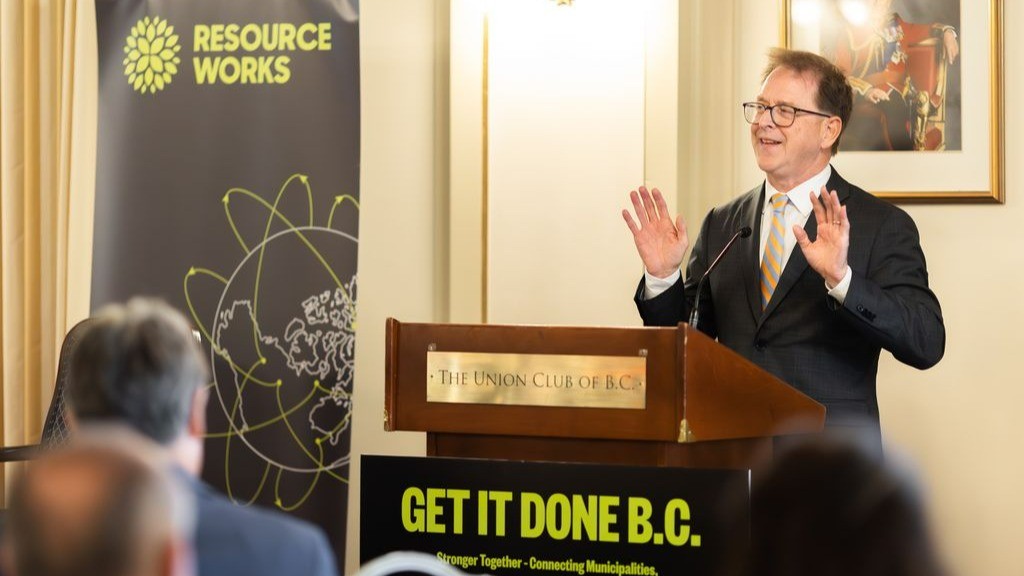
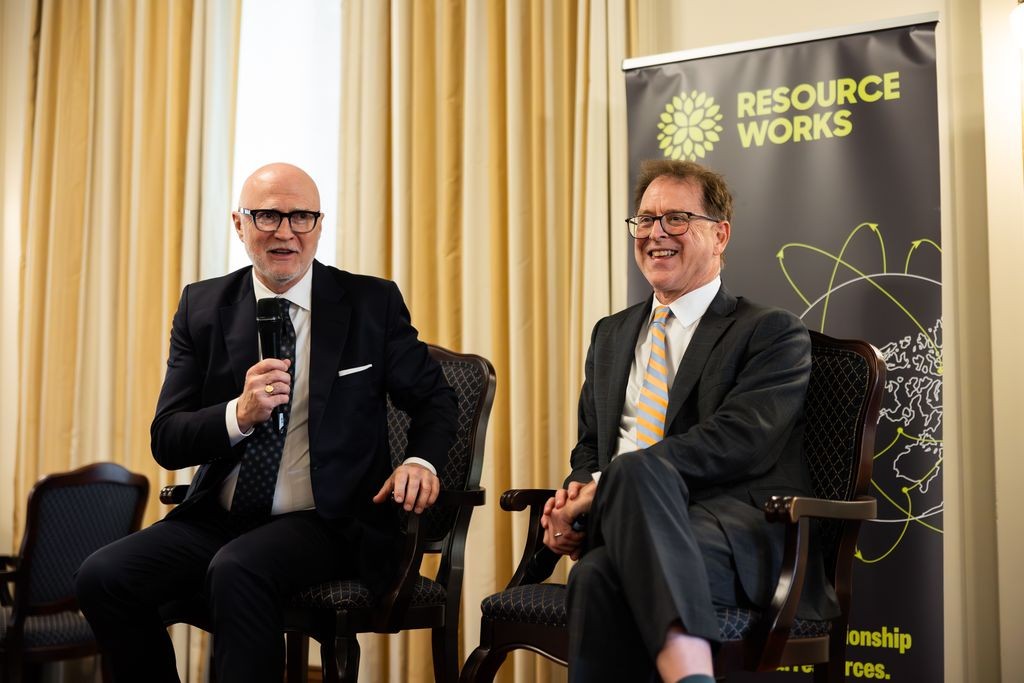
At our conference this week, the day’s keystone session perfectly captured this tension: a keynote address from the Honourable Adrian Dix, Minister of Energy and Climate Solutions, followed immediately by a separate panel which I moderated on the stark realities of energy affordability.It made for a fascinating and necessary juxtaposition of government ambition and on-the-ground reality.
Minister Dix spoke of a new era for BC Hydro, one where it must reclaim its original mandate as an agent of province-building and economic growth by taking on more risk. This shift in perspective is undeniably necessary. He pointed to the government’s actions to streamline regulations for renewables, exempting wind projects from lengthy environmental assessments, and moving to a single-window regulator to get things built faster. He called for less bickering and more unity, stressing that now is the time for all parties—government, industry, and First Nations—to work together.
It was a compelling vision of a government ready to act.
Many attendees in industry told me they are thrilled to see momentum at long last. BC Hydro is moving, and quickly, to better understand and build for the needs of all users. Flashy headlines are far from the only measure of success. Indeed, success with a “build more” agenda is best defined by the cumulative sum of all actions across government and industry. In other words, it may take some time before we see the results we want, and which the BC NDP is saying they are committed to.
The question remains whether it will be enough before the winds of political change inevitably sweep along. In an ideal world, this fresh mandate to build, to transform, and to bolster our economy would have started well before Donald Trump’s second term in the White House. But late is better than never.
When Energy Futures Institute Chair Barry Penner, KC, Surrey Mayor Brenda Locke, and strategist Bill Tieleman joined me on the stage, it was our role to connect that vision to the challenges British Columbians are facing today. The conversation that followed was a crucial reality check on what it will take to get it done.
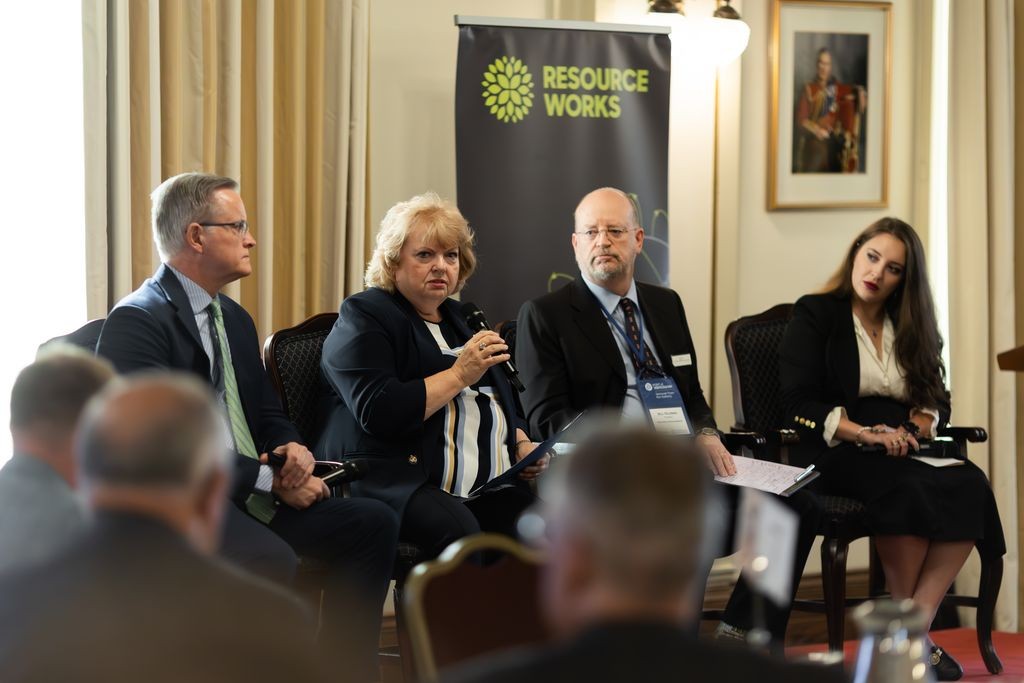
Mayor Locke provided a sobering, frontline perspective. In Surrey, a city mandated to build thousands of new homes, the lack of energy supply is not a future problem; it’s a present crisis. She spoke of major industrial projects and housing developments being stalled and businesses walking away because they simply can’t get the power they need. Her comment that she may have to tell developers to include a case of candles with every new house for heat and light wasn’t just a witty remark; it was a stark illustration of the consequences when infrastructure can’t keep pace with policy.
Barry Penner reinforced this with hard data. He noted that the waiting list for electricity service from BC Hydro now exceeds 7,000 megawatts. That’s more than six times the maximum output of the newly completed Site C dam. He also reminded us that while Site C is a monumental achievement, the decision was made 15 years ago, highlighting the immense timelines required for such projects. The billions in costs for that project are only now beginning to be passed on to ratepayers, meaning the era of low rate increases is definitively over.
Minister Dix deserves credit for showing up and listening to resource industries voices. That has the potential to turn the page on what for years has been a fractured relationship. But don’t get me wrong: appearances and strong words are nice; real action is needed. Unless a number of provincial policies unsuited to today’s economic reality get a reset, BC’s economic engine will continue to sputter.
The results of the CleanBC review are still unknown, even as provincial policies under CleanBC continue to massively drive up the demand for electricity from industrial users, electric vehicles, and new building codes.
As Bill Tieleman pointed out, many BC municipalities are simultaneously creating a crazy quilt of local regulations that effectively ban the use of natural gas, putting even more strain on a grid that is already importing a quarter of its power. We are shipping our natural gas to the United States, where it’s used to generate electricity that we then buy back at a premium. The logic is difficult to follow.
The price for this disconnect will be paid. It will be paid by ratepayers facing ever-higher bills, by homeowners facing tens of thousands in extra costs due to restrictive step codes, and by the provincial economy as a whole when investment goes elsewhere because we can’t provide the energy to power it.
The path forward requires pragmatism. It requires us to embrace choice. As my panelists argued, allowing for dual-fuel systems that use efficient electric heat pumps most of the year but rely on the existing natural gas system during peak cold snaps can save us from having to build an electrical system so large and expensive that it becomes unaffordable.
The broader conversation we had on Monday was a critical one. It wasn’t about dismissing our climate or environmental goals; it was about ensuring the path to achieving them is grounded in economic reality and common sense. Bringing so many leaders into one room proved there is a deep and widespread appetite for this honest dialogue. We have the ambition. We have the resources. Now, we must find the pragmatism to build a future that is both green and prosperous, without asking British Columbians to pay an impossible price.
And to the Minister and his team: what will mollify the frustrations of the Victoria lobbyist crowd in the short-term is not necessarily what the BC public needs and deserves from the provincial government. We need a real course correction. If the BC NDP isn’t prepare to deliver more than promises and marginal progress before the next election, voters will choose differently. Better get cracking.
—
Margareta Dovgal is the Managing Director of Resource Works Society. This post originally appeared on her LinkedIn.