British Columbia’s long-heralded era of liquefied natural gas exports arrived this past summer.
Apart from the celebrations the Haisla Nation held in Kitimat, where the newly minted LNG Canada facility loaded its first Asia-bound cargoes, the biggest commemoration of that milestone might have been at Get It Done B.C. on September 22 in Victoria.
Billed as a practical workshop on how to build things again in a province made more famous for red tape in recent years, Get It Done B.C. featured the defining conversation of the week at the Union of British Columbia Municipalities (UBCM) convention.
Hosted by Resource Works at the Union Club to open this year’s UBCM, more than 150 mayors, councillors, Indigenous leaders, MLAs, and industry figures gathered together to listen to stories of success and plans for a better future. One of the most anticipated sessions was “LNG Is Here: What’s Next?”
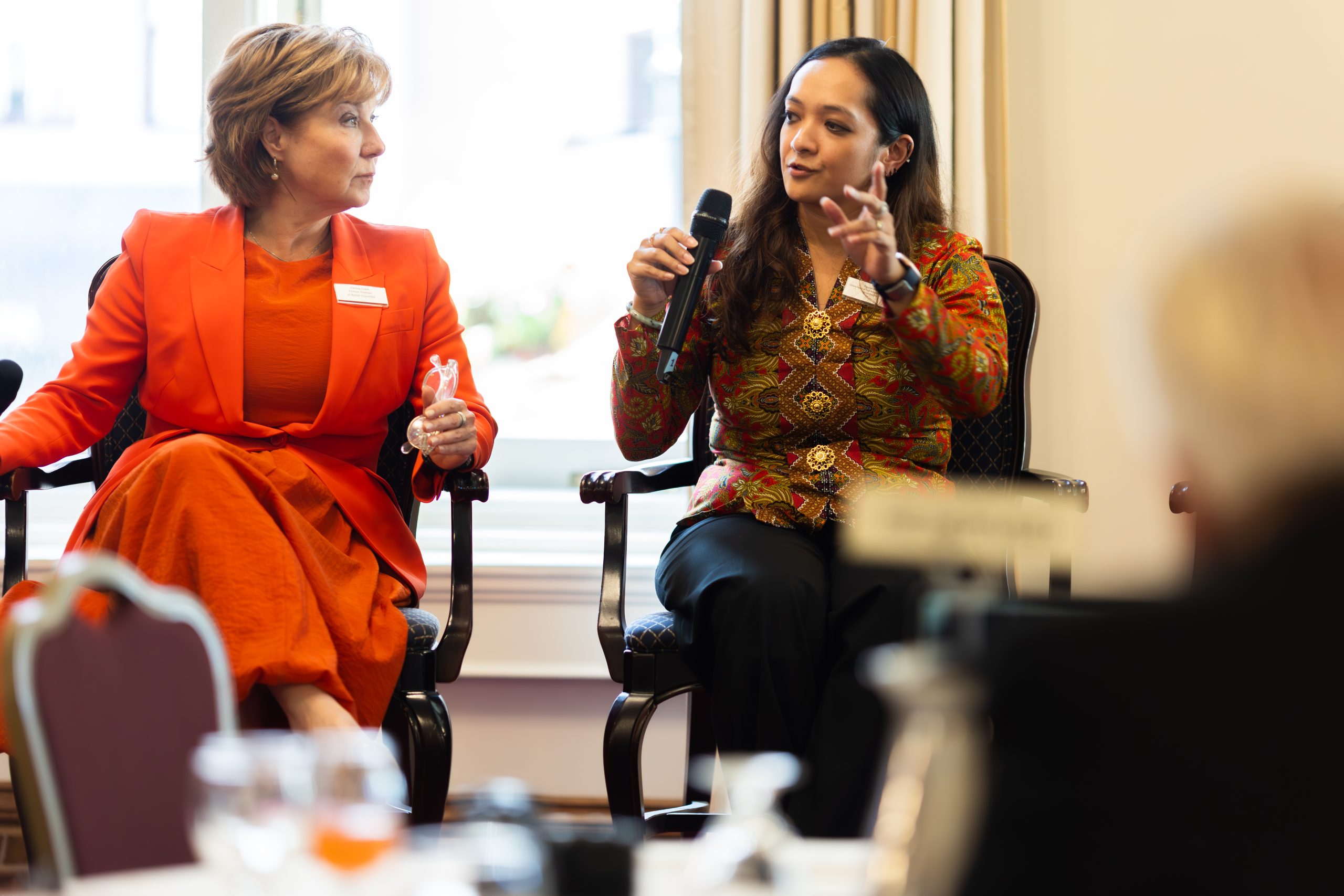
Former premier Christy Clark and Fauziah Marzuki, Global Head of Gas and LNG Research and Analysis at BloombergNEF, joined Resource Works founder and CEO Stewart Muir to talk about B.C.’s most exciting new industry.
Clark opened by expressing pride in finally seeing the results of a project that she championed from the start.
“The first shipment of LNG from British Columbia was the proudest day,” she told the packed room. “When we started the LNG projects in 2011, people said we were idiots and liars. But from that one project, LNG Canada, 100,000 jobs were created across the province and across the country.”
Marzuki has closely followed the project from Singapore and expressed how it resonated around the world.
“It was a really happy moment for me as well,” Marzuki said. “My team was already preparing the strategic insight for why this is a great gain for Canada. It was exciting to finally see that first cargo.”
Their discussion soon pivoted to the lessons learned from the project.

Over 150 guests attended Get It Done BC, from Indigenous leaders to leading industry figures to politicians from all levels of government.
Marzuki cautioned that Canada’s measured, phased approach to LNG could prove to contain hidden strengths.
“Australia developed nearly a dozen projects at the same time,” said Marzuki. “That led to absolute cost blowouts. To an extent, I do believe that this more cautious approach Canada is taking is going to strategically position the country.”
Clark asked Marzuki whether she believed that global investors, many of whom are frustrated by Canada’s regulatory gridlock, might give the country a second look. Marzuki was optimistic.
“I believe so. There is appetite for Canadian LNG. The key is resisting the temptation to develop everything at once,” said Marzuki.
The conversation shifted between technical and philosophical topics, reflecting the spirit of “Get It Done B.C.” itself, which sought to fuse pragmatic plans and aspirational dreams for the province.
“U.S. LNG is not actually cheap,” Marzuki explained while comparing Canadian and American LNG. “Buyers pay for flexibility, they pay for liability as a service. Canada’s advantage is reliability and stable supply in the Pacific.”
She added that as Southeast Asian producers like Malaysia and Indonesia decline, “Canada can backfill that supply in the Pacific.”
Clark, who made LNG development a key priority under her premiership, linked that opportunity to broader trade dynamics.
“We are governed by the rule of law, English is the language of business, we have huge resources, and we are not the Americans,” said Clark.
Their exchange reflected how LNG became a bridge between B.C.’s local prosperity and wider global geopolitics, a theme echoed throughout the wider conference.
At the rest of Get It Done B.C. sessions ranged from discussions about B.C. Hydro’s build-out plans, coastal forest policy, and the province’s faltering permitting system for major projects.
Energy Minister Adrian Dix was in attendance and urged cooperation and risk-taking, while mayors like Brad West, Kermit Dahl, and Leonard Krog launched the new Alliance of Resource Communities, a network demanding faster, fairer project approvals.
Muir framed the event as a turning point. “B.C. is at a crossroads,” he said in closing remarks. “We can either stay boxed in by bureaucracy and ideology, or we can roll up our sleeves and get things done.”
By nightfall, the consensus was clear. Get It Done B.C. was a declaration of intent for the future and the start of a movement for making grand new resource projects the norm in the province again, not just a happy exception to the routine of delays and cancellations.
Marzuki declared that Canada’s strength is a balance of ambition and realism.
“Each project still has a lot of commercial value,” she said. “When we look at the entire landscape, we need to ensure domestic demand is met while planning exports strategically.”
Clark closed out the session on the same note of optimism that had defined the day.
“Government can make great investments on behalf of citizens,” Clark said, recalling the billions her administration spent on transmission capacity to support LNG. “Those kinds of projects that invest in economic growth are vitally important.”
If the applause that followed was any indication, B.C.’s resource communities are ready to pick up the torch and power the movement now forming around them.
To read more about Tilbury LNG, click here.