A shift in ambition
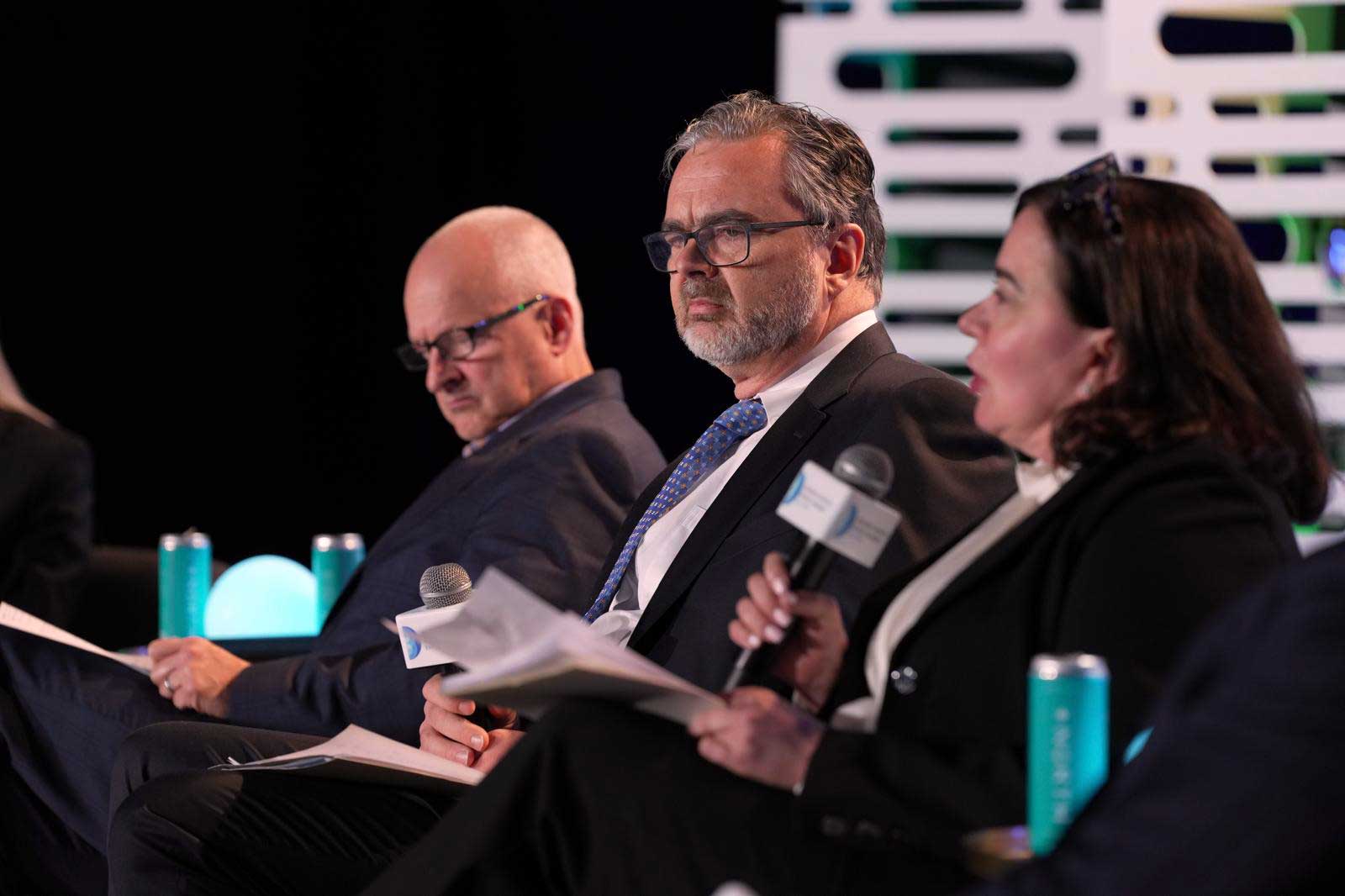
A year after the Trans Mountain Expansion Project came into service, Mike Davies, President and Chief Operating Officer at Trans Mountain, told the B.C. Business Summit 2025 that the project’s success should mark the beginning of a new national mindset — one defined by ambition, reform, and nation building.
“It took fifteen years to get this version of the project built,” Davies said. “During that time, Canadian producers lost about $50 billion in value because they were selling into a discounted market. We have some of the world’s largest reserves of oil and gas, but we can only trade with one other country. That’s unusual.”
With the expansion now in operation, that imbalance is shifting. “The differential on Canadian oil has narrowed by about $13 billion,” he said. “That’s value that used to be extracted by the United States and now stays in Canada — supporting healthcare, reconciliation, and energy transformation. About $5 billion of that is in royalties and taxes. It’s meaningful for us as a society.”
Davies rejected the notion that Trans Mountain was a public subsidy. “The federal government lent its balance sheet so that nation-building infrastructure could get built,” he said. “In our first full year of operation, we’ll return more than $1.3 billion to the federal government, rising toward $2 billion annually as cleanup work wraps up.”
At the Westridge Marine Terminal, shipments have increased from one tanker a week to nearly one a day, with more than half heading to Asia. “California remains an important market,” Davies said, “but diversification is finally happening — and it’s vital to our long-term prosperity.”
Fixing the system to move forward
Davies said this moment of success should prompt a broader rethinking of how Canada approaches resource development. “We’re positioned to take advantage of this moment,” he said. “Public attitudes are shifting. Canadians increasingly recognize that our natural resource advantages are a strength, not a liability. The question now is whether governments can seize it — and whether we’ll see that reflected in policy.”
He called for “deep, long-term reform” to restore scalability and investment confidence. “Linear infrastructure like pipelines requires billions in at-risk capital before a single certificate is issued,” he said. “Canada has a process for everything — we’re a responsible country — but it doesn’t scale for nation-building projects.”
Regulatory reform, he added, must go hand in hand with advancing economic reconciliation. “The challenge of our generation is shifting Indigenous communities from dependence to participation,” he said. “That means real ownership, partnership, and revenue opportunities.”
Davies urged renewed cooperation between Alberta and British Columbia, calling for “interprovincial harmony” on West Coast access. “I’d like to see Alberta see B.C. as part of its constituency,” he said. “And I’d like to see B.C. recognize the need for access.”
He summarized the path forward in plain terms: “We need to stem the exit of capital, create an environment that attracts investment, simplify approvals to one major process, and move decisions from the courts to clear legislation. If we do that, we can finally move from being a market hostage to being a competitor — and a nation builder.”
An earlier version of this story mistakenly attributed to Mr. Davies comments from another speaker on the same panel. These have been removed. We apologize for the error.