
Scarcity always results in rationing, whether by price or regulation. When scarcity involves the essentials of life, division runs deep, and in many directions, across a community or country. In a mixed economy like Canada, both the private sector and the government are responsible for providing goods and services.
Today in Canada, the most significant items of scarcity on the government side are housing, healthcare, and infrastructure, with extensive sub-lists under each. They affect every individual in one way or another, and to varying degrees of intensity.
People tend to avoid using the words “rationing” or “scarcity” unless there’s a war. We reach for softer terms, “shortage,” “too expensive,” or “temporary.” But the truth is simpler: we miscalculated the need.
We only need to examine the competition between healthcare and education in British Columbia to understand rationing disguised as hard choices.
The Vancouver Island Free Daily reported, “BC school boards forced to make cuts… all out of Band-Aids.” The Coast Mountain News reports on the closure of the Pediatric Ward in Kelowna on June 9, stating, “On May 26, …for what is expected to be a period of six weeks,” a good example.
However, these days, Prime Minister Carney and others have been unabashedly using the wartime metaphor, and good on them, we all need a jolt. If Prime Minister Carney and the premiers plan to make Canada an energy superpower and, in the process, alleviate today’s rationing, we’d better have our eyes on the ball. And that ball is electricity. We cannot grossly underestimate the need, as we have with healthcare, housing, and infrastructure.
The regulators and planners who sit at tables across the country, calculating future electricity demand, are of the same class as those who missed the compounding effect of unprecedented immigration in modern times. Future electricity demand is even more complicated, shaped not only by population but by breakthrough technologies. This is not a time for Over Capacity Anxiety.
Many infrastructure projects are dismissed as white elephants by opponents, only to prove their value over time, such as the Canada Line, the St. Lawrence Seaway, Expo 86, Ontario’s Darlington Nuclear Station, and, of course, the Trans Mountain Expansion.
British Columbia has its sights set on big, ambitious goals: critical minerals, hydrogen, LNG, and tech leadership in the AI era. Additionally, it aims for a reduction, and ultimately, the elimination, of scarcities in housing, infrastructure, healthcare, and education. Plus, rising incomes for working people. A return to generational advancement.
Never mind all those nation-building projects. As I drive around and listen to CKNW radio lately, the public debate seems to me to be focused on issues such as EV and natural gas mandates in homes and businesses, as well as subsidies for heat pumps.
Are these the real electricity demand questions, or are they simply cost-of-living and doing-business problems? The townhouse complex we live in does not have the electrical supply to accommodate heat pumps and air conditioning.
Does it matter if we hit this or that aspirational mandate in 2030 or 2035, when the real target is to boost the economy with enough electricity to be as green as possible in the production of natural gas, LNG, propane, hydrogen, and critical minerals, as pragmatically possible, without finding ourselves rationing electricity?
As the computerization of everything continues at an ever-faster pace, and electronics become more fragile, the need for base-load supply increases in proportion to the overall demand for electricity. Closing a natural gas generation plant seems counterintuitive when considering all the renewable capacity we hope to build, given the paramount importance of reliability.
Much of the electricity demand will be in the north, some of it in remote areas, tied to industrial projects. Hopefully, data and tech centres will also take root outside the Lower Mainland. Kelowna already has a strong foothold in the tech sector, and other medium-sized cities are likely to follow.
It’s imperative that the human resources for these future jobs, construction, resource, transportation, plant operation, and tech, are located close to the action. B.C. needs better population balance.
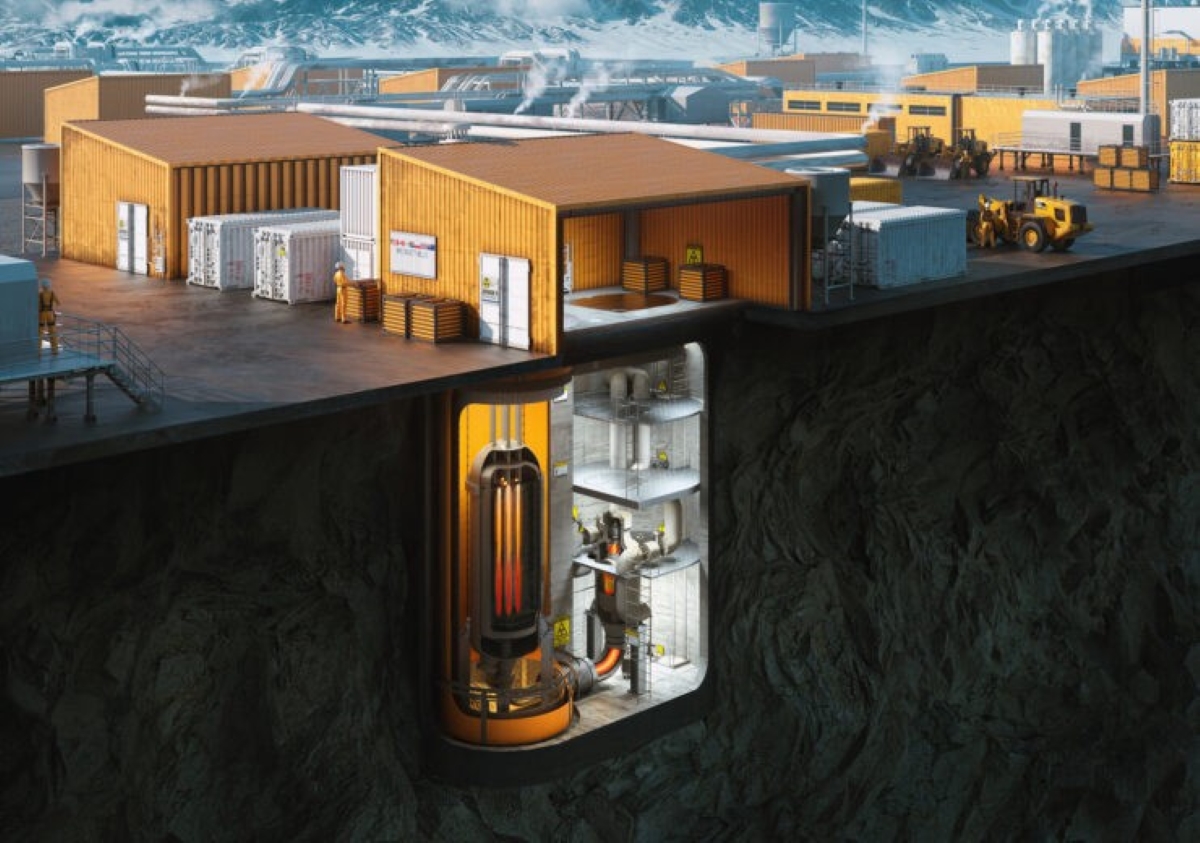
Small Modular Reactors should not be left off the table. Their flexibility in providing base-load power supports the integration of more wind and solar. B.C. should join other provinces, along with the federal government, Indigenous nations, and business organizations, in exploring the appropriate use of SMRs.
Resource Works previously published “Time for BC to embrace nuclear energy,” explaining how nuclear generation played a central role in meeting Ontario’s massive growth in electricity demand after the 1960s.
Ultimately, nation-building has four fundamental objectives: to build a flourishing, independent, and sovereign economy; to contribute to reducing global and domestic greenhouse gas emissions; to achieve generational advancement for working people; and to advance reconciliation.
Scarcity and rationing are the natural enemies of each of those goals. Is it more important to have a theoretically perfect mix of electricity generation types or a pragmatic blend that produces the best bang for the buck across the four objectives?
Jim Rushton is a 46-year veteran of BC’s resource and transportation sectors, with experience in union representation, economic development, and terminal management.