As civic leaders gather in Vancouver this week for the annual Union of BC Municipalities Convention, it will be a chance to speak directly with provincial representatives on their important issues.
Forestry is without a doubt one of the biggest issues, with hardly a day going by without new job losses being announced. Veteran forestry journalist Gordon Hamilton recently identified “a confluence of forces” behind the crisis, including industry concerns about the ability to compete in foreign markets.
Solution to the forest crisis
To stem further losses while also addressing other public priorities, Resource Works recommends focusing on three main areas:
1. Competitiveness
- BC has the highest log costs in Canada – work to reduce them.
- With each added policy, employer costs increase, so the provincial government should focus on red tape reduction
- British Columbia’s carbon tax is the only one of its kind in the world that provides essentially no support to its traded industries – industries that are export-oriented or that compete with non-taxed imports in the local market. (See this Business Council of BC report.)
- Other costs like the new health care tax add up to very high administrative costs.
2. Market Pricing System/Stumpage
- BC stumpage is about five times higher than in Alberta.
- Since 2016 the MPS system tracked quite well with markets, now the gap is too wide and the system is broken.
- By fixing the MPS system, the BC government can become more reactive to market conditions.
3. Forest Resiliency and Fire-proofing Communities
- A healthy and viable forest industry provides practical answers managing climate impacts and sequestering carbon.
- More harvesting closer to communities will prevent threats to people and property, while reducing the fuel loading in mature/over-mature stands.
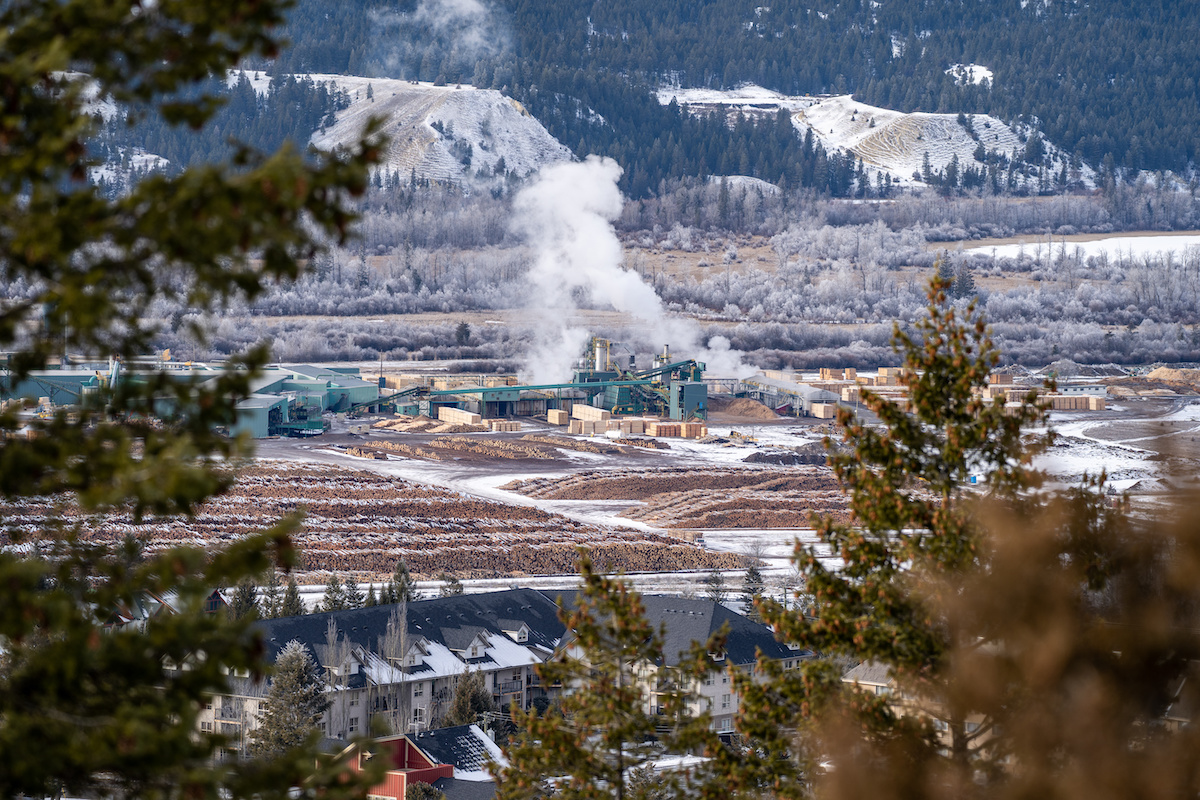
Photo: Canfor’s Radium Hot Springs sawmill. Operations were curtailed in June and July 2019 because of uneconomic conditions the company attributed to poor lumber markets and the high cost of fibre. Adobe image.