If the LNG Canada project is approved, expect to hear a lot more about the climate impact of using liquefied natural gas (LNG) to replace coal in Asia.
No alternative exists that can achieve a larger, faster improvement to global emissions and the urgent climate agenda.
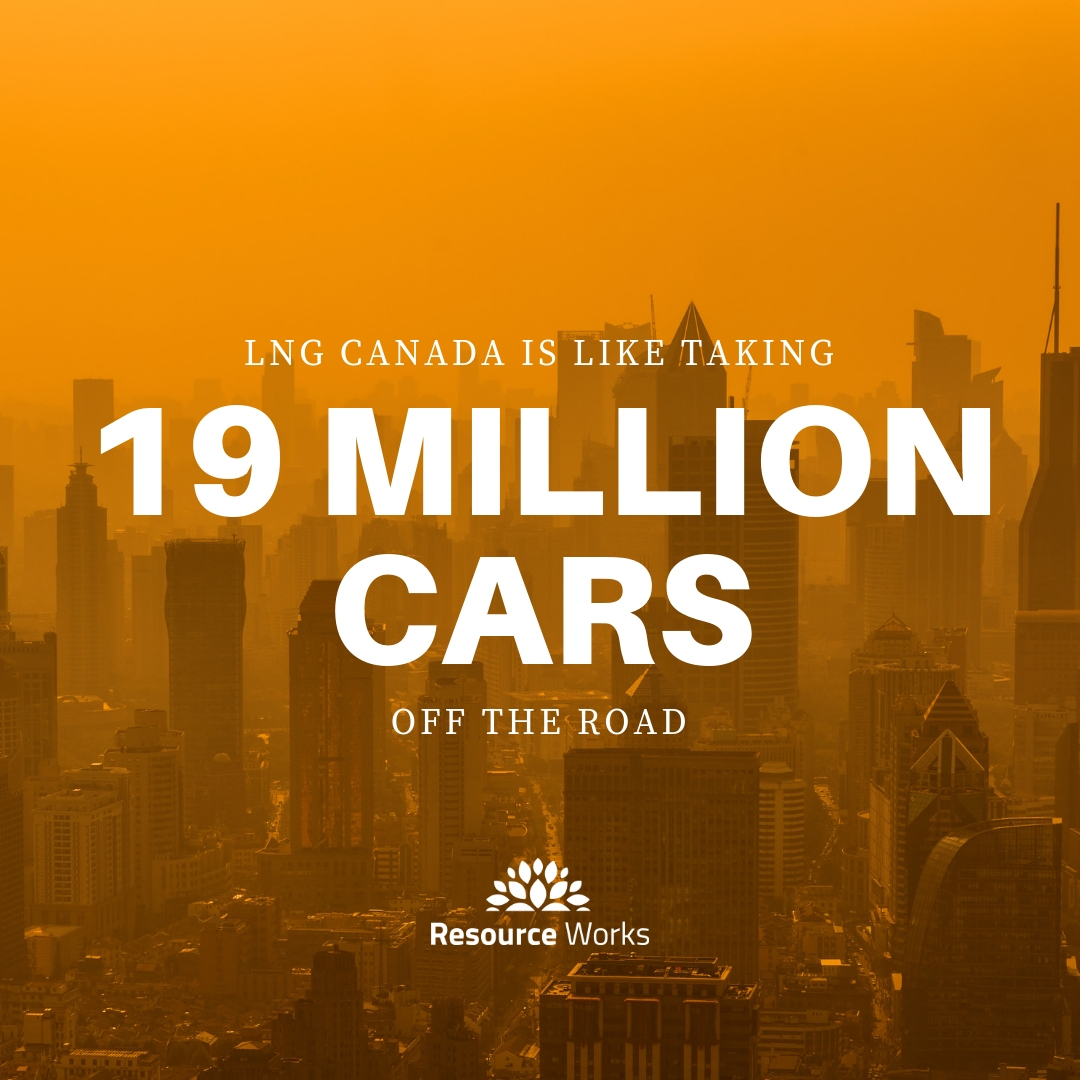
Based on our calculations, 19 million cars would have to be taken off the road to equal the climate benefits of LNG Canada.
Put differently, building LNG Canada is like multiplying six times the number of electric vehicles on the road globally in December 2017.
LNG Canada can make BC carbon neutral. The amount of GHGs reduced by using LNG Canada production to replace electricity generated with coal, would equal British Columbia’s total GHG output.
Some of the thinking behind Canadian climate policy has not caught up with these global realities. The countries clamouring for Canadian natural gas – China, Malaysia, Japan, Korea – need action now.
Those opposing LNG exports tend to overlook the fact that climate emissions are a global problem. Instead, they focus on British Columbia’s targets alone and obsess on the rather obvious fact that yes, new natural gas production does result in more greenhouse gas emissions.
The whole point of LNG is to allow high-carbon economies to emulate the success that Canada has had in lowering climate emissions. That’s why the project is moving forward with the partnership of four major economies from the other side of the Pacific:
- South Korea is aiming to reduce its emissions buy 37 per cent by 2030 and is exploring not only LNG but also renewable energy, energy efficiency, and carbon capture and storage. Natural gas is by far the easiest solution as it can be applied right now using existing technology. In 2018, South Korea’s use of coal to generate electricity reached new highs.
- For Malaysia, which wants to reduce its emissions intensity 45 per cent by 2030, climate change fears include reduced crop yields, water consumption and irrigation shortages, floods, land erosion, coral bleaching, damage to infrastructure, impacts on equipment efficiency, and increased transmission of diseases like dengue, malaria and cholera. Yet its use of coal to generate electricity was on track to increase threefold from 2005 to 2020.
- China produced 28 per cent of the world’s CO2 emissions from fuel combustion in 2015, with 64 per cent of its energy from coal. (Renewables account for just over 2.1 per cent of Chinese primary energy.)
- Japan has had to increase its reliance on coal despite moves in the opposite direction, making it difficult for the nation to meet its climate obligations.
Canadian LNG is seen as embodying the values of Canada itself: safe, clean, democratic, abundant. Pressures to withhold such a desirable climate solution from those who desperately need to lower their emissions are misguided. It’s time to act globally to create benefits locally.
Greenhouse gas life cycle analysis by LNG Canada shows that one year’s supply of LNG, if used to generate electricity in Asia instead of using coal would reduce global greenhouse gas emissions by a net 60 to 90 million tonnes
BC’s annual emissions in 2015 were 61.6 million tonnes.
A car produces 4.6 tonnes of GHGs per year. At the 90-million tonne reduction level, that equates to removing 19,565,000 million cars from the road.
One year’s supply of LNG from LNG Canada, if used to generate electricity in Asia instead of using coal, would reduce global greenhouse gas emissions by a net 60 to 90 million tonnes (BC’s annual emissions in 2015 were 61.6 million tonnes).