BRIDGING THE DIVIDE: Here’s how one mine is building communities

For those in the natural resource fields, it can prove incredibly challenging to demonstrate to others – like city residents – the positive impact that rural and out-of-sight industrial activities have on the economy. Check out how the Copper Mountain Mine is working to overcome that.

This map from the mine shows its 450 direct jobs as well as the supply chain of goods and services that runs through British Columbia. (Higher resolution PDF download)
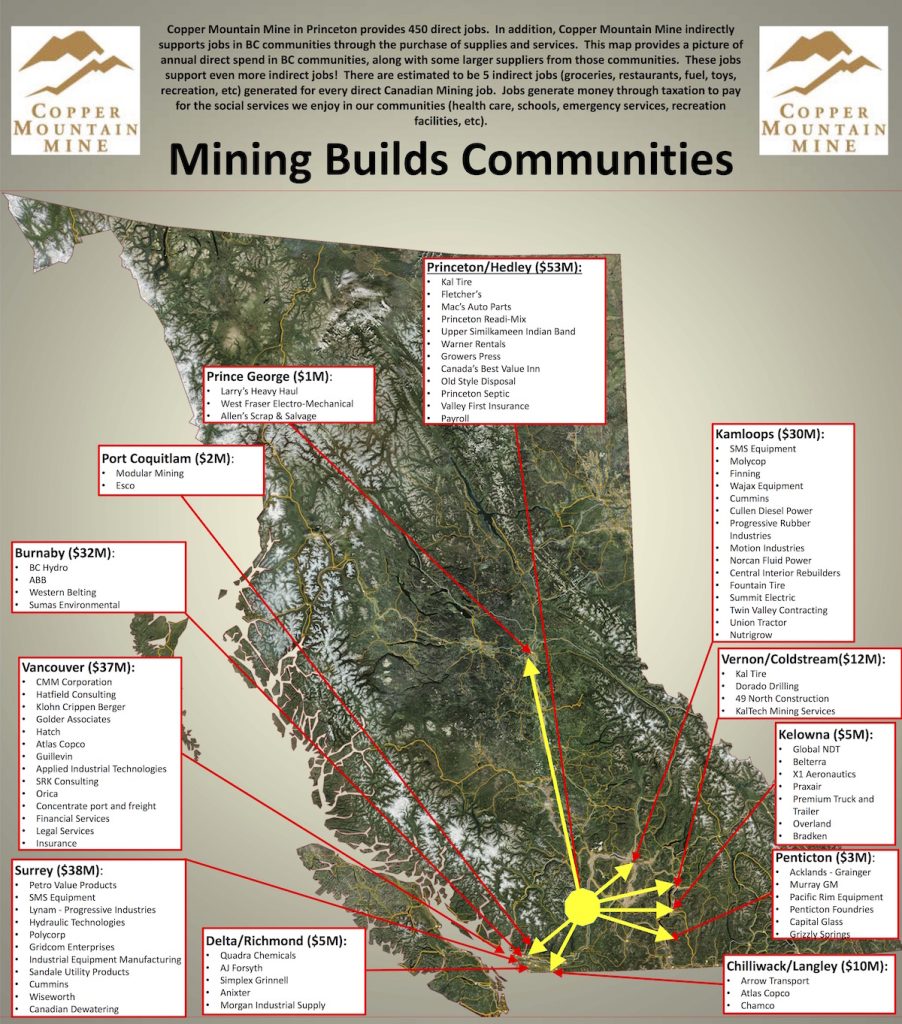
Now imagine if every mine, mill, forestry company, and energy company operating in British Columbia did the same thing for their operations. Maybe then the much-discussed urban-rural divide would start to become less of a problem. 

Though we know too well in 2017 that facts alone no longer win arguments, it sure doesn’t hurt to have them on your side.  

Have you got ideas or content along these lines that you’d like to share through Resource Works? Drop us a line at info@resourceworks.com to tell us about it. We’ll share it with others in the movement. 
Get the latest news with the Resource Works newsletter.

Shaping the Peace: Balancing Energy, Environment, and Equity in Northeast BC's Peace River Region

Help Us Get Things Done

Related News

A growing body of evidence on BC’s clean-energy future

People are deeply concerned about water management, and any perception that supplies are at risk from development can be bad news for the energy sector.

Why natural resources are the bedrock of British Columbia’s economy

Developing the energy, mining and forestry sectors in an environmentally responsible manner is the key to a prosperous future for all British Columbians

Strong BC growth next year thanks to resource trade: RBC

The province will have one of Canada’s strongest-growing economies in the next two years thanks in large part to its diverse natural-resource sector, according to