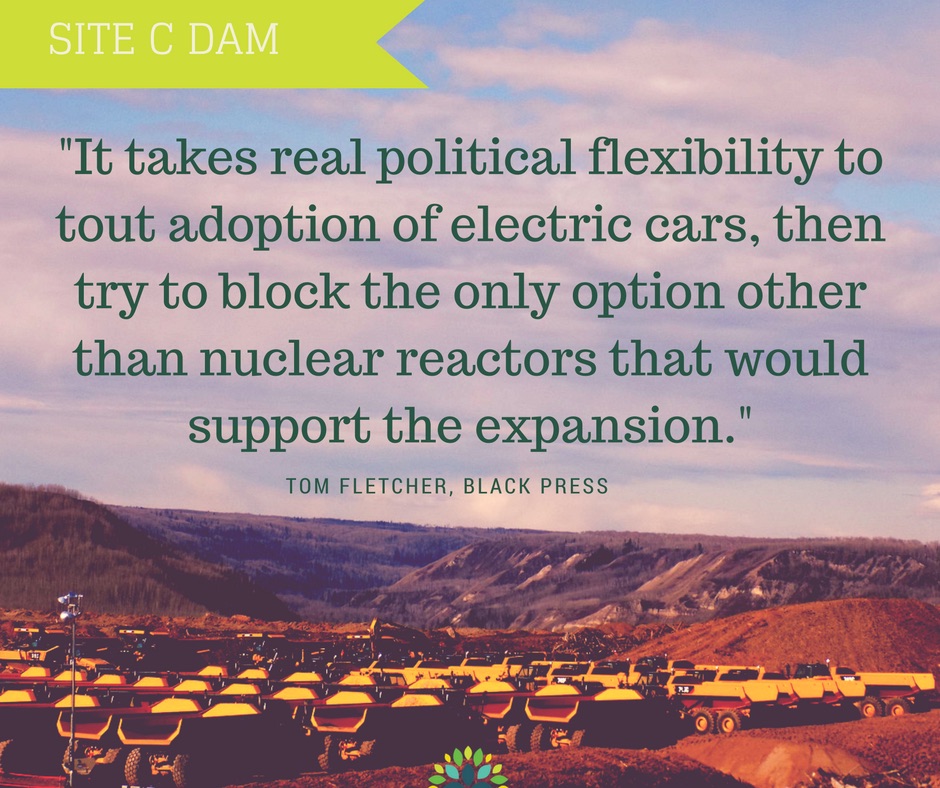
We flagged this timely column from Victoria-based Black Press writer Tom Fletcher. He touches on a theme familiar to Resource Works readers: the struggle for economic growth while meeting environment priorities. Read the full column here.
We’ve just had the latest round of international “news” about British Columbia as a global environmental outlaw.
On top of our oil tankers (almost all from Alaska), our “fracking” (conducted without significant incident for 50 years), and our alleged abandonment of “climate leadership” in lawless, planet-roasting Canada, B.C. has been summoned to the great green prisoner’s dock for the heinous offence of constructing a third hydroelectric dam on the Peace River.
This time the international protest network has called for a United Nations investigation of the Site C dam, claiming it will cause irreparable harm to the Athabasca River basin and Wood Buffalo National Park.
Things are so bad from the first two dams on the Peace that a third one might cause Wood Buffalo to be struck from UNESCO’s list of world heritage sites! That’s like 50 UN “fossil awards” and a Neil Young concert all at once!
There’s just one problem. It’s bunk
RELATED CONTENT
In the video below, Stewart Muir of Resource Works explains why consumers continue to be so confused about the City of Vancouver’s policies to ban the use of natural gas (and its denial that the plan is being carried out).
Posted on October 16, 2016