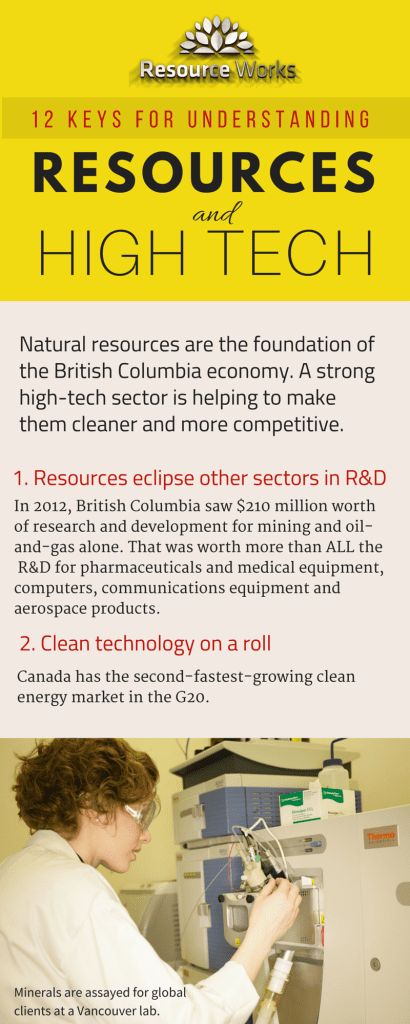
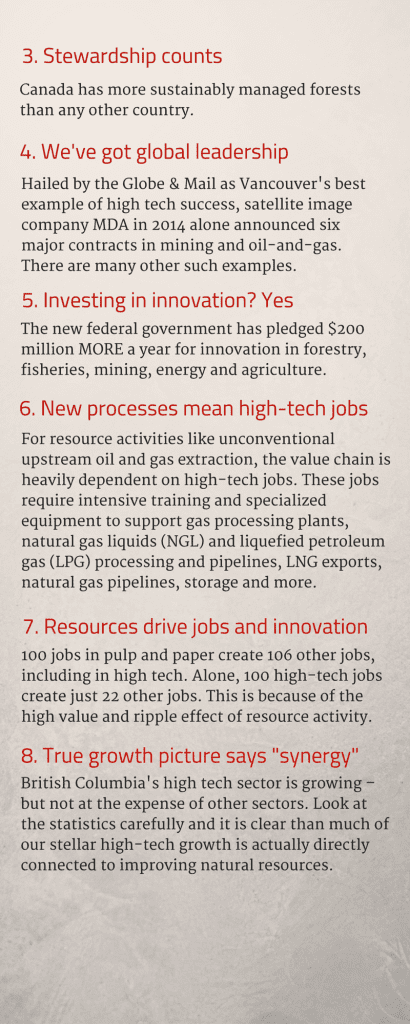
12 keys to understanding British Columbia’s high-tech resource economy

Greener and more efficient use of our precious natural resources can only come from harnessing technology. Here are some ways this is already unfolding around us today.

Sources:

  1. See data tables for Profile of the British Columbia High Technology Sector — 2014 Edition (released June 2015)Table B8^ accompanying “Input Indicators”
  2. Natural Resources Canada
  3. Natural Resources Canada
  4. www.mdacorporation.com
  5. Natural Resources Canada
  6. Energy XXI
  7. Squamish Lillooet Regional District
  8. Profile of the British Columbia High Technology Sector: 2014 Edition (831kB) 
  9. Ipsos Reid survey for Resource Works, April 2014.
  10. Financial and Economic Review, BC Ministry of Finance
  11. http://venturebeat.com/2013/04/03/mining-your-iphone-recycling-iphones-yields-gold-silver-platinum-and-more-infographic/
  12. http://www.ic.gc.ca/opic-cipo/cpd/eng/introduction.html
Get the latest news with the Resource Works newsletter.

Shaping the Peace: Balancing Energy, Environment, and Equity in Northeast BC's Peace River Region

Help Us Get Things Done

Related News

What an educated millennial thinks about forestry

Social media stoked his belief that old-growth forestry was something to oppose. Now: "After seeing firsthand how forests are managed in British Columbia, I am
Premier of British Columbia addresses the media at a BC Hydro substation, standing at a podium marked “StrongerBC for everyone.” Surrounded by construction and utility workers, the press event underscores the province’s focus on clean energy infrastructure and the challenges of balancing policy with power demands.

PENNER: Can BC green policies keep up with the changing world?

Energy policies have to be nimble and adaptable, not ideological and rigid.

Municipal forestry ban attempt leaves First Nations frustrated

A Vancouver Island First Nation takes issue with civic politicians attempting to limit aboriginal forest activity