So let’s take a quick look. Here are BC’s 10 biggest sectors by GDP:
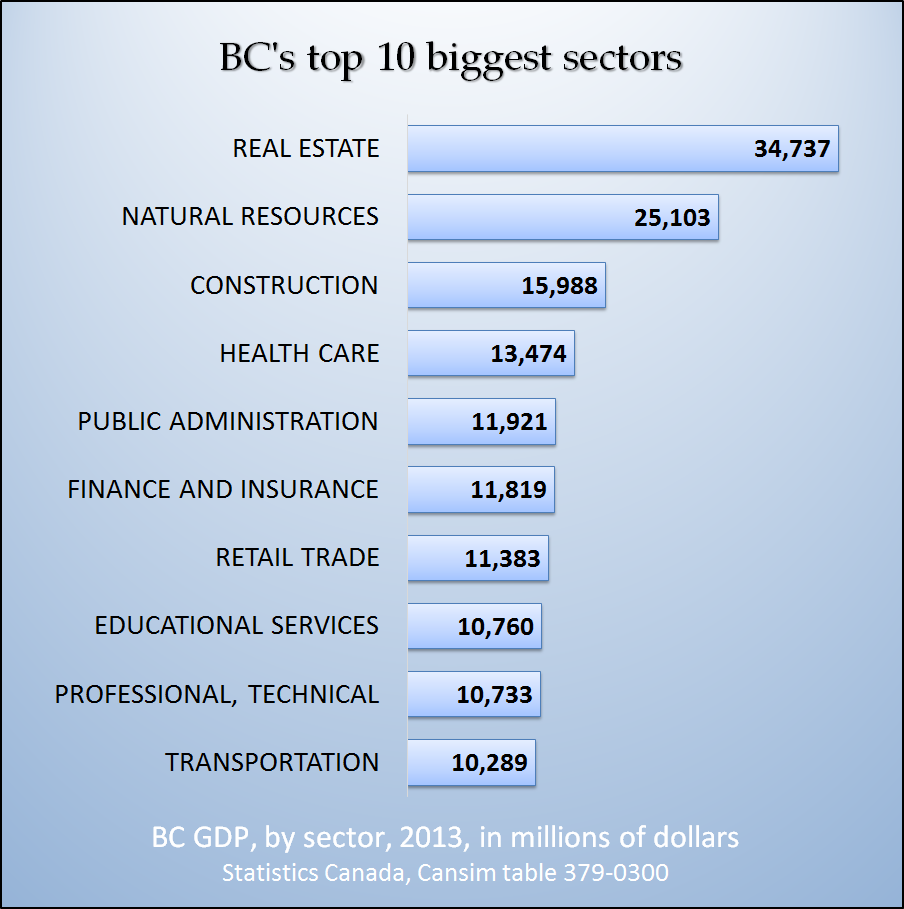
As you can see, the resource sector is BC’s second biggest, after real estate.
What about tourism and high tech?
Now you might have noticed that there are a couple sectors missing from this list, in particular tourism and high-tech. They’re not on the list because these sectors aren’t counted as such by Statistics Canada, which is where this data comes from (it’s all from Cansim table 379-0030, if anyone’s curious).
It’s not uncommon to hear that either the tourism sector or the high-tech sector are more important for the BC economy than the resource sector. But do the numbers tell the same story?
Luckily, other organizations have produced estimates for these sectors that we can use to compare. So here’s the high-tech sector, as measured by BC’s statistical agency, BC Stats (source here) and tourism, as defined by the BC Crown corporation Destination BC (source here):
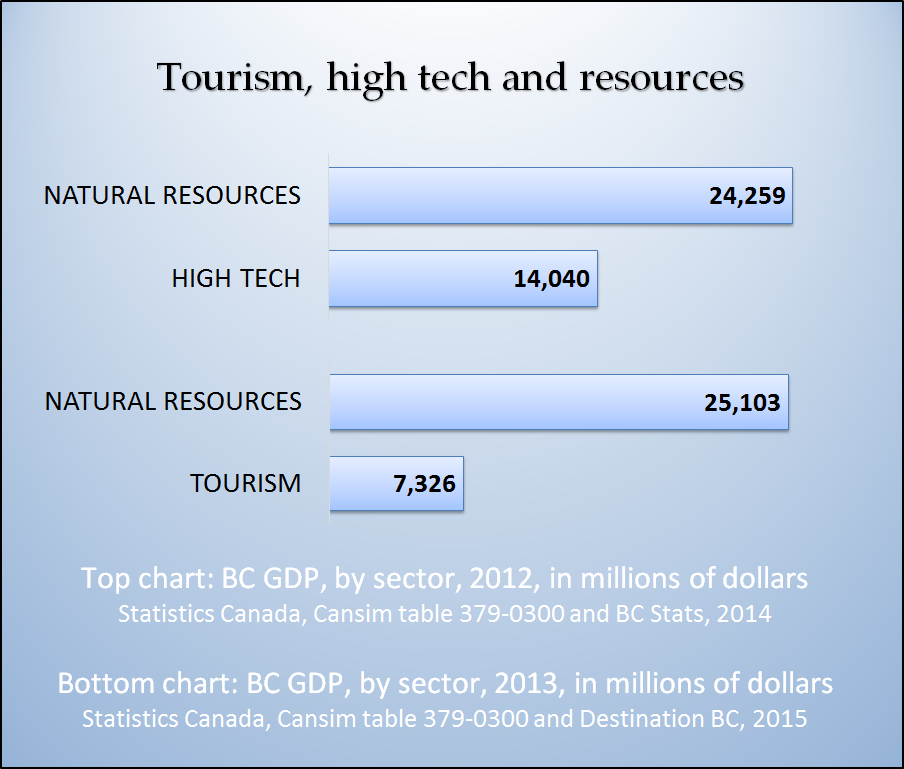
As you can see, both high tech and tourism are big, important parts of the BC economy, responsible for billions of dollars of economic activity. But no, they are not bigger than the resource sector in terms of GDP, even combined.
What is the “resource sector” anyway?
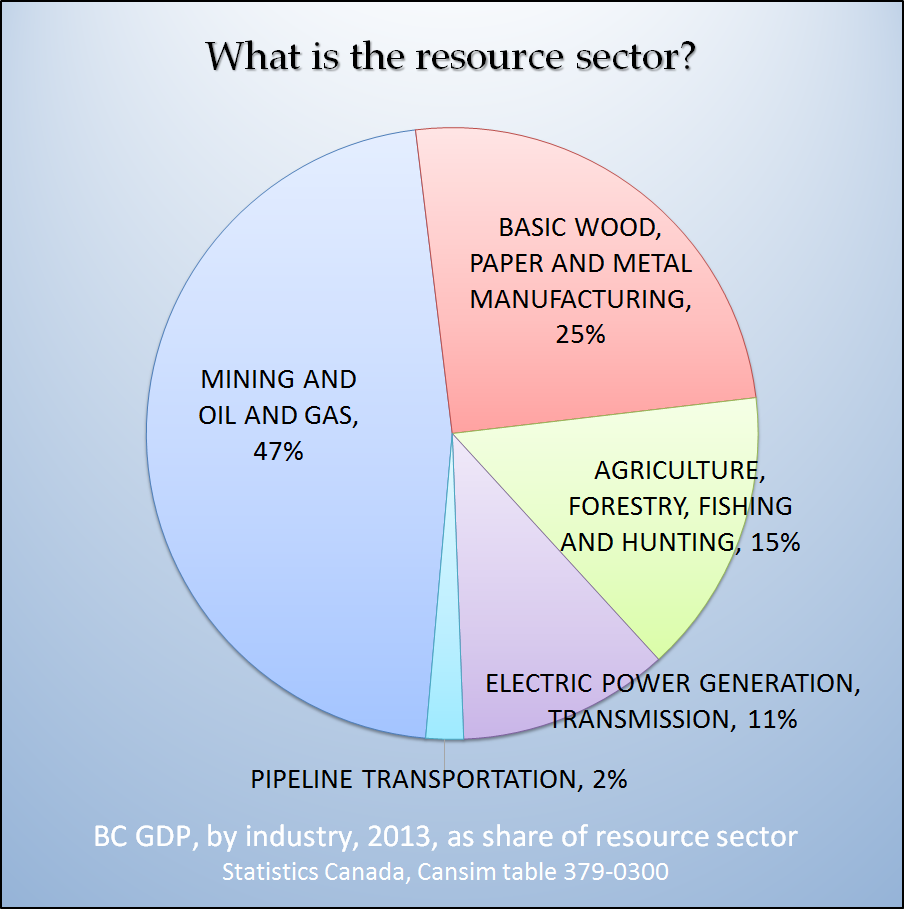
Of course, how we define the resource sector matters when doing these kinds of comparisons. At Resource Works we use a definition of the sector that includes forestry, mining, oil and gas, agriculture, hydro electricity, and related manufacturing and transportation activities – things like sawmills and pipelines.
Here’s a breakdown:
GDP isn’t everything
While GDP is a useful measure, it’s not the whole story. When it comes to economic activity that supports a good standard of living, there are lots of other factors worth talking about, including job creation, revenue flowing to governments, exports and the indirect economic impacts of different kinds of spending.
We’ll certainly get around to talking about these topics before too long.
Peter Severinson is the Research Director for Resource Works. Follow on Twitter: @pseverinson