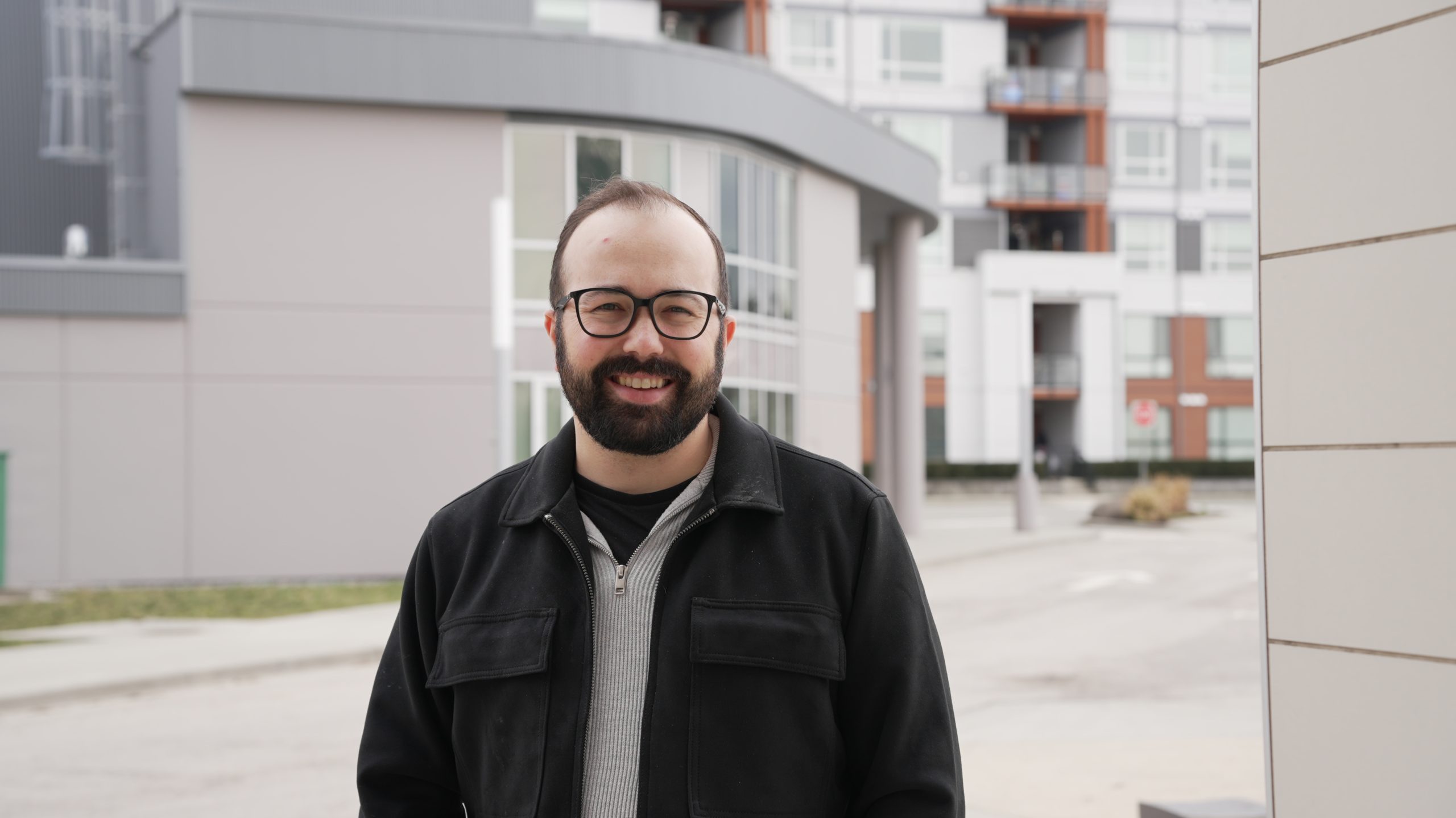
He’s just 30 years old, but Dylan Kruger has spent much of the past decade in elected politics.
Most of his adulthood has been spent navigating the complex and often subtle tides of municipal politics in his hometown of Delta, where community, industry and affordability are top of mind. First elected to Delta city council at 24 in 2018, Kruger’s youthful presence on the local political scene was not just a demographic novelty but a sign of a generational shift towards a pragmatic focus on livability.
Flashy ideology is not Kruger’s style. His north star is the tangible trifecta of housing, infrastructure and economic renewal, all rooted in the everyday lives of the families and workers who elected him.
For Kruger, Delta is not just another vast expanse of suburban sprawl and real estate speculation that has come to define much of Greater Vancouver. His Delta is where the fortunes of his community and industries like natural resources are deeply intertwined. At the heart of this vision has been the Tilbury LNG expansion project.
At $3 billion, the liquefied natural gas facility is no small piece of throwaway industry but a gamechanger fully powered by clean hydroelectricity. Kruger has been clear in his support for Tilbury, calling it “nation-building,” a definition steeped in reverence for the many other great infrastructure projects that built British Columbia and Canada.
In 2024, Kruger sees Tilbury as the glue that binds climate pragmatism, Indigenous partnerships and lasting economic renewal.
Delta is in a unique place in Greater Vancouver, at the centre of three economic arteries: Deltaport, the Tsawwassen Ferry Terminal and the American border. It has a natural advantage, and Kruger sees industrial growth as key to the city’s future.
“Many municipalities across Metro Vancouver are surrendering industrial land to residential development,” Kruger explains. “We’re the opposite, we’re expanding industrial areas. Businesses see opportunity here and we encourage it, recognizing the cascading benefits to local employment and the municipal tax base.”
For Kruger, infrastructure has to be more than just industrial accommodation; it has to be an active defender of Delta from the many environmental threats that come with being below sea level, with flooding being the biggest. He is the chair of Metro Vancouver’s Flood Resilience Committee and one of the region’s most vocal advocates for dealing with this vulnerability caused by rising sea levels.
Delta and Richmond are south of the Fraser River, and Kruger is not confident in the current dike system. The fact that vital assets like Vancouver International Airport, the Tsawwassen Terminal for BC Ferries and sections of the Port of Vancouver are in the same boat as Delta makes the need for upgrades even more pressing.
“It’s existential,” Kruger says bluntly. “An infrastructure failure here isn’t just disruptive, it’s catastrophic; it goes far beyond Delta. Protecting this infrastructure isn’t a municipal luxury – it’s a provincial imperative.”
He’s advocating for higher levels of government to take responsibility for the dikes. Kruger frames seemingly unrelated issues like housing affordability and industrial development through a lens of generational responsibility. For him, municipal decisions should not just address immediate needs but shape the community’s long-term future.
Housing is a clear example of this. Delta, like much of BC, is being asked to build more housing, with record federal immigration numbers straining municipal services to the breaking point. Kruger says municipalities can and should approve more housing – but the federal and provincial governments must also step up and fund the infrastructure that has to keep up with that growth.
The Massey Tunnel replacement is a stark example of that infrastructure deficit, an aging and seismically vulnerable artery that the region relies on for people and goods movement. One hundred thousand commuters face delays at the Massey Tunnel every day, but the impact goes far beyond inconvenience; it impacts regional trade and economic productivity. “It’s not just about commuters, it’s commerce, service providers, goods movement,” Kruger emphasized. “The economic drag is enormous.”
Resources are key to Kruger’s solution set, as is bridging the gap between the industrial economy and residential livability. When asked about the relationship between the resource industry and local housing plans, Kruger said: “Resource industries underpin economic stability; we can fund critical housing and infrastructure projects. Unfortunately, senior governments over the past few decades have risked strangling the very sectors that can drive sustainable growth.”
Since the start of the year, political and economic tensions with the United States have been constant, and Kruger says supporting domestic industries is a strategic necessity. “The Tilbury LNG expansion alone will create over 6,000 jobs during the planning and construction phases and about 100 permanent positions afterward,” he pointed out. “The project will inject $1.7 billion into the provincial economy during construction and about $700 million annually in operations thereafter.”
For Kruger, saying no to these projects will incur a steep cost of lost employment opportunities, falling tax revenues and sacrificing global environmental leadership. “Expanding Tilbury LNG doesn’t just benefit Delta economically,” Kruger says, “but it gets us closer to our global climate goals by displacing coal abroad with cleaner BC natural gas.”
Within Delta, the local opinion seems to be in agreement. “There’s community support,” he said. For example, the Delta Chamber of Commerce has also vocally supported the project, revealing that there is broad appreciation for LNG’s capability to anchor Delta’s prosperity while supporting the global energy transition.
Looking ahead, Kruger envisions Delta in 2035 as: “A city where economic activity and quality of life are balanced, with innovation and community-focused infrastructure. Delta should be the best place to raise a family. Investing in diverse housing, local businesses and top-tier recreational amenities, pools and ice rinks and parks and playgrounds, is how we keep that reputation.”
On the other hand, Kruger laments the paradox of city politics: “Local politics has the most impact on people’s daily lives yet has the lowest voter turnout.” Essential but invisible municipal services—water supply, waste management, road maintenance—support daily life, usually out of sight until something goes wrong.
Kruger points out that decisions made at the municipal level can have far more permanence than higher up. “Provincial or federal legislation can be repealed by a subsequent government. But you can’t repeal a road, a housing complex or community facilities. These tangible investments remain in our communities for generations.”
Going forward, Kruger has a clear and simple message.
“Maybe I’m biased,” he said, “but I think Delta is the best place in Canada to live, work and raise a family. The formula to keep that is simple: clean streets, safe neighbourhoods, good amenities and a government that stays focused on the basics without frills and watches the tax burden.”
Kruger’s politics are clear because they are straightforward. Responsible resource management, practical infrastructure investments and no-nonsense municipal governance, all of it in the name of livability for generations to come.
Geoff Russ is a policy analyst with Resource Works. He formerly worked as a reporter with the Hub, and has written for a variety of publications based in Canada, the United States, and Australia. His work has covered domestic and foreign affairs related to current events, the resource industry, and international affairs, including election coverage in North America and Europe.