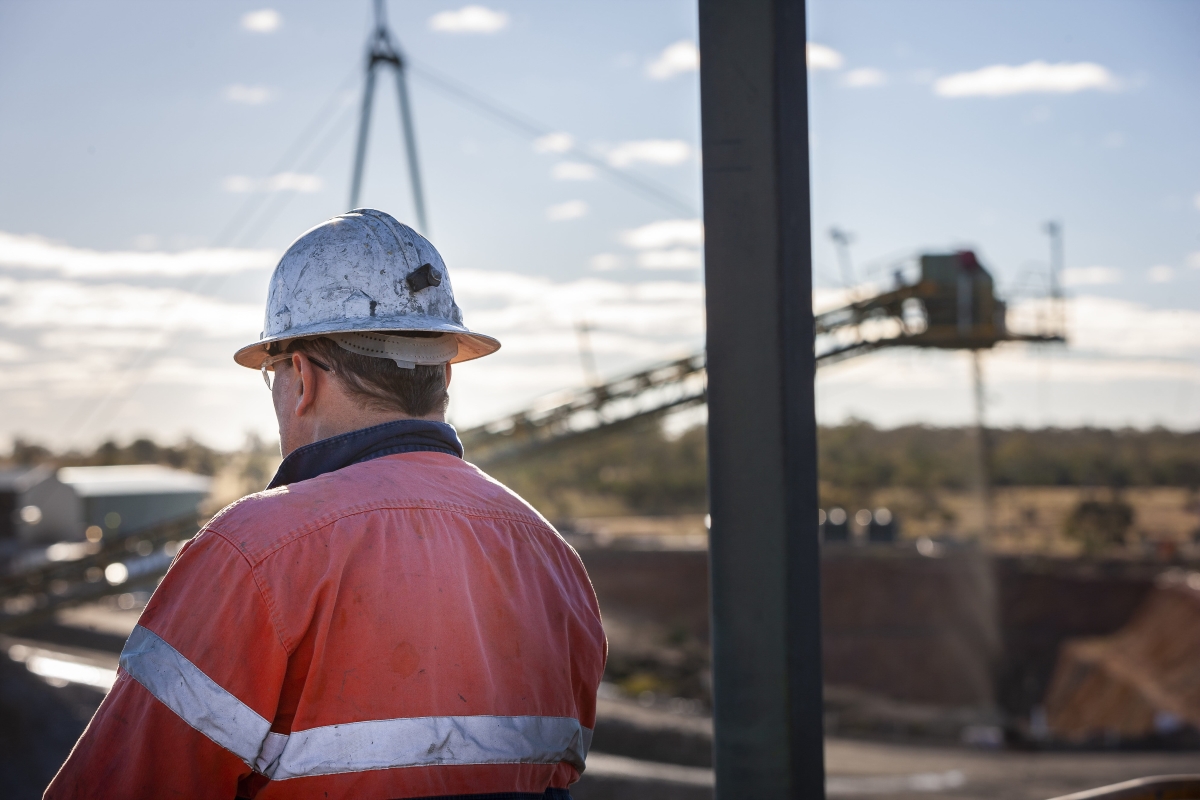
When we talk about Canada’s mining industry, it can be easy to lose sight of the real people who make it happen. These are more than numbers; they are communities across the country, and workers whose lives directly impact the country’s economic well-being. Recent figures from the Mining Association of Canada (MAC) show this clearly.
Their latest report shows how mining jobs have a positive impact not just on the national economy, but also on local community prosperity.
Today there are about 430,000 people in Canada directly employed by the mining sector in 2023. Beyond that, mining also supports 281,000 additional Canadian jobs indirectly. That’s over 700,000 Canadian workers whose lives and livelihoods are tied to this industry. To put that in perspective, one in 28 jobs in Canada is related to mining, and each of those jobs is crucial for security, family stability, and local economic resilience.
Regarding the jobs themselves, the average annual salary for miners in Canada is $147,144 per year, more than double the average national wage. So long as world markets demand Canadian minerals, this means wealth and opportunity for hardworking Canadians.
In these times of economic upheaval, mining is an essential part of keeping the economy strong nationwide. In 2023, British Columbia alone produced $5.1 billion in minerals, all while transitioning towards more sustainable practices to position it for the future.
In Saskatchewan, the McIlvenna Bay project is due to become the first carbon-neutral copper mine in Canada. Using battery-powered equipment, efficient water management practices, and heat recovery systems, McIlvenna Bay showcases how responsibility is not at odds with greater economic security. In this regard, Canadian mining is a perfect repudiation of the basis for the Degrowth movement, which proposes limiting future growth to stem further ecological damage.
What the Degrowth movement, a phenomenon of the G7 countries, has failed to realize is that innovation in sectors like mining is the key to a healthier, more responsible future, not trying to limit their expansion at a time when minerals are needed for groundbreaking technologies.
Mining’s importance to the future economy also includes the role it plays in Indigenous economic development. Today, Canadian mining is the single largest private-sector employer of Indigenous people, with over 12,000 employed in the industry. In addition to the quantity of jobs, the technical, managerial, and specialized roles in mining create longstanding, dynamic careers.
Since 2000, over 500 agreements have been signed between Indigenous communities and the mining sector that have included job training programs, profit sharing, and joint management. It is one of the best examples of meaningful reconciliation, with permanent positive impacts on the communities involved.
However, the next decade will be filled with challenges for the mining industry and those who work in it, especially the skills shortage. MAC has reported that between now and 2035, over 100,000 new workers will be needed due to retirements and growth in the industry.
Science, technology, and engineering are of particular importance. Canada will need a reliable, plentiful stream of people trained in these skills to meet the demands of this industry that does so much to boost the economy and provide gainful employment to thousands of people.
Public awareness of the mining sector and its importance to urban Canada is not where it needs to be. City-dwellers rarely imagine how much of their lifestyles depend on the critical minerals mined far away from their condos in downtown Vancouver, and that has to change.
Our resource industry, mining or otherwise, is so much more than some simple numbers; it is the key to unlocking a brighter future for Canada, and all those who live here. Minerals are at the forefront of the future, not just for the economy, but for innovation and the lives of the people themselves.