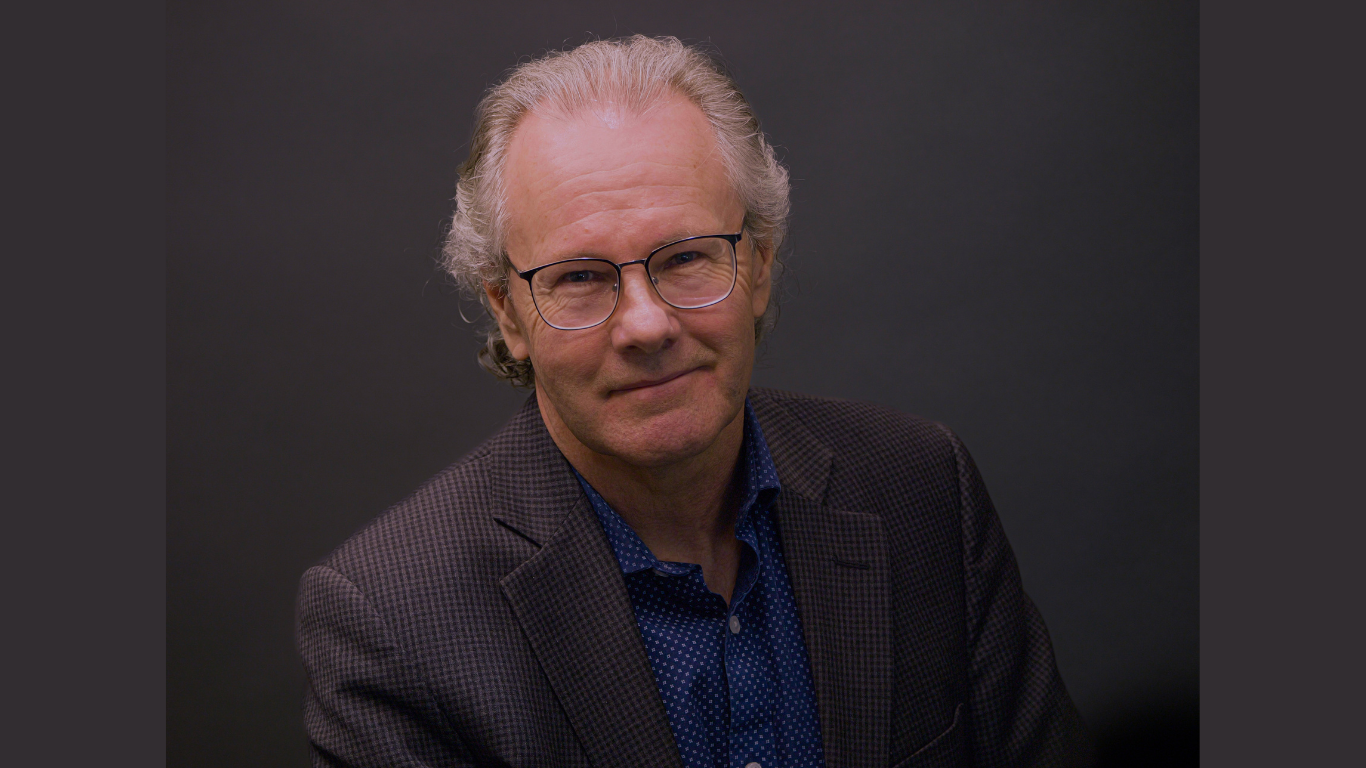
Energy and resources journalist Nelson Bennett returns to journalism with Resource Works to cover the stories that matter, with fresh perspective and renewed purpose.
After more than a decade at Business in Vancouver, Bennett decided to retire, only to find the energy and resource world pulling him back in. Find out what got Bennett back to the beat.
As some Resource Works readers may know — because many are also probably Business in Vancouver readers — I officially retired from BIV in March, where I had spent more than a decade covering energy and natural resources.
As retirement day loomed, I confessed to some of my colleagues that I was having some reservations about retiring just yet. There just seemed to be a bit of unfinished business.
“Things are just getting interesting,” I noted.
Donald Trump was back in the White House, causing his usual havoc, which promised to have serious repercussions for Canada, and a federal election in Canada loomed.
But I had promised myself long ago that when I reached 65, I would stop working full-time. There are still a few items on my Things-To-Do-Before-I-Die list — things that full-time work tends to get in the way of, like travelling.
But it was never my intention to fully retire. I always planned to eventually go back to work part-time, as a freelance writer. I just wanted a sabbatical.
I wanted to do some travelling, maybe try writing a book — or at least read one — join a rock band (I play drums), and see what it’s like to not have to wake up everyday to an alarm clock.
So, over the last three months, I have spent some time in Italy, did a bikepacking trip on Vancouver Island, hit the gym everyday, joined a band, and tried to ignore the news and social media.
It’s been nice — a longish vacation. But I have discovered that doing nothing is harder than it sounds. And it doesn’t pay very well, either.
So when Stewart Muir from Resource Works reached out to offer me a weekly column writing about energy and resources, I could hardly say no. It’s kind of up my alley.
Before BIV, I spent seven years on Vancouver Island writing for the Nanaimo Daily News (now defunct). I covered city hall mainly, but also covered some resource issues like logging and fisheries. I also developed a new beat there — treaty negotiations, which gave me some valuable insights into the complex legal world of aboriginal rights and title.
I joined BIV in 2011, where I initially covered the tech beat. But they kept losing their resource beat reporters, so I was asked to take on that role. I was reluctant at first. I thought it would be dull writing about forestry and mining. It was anything but.
The resources beat became intensely interesting, as energy began to play a bigger role in B.C.’s economy. Site C dam, Trans Mountain pipeline, and LNG projects and natural gas pipelines were in the early stages and all were highly controversial, which can make for interesting writing.
I owe a great debt to BIV for giving me the opportunity to develop the expertise that comes with beat reporting. I was given the time and space and freedom to sometimes go deep on certain topics. I had the opportunity to write about everything from oil pipelines and LNG, to hydrogen and fusion energy.
I covered the decline of B.C.’s forestry and commercial salmon sectors, the highly contentious fish farming industry, and the rise of a new industry — liquefied natural gas.
I also covered mining issues, including the fallout from the Mount Polley tailings pond collapse (and near collapse of the company), and the lost opportunity that was the Prosperity copper mine project.
I have had a life-long interest in science, and the resource beat often nurtured my inner nerd. There is a lot of science and engineering involved in energy, fisheries and climate change issues, which over the course of my career at BIV became increasingly pertinent to energy and natural resources.
Science, I discovered, to great dismay, can be political.
Whether it is the question “does methane intensity of natural gas and LNG make it worse than coal?” (spoiler: it doesn’t), or whether piscine orthoreovirus transmitted from fish farms cause fatal diseases in wild salmon, I found environmentalists can be as tendentious as industry when claiming the scientific high ground for a particular cause.
Not being a scientist myself, I always tried to seek the advice of credentialed scientists and academics to help me try to get a balanced read on the topic at hand. If I ever sound smart, it’s only because I talked to someone who really is smart.
One encouraging trend I have covered over the last decade has been economic reconciliation, and the rise of First Nations as serious players in energy and resource development.
For me, one of the most gratifying stories I ever wrote while at BIV wasn’t much more than a news brief: Cedar LNG in Kitimat is a go. Here was a small First Nation from Kitimat, the Haisla, founding a multi-billion liquefied natural gas project.
Following close on the heels of the Haisla, the Nisga’a Nation launched an even more ambitious project — Ksi Lisims LNG.
Meanwhile, north of Kitimat, the Tahltan Nation have become serious players in the mining industry. And in recent days, there have been announcements of First Nations groups taking a $715 million equity stake in the Enbridge’s Westcoast pipeline.
Those are the kinds of stories I’d like to keep writing about.