British Columbia is a place where the stories that journalists choose to tell usually begin at the steps of the provincial legislature in Victoria, and end in one of the bustling plazas that surround the Vancouver Art Gallery. In between those two urban icons, and far beyond them, are vast swathes of forests and dirt roads that run along mountainsides with staggering vistas, from the peaks of which one can observe the other part of BC.
This other half all too often remains an afterthought, despite making up the vast majority of the province. The people who live here, and their stories, are not heard nearly as often as their urban counterparts, who remain the focus of most of the media landscape.
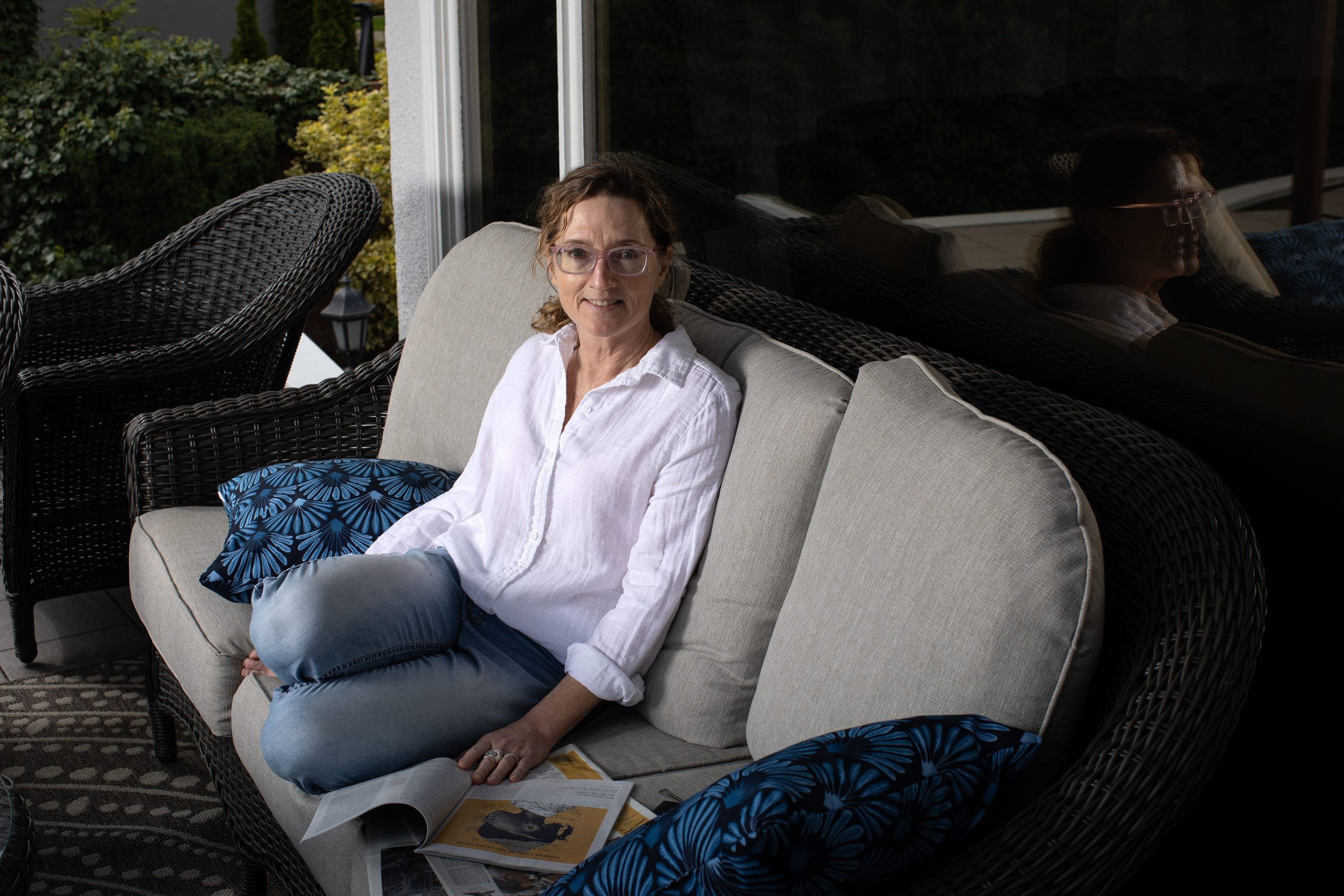
Fran Yanor is changing that, pushing the gaze of the media beyond Vancouver and Victoria into the great hinterland of rural BC, so that more voices and stories can be part of the provincial consciousness.
In 2022, Yanor created an ambitious e-magazine, focussed on provincial politics and public policy, featuring political commentary and in-depth, longform journalism to highlight the people and issues that otherwise get overshadowed by the messaging out of Vancouver and Victoria. “While covering the legislature for another publication, I noticed few decision-makers and most of the media didn’t really consider the rural perspective or the impacts of provincial public policies on communities outside Vancouver and Victoria,” Yanor says. “It seemed an important gap we could fill, to act as a sort of conduit between communities and legislators.”
Her journey to building Northern Beat follows careers in the print, television, and magazine industries. After working as a science documentary producer for CBC’s Nature of Things with David Suzuki from 2005 to 2009, Yanor founded Midnight Blue Media, a multi-platform film production company that eventually became the parent company of Northern Beat. The publication is driven by Yanor’s vision to create a trusted news source that goes beyond simple reporting. Northern Beat is home to expert analysis and carefully researched investigations that dig into the stories behind the headlines. Rural BC life, whether it be tensions in resource industries, complicated social issues, or the fallout of public policies on communities, Yanor has tackled them with proficiency, nuance, and rigour.
The stories in Northern Beat have shone a light on the often complex interdependence that exists between the largest cities and their rural and northern counterparts. Yanor acknowledges a rural-urban divide exists. Many people in rural communities feel chronically unheard by decision-makers in Victoria, who are often, in turn, in the dark about the circumstances and priorities of communities beyond the Lower Mainland, she says.
Hospital ER closures, mill shutdowns, and decades-long attrition of forestry jobs rarely make the major news, unlike white-collar job-shedding during the COVID-19 pandemic, for instance, which received ample attention. Many sectors in the non-urban economy have been gutted, yet these losses go largely unacknowledged. Which might explain why, in the last provincial election, many former NDP, blue-collar communities flipped to the BC Conservatives. On the other hand, most of Vancouver’s wealthier inner suburbs voted for the centre-left NDP, in a dramatic realignment.
“There’s definitely a disconnect in perspective and experience. Nearly a straight split of British Columbians voted Conservative versus NDP, and a substantial amount of that split manifested along rural, urban lines.”
Yanor believes that divide extends beyond simple political partisan references, and goes deeper to identity and trust. “From a political point of view, since I’m a political journalist, both factions, if I can call them that, kind of misunderstand and (in some cases) even mistrust each other. People in rural communities don’t feel well-represented by elected government officials in Victoria, and decision-makers in Victoria are often quite poorly informed about the rural perspective.”
Regarding Northern Beat’s editorial approach, Yanor does not hesitate to challenge the government’s narratives on controversial topics. From investigations into the BC NDP’s denial of the harms of safe supply, to the nuances of mandatory care, to the government’s support of drug user groups, and the unspoken goal by public health officials to force legalization of all drugs. The e-magazine routinely examines sensitive issues, like the aggressive occupation of Blue River by radical anti-pipeline activists claiming to fight for decolonization, or an examination of the roots of public disorder and repeat offending in downtown BC communities.
It reflects Yanor’s strategy as editor, and reflects the daily life of northern and rural communities to the fullest, and at their most raw, if required. Tensions between environmental activists and local residents seeking to create jobs and industry are an ongoing struggle in the BC economy. When asked if covering the resource industry was deliberate or reflective of community realities, Yanor bluntly replied with “Both”.
In the north, the natural resource economy moulds local identities, and is the lifeblood of entire communities. Some of Northern Beat’s most successful stories have included sources such as Ellis Ross, a former MLA and Haisla Chief Councillor, who is a longtime champion of LNG in his hometown of Kitimat and elsewhere. Another constant area of focus is the changing dynamics of forestry, mining, and fisheries in BC, all of which are facing uncertain times.
By no means are resources the only focus of the e-magazine. A popular feature is the in-depth profiles of prominent newsmakers, including Ross, John Rustad, Sonia Furstenau, and others.
Amid the investigations, profiles, and political columns, Yanor has dug up many surprises, some of which have been revelatory, and even disturbing, as they reveal the missteps of government policies. “Public policy wise, the biggest surprise was the discovery that the provincial and federal governments were steering us towards the legalization of all drugs, wanting to make meth, cocaine, heroin, and fentanyl available like cannabis,” she says. While initially skeptical, dozens of interviews and hours of investigation ultimately validated the troubling direction that health and elected officials were trying to steer the province.
Among the veteran freelance contributors to Northern Beat are the Victoria-based political correspondent Rob Shaw, National Post columnist Geoff Russ, the Peace River-born political commentator Tom Fletcher, ex-CBC legislative reporter Jeff Davies, former BC NDP MLA and BC Conservative candidate Gwen O’Mahony, along with northern contributors Spencer Hall, editor of the Rocky Mountain Goat in Valemount, and Tania Finch, founder of the Broken Typewriter in Peace Country, among many others. Combined, they are a dynamic and effective roster, with a presence at the legislature and rural and northern BC, capable of covering the province and issues mainstream outlets fail to cover.
Northern Beat has also been among the first to capture the Blue Wave that engulfed the province in recent years, including the fall of the BC Liberal, United, and the rise of the BC Conservative Party, which had been effectively dead for more than half a century. “The most surprising political story in 2024 was the meteoric rise of the BC Conservatives,” she notes.
Even in 2022, Northern Beat’s contributors were covering activities led by young conservative activists to reawaken the moribund party. Many of the issues, like drug proliferation, crime, and safe supply diversion, helped drive this dramatic political change. Northern Beat has the distinction of being one of the first to begin tracking how these events were reshaping the political landscape, while most legacy outlets at the time remained skeptical.
“Media gets a bad rap. Some of it justified, some not,” Yanor admits. “There are some very good reporters and investigative journalists in B.C., and I work with some exceptional political columnists and correspondents. We’re fortunate in that our news magazine format allows us to investigate stories in a more in-depth way than typical media has time or resources to do. As a result, we’ve been out front on several issues related to failed public policies, repeat offenders, rampant downtown crime, complex housing, not-safe supply, colleges overly reliant on immigration, and more.”
Although rural, urban divide figures prominently into the e-zine content, Yanor acknowledges that both geographies have their charms and appeals. Born in Toronto and raised in a small town, Yanor can appreciate what both have to offer. Affordability, fresher air, and stronger ties in the community in small towns, while urban centres offer more options in healthcare, transportation, entertainment, and employment.
When it comes to narratives on the natural resource industry, Yanor says there has been a shift in how the provincial government treats sectors like LNG. She notes, “Premier David Eby and his ministers now utter the words ‘natural gas’ in public,” illustrating a shift driven partly by political necessity and international geo-political realities. Many of Northern Beat’s articles have featured the growth of the natural gas industry in BC, and high-profile advocates from Indigenous communities seeking to grow their economies.
Yet even these notable pivots on policy, such as the subtle, rather than public, walk-back of the provincial government’s Clean BC’s LNG emission goals, showcase the relative ambivalence within BC NDP’s political circles regarding resource extraction.
Yanor’s approach with Northern Beat is often centred around people, and has involved on-site visits to pulp mills, LNG corridors, downtown cores, street-entrenched encampments, manufacturing facilities, and rural Indigenous communities most affected by decisions made in Victoria. The news industry in BC has fallen on hard times, with many local publications, such as the Black Press network, becoming insolvent, but this creates an opportunity for newcomers, particularly independents, in which to thrive.
In the future, Yanor sees Northern Beat as a thriving media company with an independent editorial stance that is a permanent part of the province’s media landscape. “The goal is to attain a financially self-sustaining state that enables us to expand our team of freelance writers to keep a proper eye on the public policy coming out of Victoria and comprehensively cover the issues of importance to rural BC.”
Ultimately, Yanor wants Northern Beat to be the brand that inspires trust and embodies the higher, nobler goals of journalism, like accountability, depth, and quality of content, which delivers a genuine representation of the province that bridges divides and illuminates the unreported nooks and crannies of BC. There is no doubt she has gotten off to a great start in the past three years.
“Thanks for caring about Northern Beat,” Yanor adds warmly. “To your readers, swing by our NorthernBeat.ca news site and check out my Substack. If you like what you see, subscribe!”
Photo credits to Chad Hipolito