The BC Chamber of Commerce has passed a resolution saying that BC has uniquely strict rules in North America regarding SAF, with target mandates of 1 percent of jet fuel in 2028, which is set to rise quickly to 3 percent by 2030. This is decidedly off-course from what is happening in the rest of the world, where SAF production is still limited, very expensive, and being sidelined.
On January 1, 2026, the BC Low Carbon Fuel Standard (LCFS) will require a 2 percent reduction in carbon intensity (CI) for jet fuel, marking the first stage of a progressive increase that is part of BC’s broader effort to incorporate SAF into the aviation fuel supply.
British Columbia’s ambitious plan to require Sustainable Aviation Fuel (SAF) targets is misguided and will put the province on the fringes of the airline industry.
Currently, BC’s SAF policy is aimed at cutting emissions caused by air travel to help the province meet its climate goals. Furthermore, the government has touted it as an opportunity to stimulate investment in clean tech, expand local economic growth, and generate modern aviation jobs.
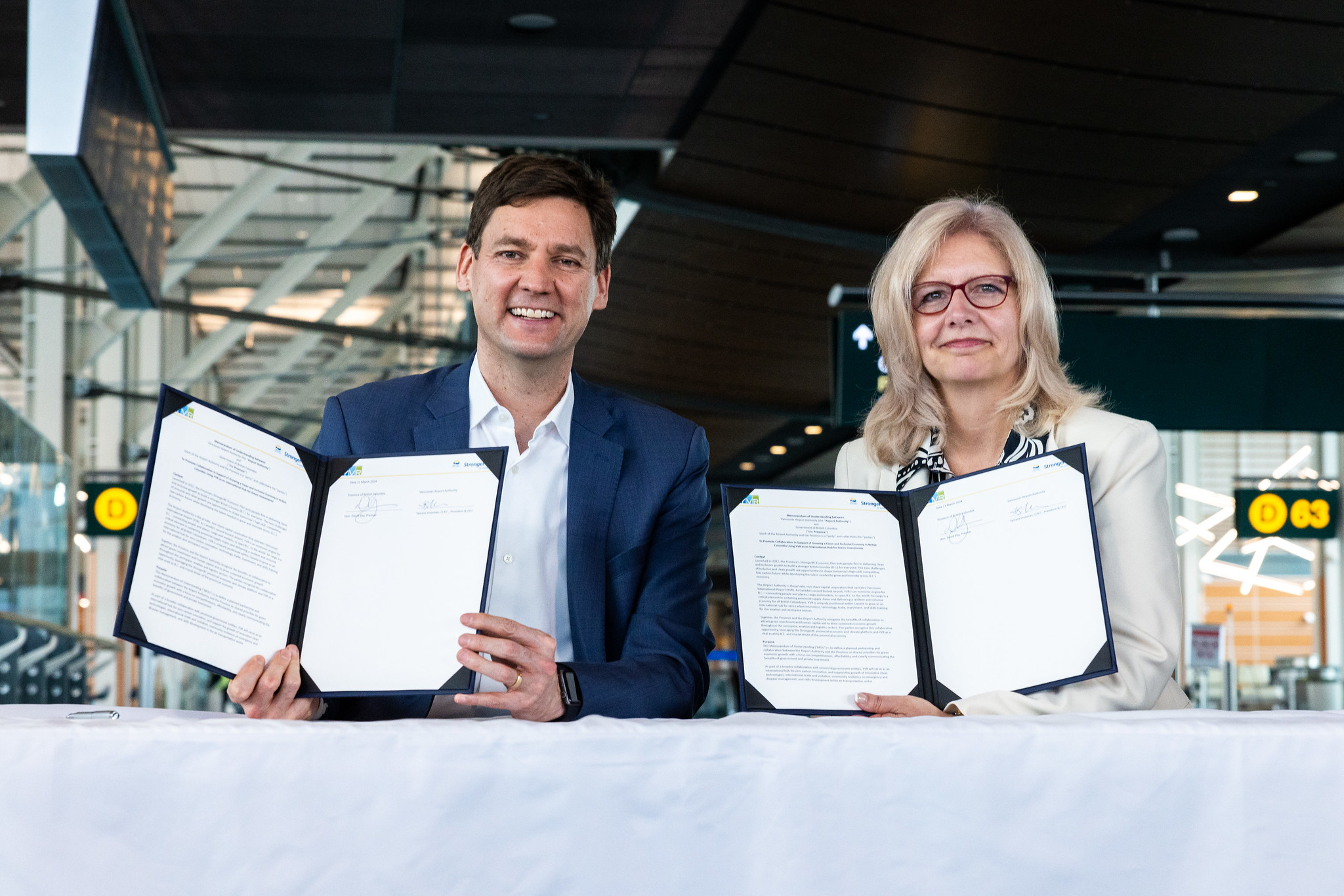
Premier David Eby has touted his government’s work on SAF, particularly in collaboration with facilities like Vancouver International Airport (YVR).
“By working together on shared priorities, like promoting made-in-B.C. clean tech and expanding trade diversification while reducing pollution, we can maximize benefits for all British Columbians, while strengthening our province’s economic future,” said Eby last year.
BC’s SAF policy aims to rapidly expand sustainable aviation fuel production and use, significantly cutting aviation-related pollution and carbon emissions. It also seeks to stimulate clean-tech investment, creating local economic growth and resilient, sustainable aviation jobs.
First, SAF production around the world isn’t growing fast enough to meet these requirements set by BC. The International Air Transport Association (IATA) says that only 2 million tonnes of SAF will be made around the world in 2025. This is only 0.7 percent of the world’s aviation fuel use. Willie Walsh, the Director General of IATA, said that the low availability of SAF has already caused compliance fees in Europe to skyrocket, making SAF almost five times more expensive than regular jet fuel.
The Financial Times (FT) reports that airline industry leaders in Europe, where SAF mandates have been put in place, are very sceptical and are pushing back. For example, leaders at Ryanair and Lufthansa have openly questioned whether the current SAF targets are realistic.
Their worries follow facts that were brought to light in earlier FT reports, which found that Europe’s SAF mandates made energy companies hesitant to make new investments or even stop them altogether, like Shell’s biofuels facility in Rotterdam, which is on hold. The situation is a warning for BC that making rules too soon can stop investments instead of speeding up the switch to green energy.
The Wall Street Journal has written extensively about how unclear it is what qualifies as SAF, which adds even more risk to the province’s ambitious goals. The differences between U.S. and European standards have made markets less clear and scared off investors. European rules say that crop-based SAF is not allowed, but the U.S. gives incentives for it. This makes the global market less stable. This lack of consistency in policy makes it even harder for Canadian producers to set up viable domestic SAF facilities, making the province even more dependent on expensive imports from a small number of international sources.
The Canadian Council for Sustainable Aviation Fuels (C-SAF) acknowledges that it is hard to increase production in Canada. Even though more than 60 airlines have signed on, Canada’s SAF market is still in its early stages. BC could needlessly harm the airline industry and the wider economy by enforcing strict rules without a strong local industry to support them.
The Chamber of Commerce is right to point out the economic risk. Airports like Vancouver International (YVR) are important for BC’s economy because they connect people and are vital hubs for importing and exporting. If BC airports don’t have enough domestic supply, overly aggressive mandates could make them less competitive. Smaller, regional carriers are already having a hard time making money, and now they are facing threats to their very existence. Last year’s failure of Lynx Air shows that rising fuel prices have real effects.
Also, BC’s policy too closely resembles European goals, which have proven too ambitious. The EU was once a strong supporter of SAF, but airlines are now strongly against it and warning about rising costs and limited SAF availability, which is leading to calls for policy changes. To stay competitive, airlines have even tried to make Europe’s strict carbon pricing and SAF rules fit in with less strict global standards. If Europe, which is a leader in climate change, has to rethink its rules, BC’s decision to go it alone looks even more wrong.
Finally, economic studies show that the costs of SAF mandates always end up being passed on to consumers.
For many BC communities, air travel is not optional. It’s the only lifeline for passengers, medevacs, time-sensitive goods, and perishable supplies. This, carbon pricing and SAF mandates hit harder in B.C. than in more road-connected provinces, potentially disrupting lifeline services and increasing costs for rural and Indigenous residents.
BC’s separate SAF mandate, as stated in the BC Chamber’s resolution, is not in line with what is happening in North America and around the world. Instead of encouraging real progress for the environment, the policy could hurt the economy and be meaningless. A better way to go about things would be to set timelines and goals that are in line with global standards, encourage domestic SAF production, and support technological progress before putting in place rules that BC’s economy can’t realistically handle.