Premier David Eby’s statement that British Columbia will “win the race” to deliver liquefied natural gas (LNG) to Asian markets is a big and welcome sign of growing political consensus on the importance of LNG to Canada’s future. Once an LNG skeptic, Eby’s shift is a welcome change for both BC and Canada.
At a press conference announcing provincial support for the Cedar LNG project, Eby emphasized Canada’s reliability as a trading partner compared to the unpredictable actions of U.S. President Donald Trump. This is a big commitment to seize an economic and geopolitical opportunity of a lifetime.
Trump’s push for the US$44-billion Alaska LNG project to capture the same Asian markets has added to the urgency. With Trump courting Japan to get market share, B.C. has a tough competitor.
Alaska’s advantage is not just proximity to Asia but Trump’s willingness to streamline regulations aggressively, unlike Canada’s often cumbersome regulatory environment. Eby’s tone shows he gets this and B.C. won’t give up its natural geographic advantage without a fight.
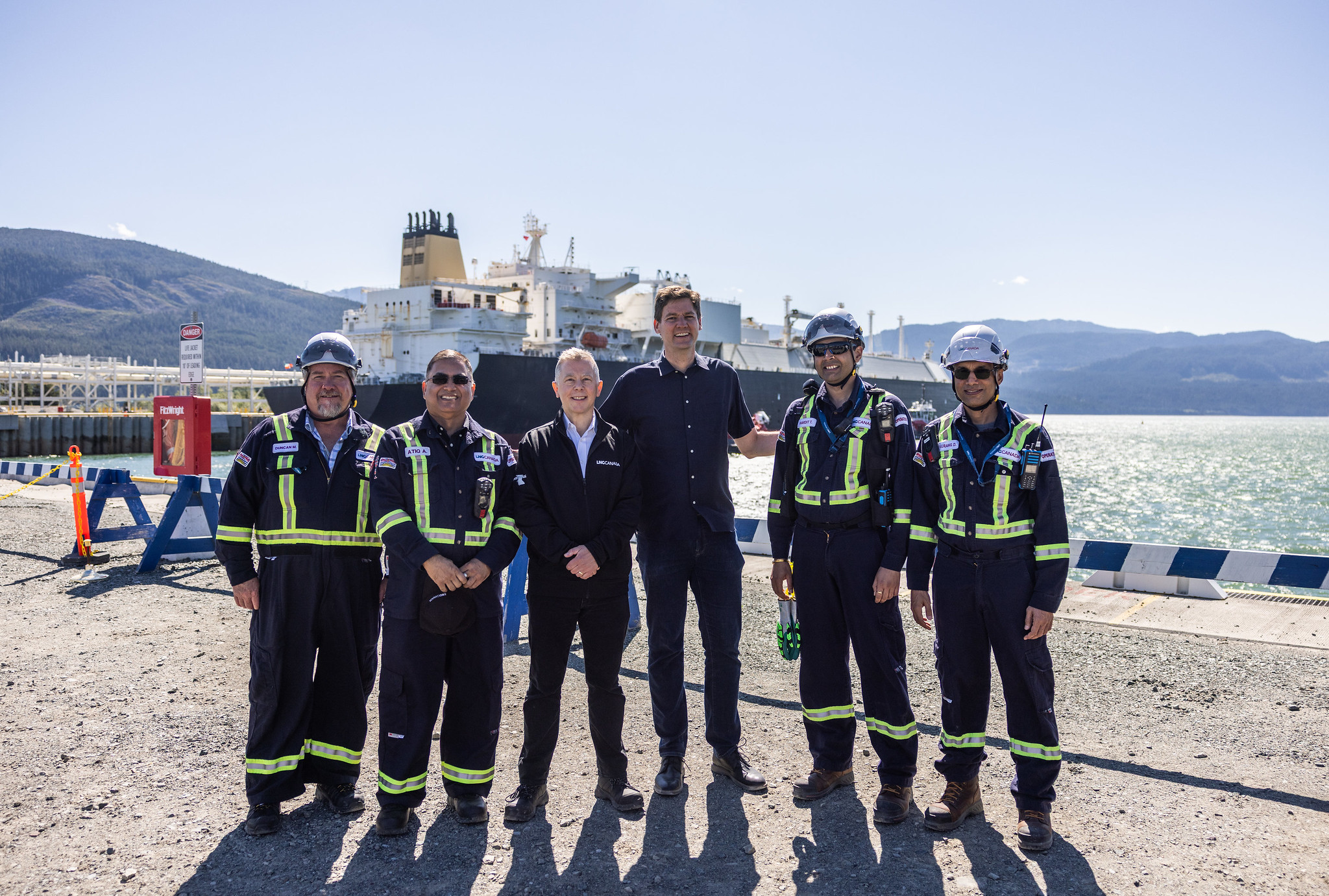
B.C. already has some notable LNG projects like LNG Canada, Cedar LNG, Woodfibre LNG and Ksi Lisims LNG, all of which have moved forward despite huge opposition from environmental groups and regulatory hurdles. LNG Canada, the largest private sector investment in Canadian history at $40 billion, marked a big milestone with its first shipment to Asia earlier this summer.
Cedar LNG, a groundbreaking Indigenous-majority owned project, is the economic reconciliation we need for modern resource development. Partnering with the Haisla Nation, Cedar LNG has secured provincial and federal support, including $200 million each from Victoria and Ottawa, to build the infrastructure and electrify the operation to minimize environmental impacts.
Another important project, the Prince Rupert Gas Transmission (PRGT) pipeline, has reaffirmed its environmental certificate despite intense scrutiny from environmentalists and specific First Nations groups. PRGT is key as it supplies natural gas to Ksi Lisims LNG, another big LNG terminal co-owned by the Nisga’a Nation.
Its progress, despite the challenges, shows the perseverance required to keep Canada’s energy sovereignty and economic diversification. And this has brought together two unlikely political bedfellows: the governing NDP and the BC Conservatives.
Traditionally at odds, both parties now share a common vision that LNG is key to British Columbia and Canada’s economic future. This is unusual but good, because it means progress can happen despite the BC Green Party’s continued opposition to fossil fuel projects.
Green Leader Jeremy Valeriote slammed the government’s LNG support, saying it contradicts provincial emissions targets and is “greenwashing”. But the bipartisan support for LNG, from the Conservatives and the NDP under Eby’s leadership, shows political maturity and strategic thinking that goes beyond ideology.
Both parties recognize that responsibly managed LNG projects can deliver big global emissions reductions by displacing coal in Asia and serve both economic and environmental goals.
For Canada, winning the LNG race is in the national interest. Missing this window means ceding economic growth, jobs, Indigenous economic reconciliation and geopolitical influence to the United States.
The disastrous EU-U.S. energy deal, which shows Canada’s missed LNG opportunities in the Atlantic, must not be repeated in the Pacific. If we don’t act now, Trump’s Alaska project will lock us out of the market.
Eby’s conversion on LNG and his working with the BC Conservatives is a hopeful sign of a more pragmatic B.C. politics. This means continuity and stability, making LNG investment possible and realistic.
It’s a message to international partners looking for a stable energy supplier. And above all, Eby’s turn of mind shows Canada is serious about using its natural gas resources responsibly for long-term prosperity and energy security.