At the heart of Canada’s policy dysfunction lies a kind of national self-loathing — a cultural tic that’s been with us since the 1960s, when someone first dismissed us as “hewers of wood and drawers of water.” That phrase burrowed deep into our psyche. Instead of being proud that we built a modern, stable, and generous country on the strength of our resources, we convinced ourselves that real success meant something else: something abstract, urban, and supposedly more sophisticated.
From there grew a prejudice against the very foundation of our prosperity. The industries that shaped our towns, financed our infrastructure, and gave us global credibility were re-cast as embarrassments to be outgrown. We began to treat resource wealth as a moral burden rather than a strategic gift.
Meanwhile, other nations have spent the past half-century doing the opposite. Australia, Norway, and the United States leaned into their resource endowments, creating wealth that funds innovation, education, and climate solutions. Canada, by contrast, has developed a habit of psyching itself out — overthinking, over-regulating, and over-apologizing.
The cult of constraint
Nowhere was that national neurosis more visible than in the Trudeau era, when government seemed to forget that its role was to enable citizens, not constrain them. A perverse belief took hold in Ottawa that the highest form of public virtue was to shut things down. Entire industries could be erased, joyously, with the stroke of a pen.
This doctrine of constraint found its most tragic expression on the West Coast, where Ottawa intervened to dismantle British Columbia’s salmon-farming industry. What should have been a world-class Canadian export story became a social and investment disaster.
The facts were never the issue. Federal scientists, independent researchers, and the government’s own advisory panels repeatedly affirmed that aquaculture could expand safely and sustainably. Even the 2016 Barton Report, commissioned by the Trudeau government itself, urged tripling Canada’s aquaculture output. But that evidence was ignored.
Instead, policy was handed to a handful of radical activists who recast science as moral theatre. A self-styled campaigner, rejected by credentialed experts, was elevated to the status of national authority, while actual PhDs were muzzled. The result: thousands of rural and Indigenous jobs lost, capital flight, and a global embarrassment for a country that once prided itself on pragmatism.
When ideology trumps evidence
This was not environmental leadership. It was performative destruction — the logical endpoint of a culture that mistakes paralysis for principle.
And yet, as contemptible and vivid as the salmon episode was, it wasn’t the biggest. That distinction belongs to the oil sands. Once understood as a source of national uplift — a continental-scale endowment that could fund generations of Canadian prosperity — northern Alberta’s Athabasca oil sands were reframed as a planetary sin.
In one of the most self-defeating turns in modern history, Canada’s own insiders, many of them on the public payroll, spent the past decade working to delegitimize the very industry that had underwritten the country’s standard of living. The damage has been catastrophic. Hundreds of billions of dollars in investment intentions have been driven away. It will take decades to recover from this blunder.
I have long argued that the single most environmentally progressive act Canada could undertake would be to get mass quantities of liquefied natural gas to global markets that lack access to gas and are forced to burn coal instead. The second most green act would be to stop handing discounted oil to American consumers. Our inability to build pipelines to tidewater means we subsidize a “cheap and fat” U.S. lifestyle, letting them drive bigger, more polluting vehicles while we forfeit fair value for one of the world’s cleanest, most responsibly produced energy supplies.
If Canada had the backbone to finish the job and move our oil and gas to the ports, we’d help the world replace coal, cut emissions, and use energy more efficiently. That’s not a contradiction; that’s real environmentalism.
Call it a fossil fuel if you will, but nobody has ever shown a reality-based scenario where oil isn’t a foundational commodity for human civilization. By getting our valuable energy to the markets that truly value it, and that pay full price for it, Canada can ensure that the way it’s consumed is the most efficient and least harmful possible. This is what responsible resource leadership looks like — and it’s time we started practising it again.
A country built for big things, governed as if it were tiny
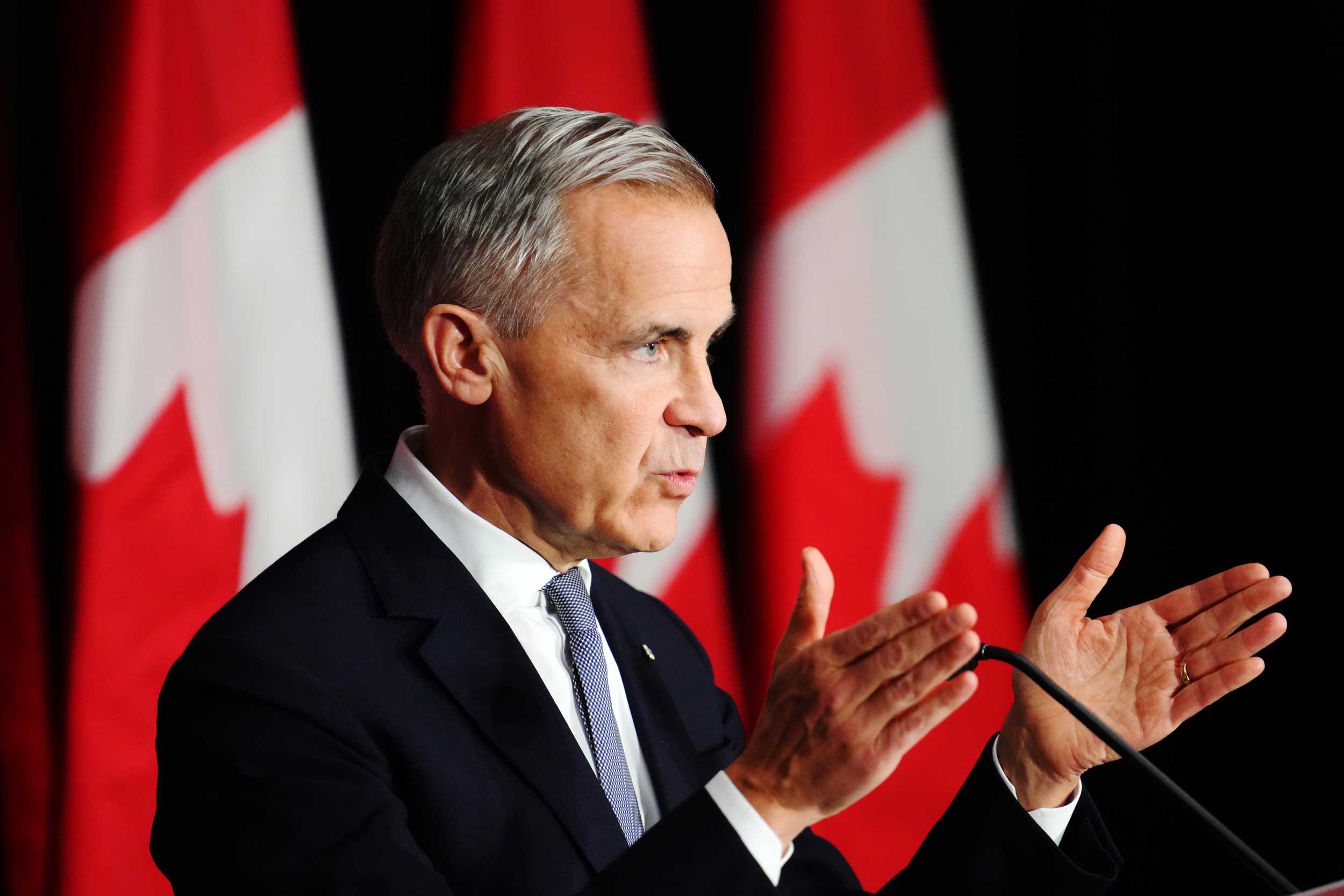
Prime Minister Mark Carney now says to build a stronger economy, he’s going to take on the federal bureaucracy. Good luck to him. It won’t be easy. Over the past decade, Ottawa has become riddled with a bureaucratic mindset that treats Canada as if it were Liechtenstein, designing energy and environmental policy for a miniature state rather than a continental power.
Our institutions have grown obsessed with process over purpose, compliance over competition. Every project, every permit, every regulation is now forced through a moral filter rather than a practical one. The result is paralysis dressed up as virtue.
Until recently, as happens with all mass delusions, no one wanted to be the first to call it out. But that moment has arrived. Congratulations to Carney for taking the brave first step — not only naming the problem but committing to root it out.
His call for “investments over prohibition” signals a break from the moral minimalism that has kept Canada small. It suggests an understanding that climate leadership and economic strength are not opposites but partners. If he follows through, if he can turn aspiration into administrative courage, Canada may finally start acting like the resource superpower it actually is.
Cracks in the green illusion
Maybe it’s finally starting to dawn on people that the war on old, reliable energy has an economic cost. The gap between what policymakers say in public and what they admit in private is widening — and fast. There’s just no way Carney’s awakening came out of the blue. Anyone who’s spent time in the policy circles of Ottawa, London, or New York knows this conversation has been bubbling for years: that the numbers don’t add up, that the politics have outpaced the physics.
Lately, one hears a telling phrase more and more often: “Obviously, I’d never say that in public.”
That’s how senior officials and industry leaders now end conversations about climate and energy — a quiet confession that the story they tell the cameras no longer matches what they tell each other. For years, governments have tried to sustain a kind of “reality distortion field” around climate policy, where good intentions were expected to trump real-world consequences. But for that illusion to work, they had to half-believe it themselves.
Now the façade is cracking. Energy shortages, industrial flight, and fiscal pressure are forcing a reckoning. Even in Europe, where environmental orthodoxy has been gospel for decades, reality is setting in. It turns out that getting hooked on cheap Russian gas while eradicating its own reliable energy sector wasn’t such a good idea. As Germany’s finance minister Lars Klingbeil said on October 22: “We need decarbonization, but decarbonization must never mean deindustrialization.”
That statement might as well have been written for Canada. Everyone is terrified to offend the green lobby — the ones who have made an art form of putting our most productive occupations on the chopping block. But the spell is breaking. Even inside the system, people are starting to say what they know: you can’t build prosperity on prohibitions.
A new geopolitical reality
As 2025 draws to a close, Canadians are waking up to another uncomfortable truth: the United States no longer sees us as a partner, but as the 51st state. When President Trump talks about “North American energy dominance,” he’s not inviting us to the table. He’s reminding us who he thinks owns it.
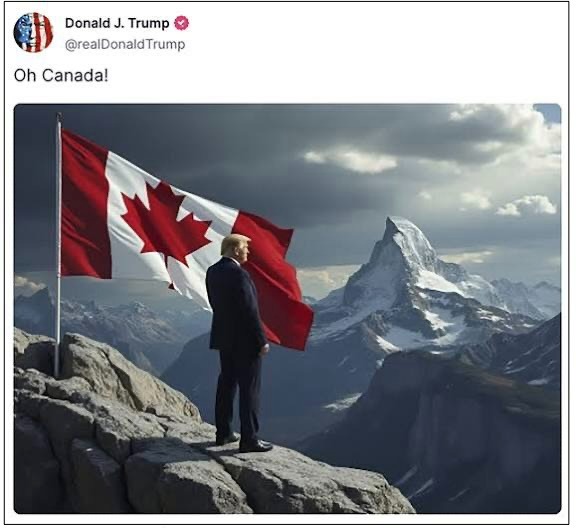
We nervously laughed off those comments at first. But what’s emerging isn’t a tick; it’s a trend. Trump’s revival of U.S. imperialism is real, and it’s economic as much as military. The new 5% defence-spending target might have been forced on Canada, but the lesson is clear: if we’re going to carry a bigger share of the security load, we need the economy to match it.
Doubling our non-U.S. exports is possible, but we need to be very clear on one thing: it will be almost entirely due to natural resources that we can accomplish this. The forces of No that played spoiler so effectively in recent years can do so again, but not if citizens speak out consistently, confidently and clearly.
That means a Canada First economic approach — one that starts with rebuilding our ability to produce, build, and export. It means aligning our environmental policy with the level of economic activity required to sustain true sovereignty.
Because let’s be honest: we can’t defend what we don’t develop. The only way to secure our security is to develop our resources — energy, minerals, and the industrial base that goes with them — and to do it quickly.
Breaking the spell
The task ahead is immense. We have to rewire the machinery of government so it rewards results instead of rhetoric, performance instead of paperwork. It means confronting the Ottawa reflex that measures progress by the thickness of reports instead of the number of shovels in the ground.
If Carney can restore belief in building — if he can help Canadians see that stewardship and strength can coexist — he’ll have done something few leaders manage.
He’ll have broken the spell of self-doubt that’s held this country back for half a century.